You step away to answer the door, leaving a client’s paperwork beside the laptop. In a living-room office, that page is now within sight of a guest, a child, or someone walking to the kitchen. Privacy needs a routine, not just a tidy-looking desk. Start with your employer’s requirements: they take precedence over these suggestions, including rules about bringing records home, printing, storage, transport, and destruction. If home paper handling isn’t permitted, a locking drawer doesn’t make it acceptable.

1. Reduce the paper that enters the nook
The easiest page to protect is one you never print. Before starting a task, ask whether it can stay in your employer-approved digital system. Read a brief on screen, use approved electronic signatures when available, and avoid printing a whole packet for one reference page. Don’t substitute personal email, cloud storage, or a phone scan just to make paper disappear.
Give incoming mail a deliberate intake point rather than letting it mingle with grocery flyers. Open work envelopes yourself, separate the necessary contents, and handle identifying envelopes according to the same disposal rules as their contents. Paper reduction may require changing a familiar habit; if a screen makes comparison work awkward, print only the permitted pages you actually need.
2. Separate today’s active file from everything else
Keep one current task in a closed, opaque folder, with other records in approved locked storage. When you switch clients, put the first file away before opening the next. This limits what is exposed and reduces the chance of slipping one client’s page into another packet. A folder containing only today’s appointment paperwork is easier to account for than a mixed stack.
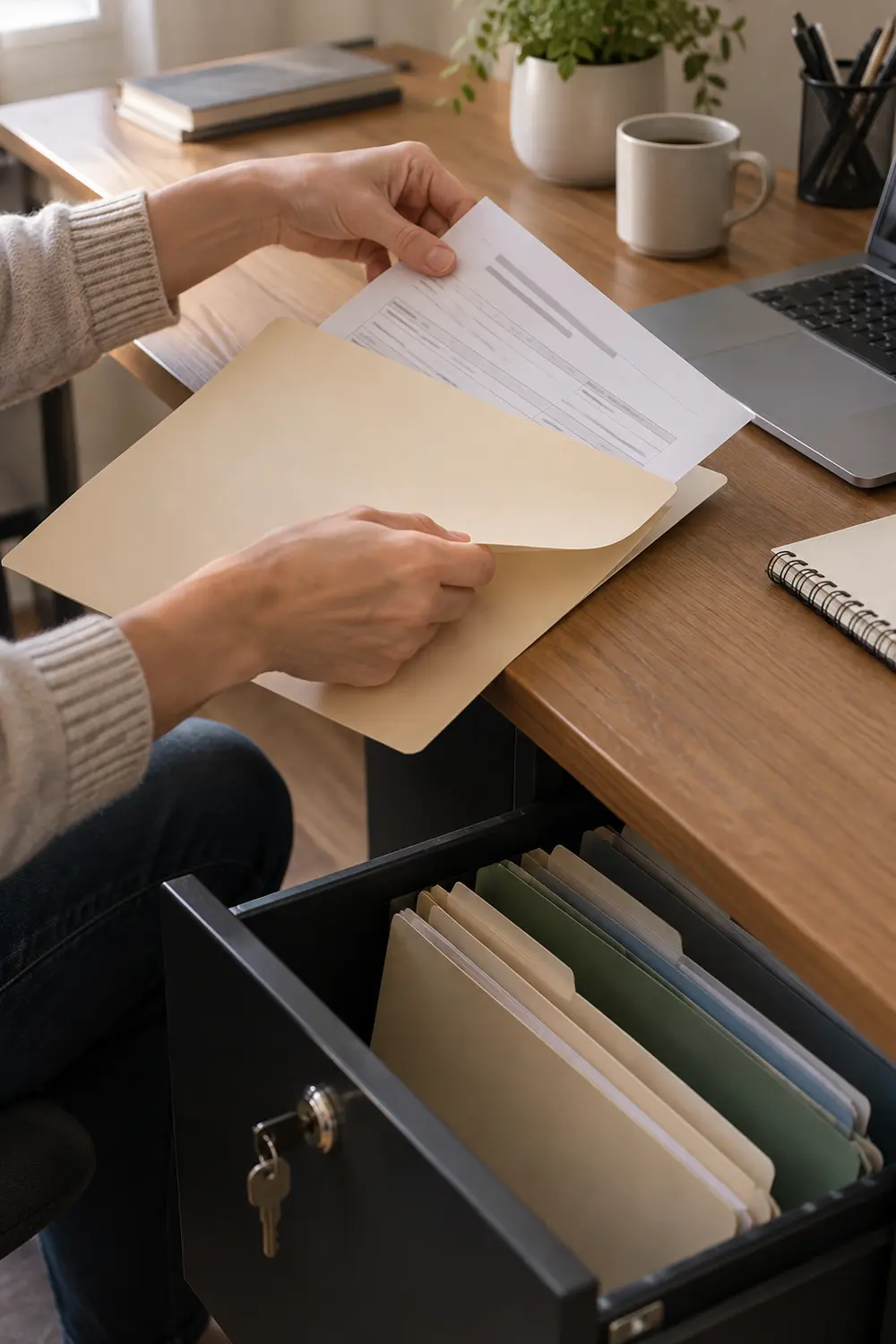
Use neutral labels or employer-approved identifiers rather than client names displayed across folder tabs. Keep any identifier key in the approved system, not on a sticky note beside the folders. A closed folder provides visual cover, not access control: whenever the papers would be unattended or accessible to others, return them to locked storage as your workplace rules require.
3. Choose storage for the required protection, not just the fit
Check what your employer means by secure storage before buying anything. A permitted locking file box may suit a few folders; a locking drawer may be more convenient for daily use. Neither is automatically sufficient for sensitive records, and a lightweight box can be carried away. Confirm any required lock, cabinet, anchoring, or room-security specifications rather than assuming a household furniture lock qualifies.
Measure the nook, furniture, drawer extension, and access route before committing. A cabinet that fits under the desk but cannot open without moving your chair will invite shortcuts. Follow manufacturer stability and anchoring instructions, and resolve rental restrictions before purchase. Store keys away from household access, not in the lock or a nearby pencil cup; keep combinations private too.
4. Move document trays out of passing sightlines
Look at the desk from the places other people actually stand: the entry, sofa, kitchen doorway, and video-call camera position. Move an open tray from the public-facing edge to the desk’s inward side, or replace it with an opaque lidded tray for attended work. Test with a fictional page, not a real client record, to see what remains visible.
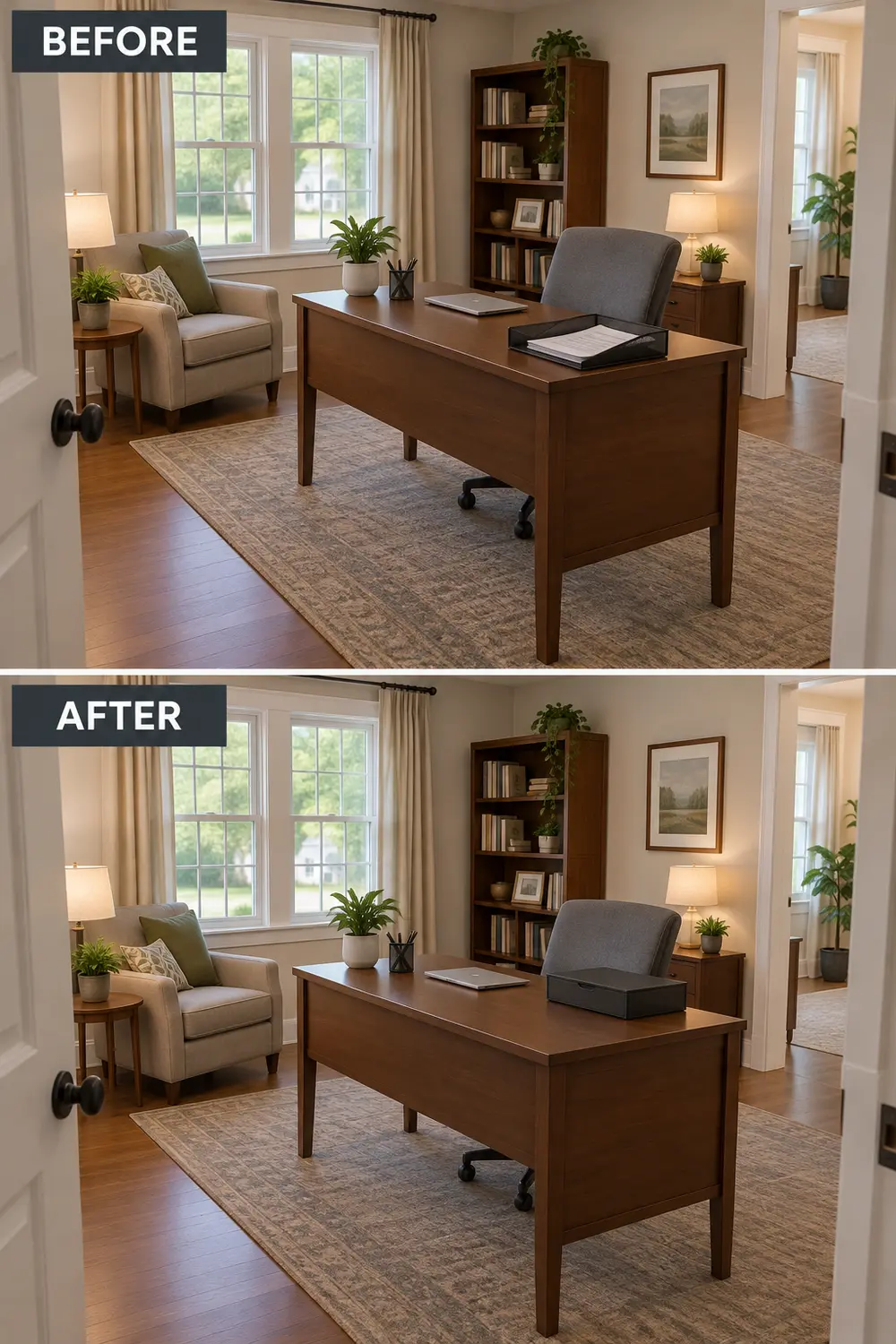
Sightline changes reduce casual viewing; they don’t stop someone from reaching over. Avoid treating a screen, curtain, or stack of books as secure storage. If rearranging the nook also improves household circulation, these ways to define a living-room work area can help establish its footprint. Keep exits, vents, and heaters clear as you adjust the arrangement.
5. Print only when you can collect the pages
Treat printing as an attended task: send the job, collect every sheet immediately, and check the output tray before leaving. Don’t start a sensitive print job on your way to school pickup. With a shared household printer, reserve a moment when you can stand nearby, and confirm that the selected device is the intended, employer-permitted printer.
Check page counts and retrieve misprints, duplicates, and pages caught during a jam, following the printer’s instructions. Those sheets need the same protection as the finished packet. A printer closer to the desk may help, but don’t crowd out working room or ventilation; these small-desk layout adjustments offer ways to preserve usable space without piling equipment around your hands.
6. Cover papers whenever they travel
Use an opaque, fully closing folder or permitted document case when carrying paperwork between the printer, desk, and locked storage. Loose pages held against your chest still expose the back sheet and can scatter when you reach for a handle. For a short trip across the apartment, a closed flap folder keeps the packet together and conceals its contents.
Leaving home is a separate decision governed by your employer’s transport rules, not an extension of household filing. Use any required approved carrier and keep it under your control. Don’t leave it in the entryway with shopping bags or assume an opaque envelope makes unattended car storage acceptable. Extra packaging adds a step, but prevents exposed pages from becoming your carrying method.
7. Give handwritten notes the same protection as printed records
A callback number scribbled on a pad can be just as revealing as a printed form. Use one work-only notebook or permitted note system rather than scattered sticky notes. Close it when interrupted and lock it away when unattended. A reusable cover can shield a page during attended work, but the notebook still belongs in secure storage when you leave.
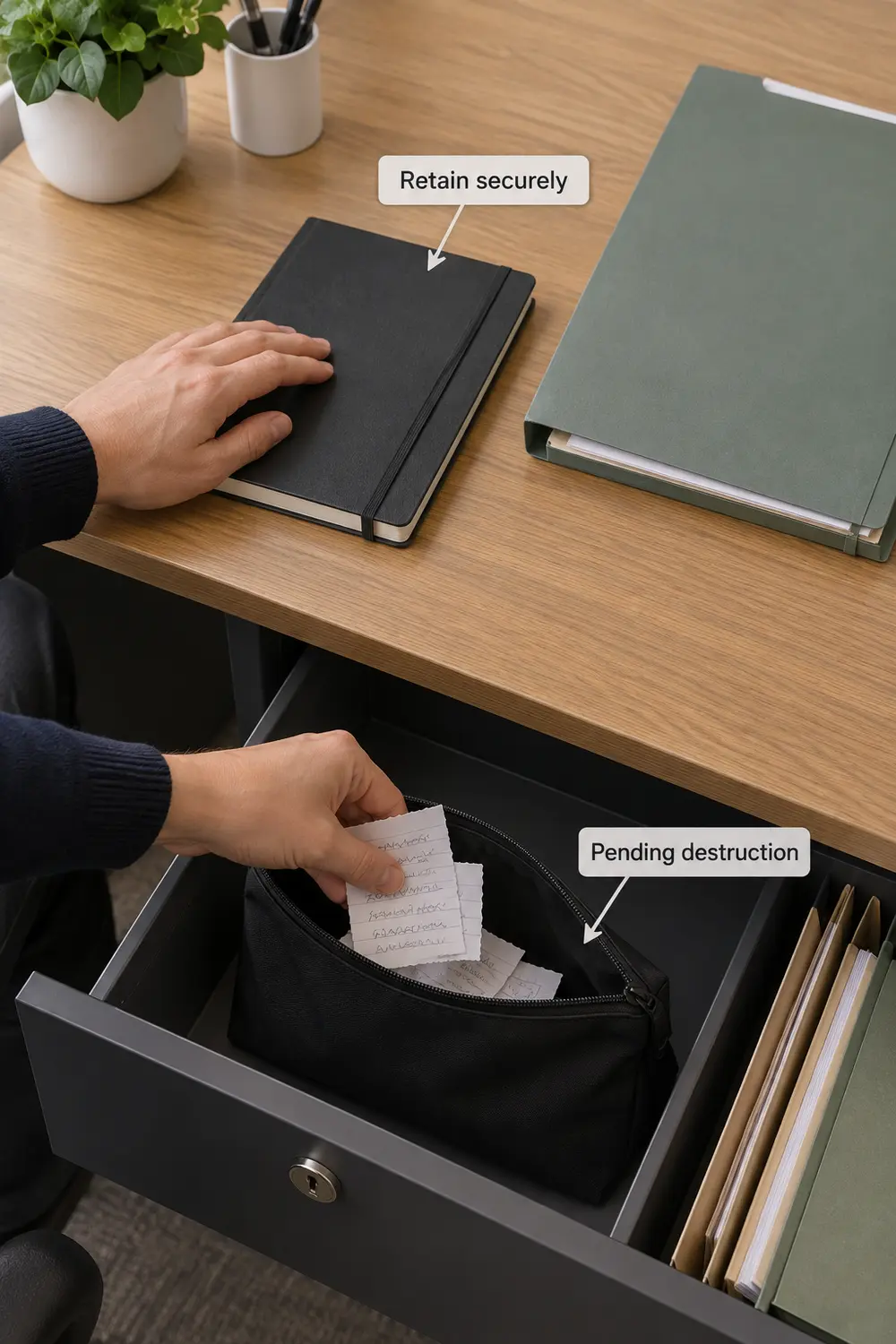
After a call, move necessary information into the authorized record if your process allows, then handle the original notes under the retention policy. Don’t assume transcription permits immediate destruction. Keep work details off the household calendar, fridge, and shared shopping pad. Tearing off the top page is not a reliable privacy fix, since handwriting impressions may remain on the sheet beneath.
8. Set retention rules before the drawer fills
Ask your employer which records must be kept, where the official record belongs, and who authorizes disposal. Include handwritten notes, working copies, envelopes, and duplicate printouts in that conversation. Don’t invent a household rule such as keeping everything for a year: requirements differ, and instructions to preserve particular records can override an ordinary destruction schedule.
Translate the approved policy into a simple review routine. If permitted, mark folders with a neutral review date and check them on a scheduled day, without exposing client names on the cabinet exterior. A review date means assess, not automatically discard. When storage approaches capacity, arrange an approved transfer or disposal instead of letting overflow migrate into an unlocked closet.
9. Lock up the material awaiting destruction
Create a distinct, secured place for papers approved for destruction. An opaque pouch inside your permitted locked cabinet can separate them from active files; a dedicated locked collection container may be required instead. Never use an open wastebasket under the desk. A visitor emptying trash—or a child looking for drawing paper—shouldn’t encounter a rejected client printout.
Follow the employer-approved destruction method and timing. A household shredder is suitable only if it meets those requirements; tearing sheets by hand is not a substitute. If records must go back to an office or approved service, arrange that route before the container fills. Follow equipment instructions and keep children and pets away during shredding. Don’t let a disposal backlog become permanent storage.
10. Finish with a repeatable clear-desk check
Close the workday by checking the same places in the same order: desktop, printer, notebook, transport folder, and pending-destruction container. Return retained papers to storage, secure disposal material, lock the cabinet, and remove the key. Look from the room’s public side once more. A page tucked under a keyboard or left on the chair can escape a quick glance from your usual seat.
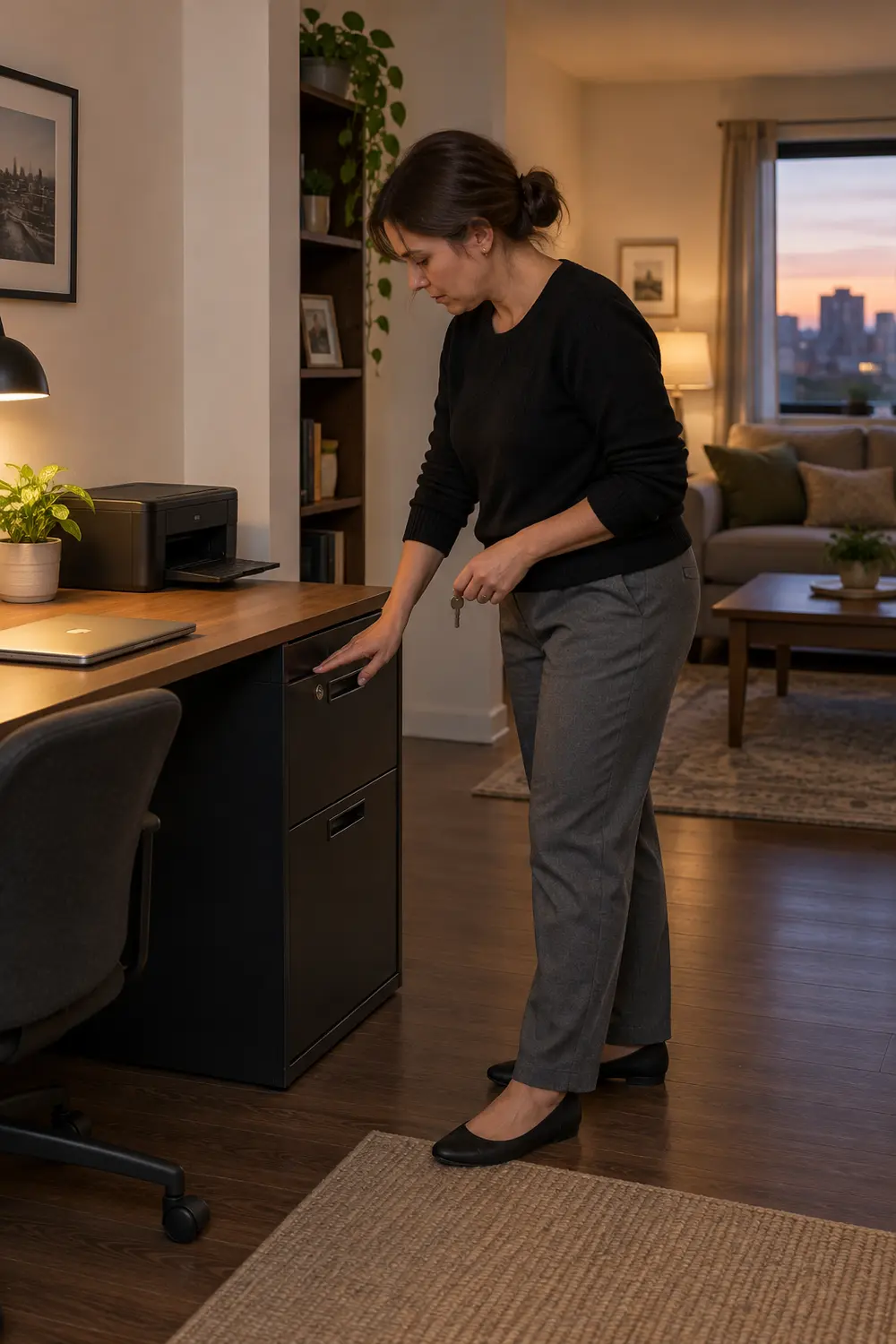
Use a short reminder with no client information if the sequence is easy to forget. Build a shorter lock-away version for lunch, deliveries, and other interruptions; the evening routine doesn’t excuse daytime exposure. Ask household members not to use work paper or move folders, while recognizing that a family agreement supports physical safeguards rather than replacing them.
First, confirm what paper handling your employer permits. Then walk from the entry to your desk and identify where a page could be seen or picked up. Establish an approved locked destination before adding trays, folders, or more storage.
Leave a Reply