A linen closet can hold plenty and still make a clean pillowcase surprisingly hard to find. The problem is often a mismatch between shelf depth, folded sizes, and what your household actually uses. Start with the closet you have, not a shopping list of organizers. These ten changes create clearer storage for towels and bedding without demanding matching linens or a larger home. All dimensions below are approximate planning guidelines; measure your shelves, door opening, and comfortable reach before making changes.
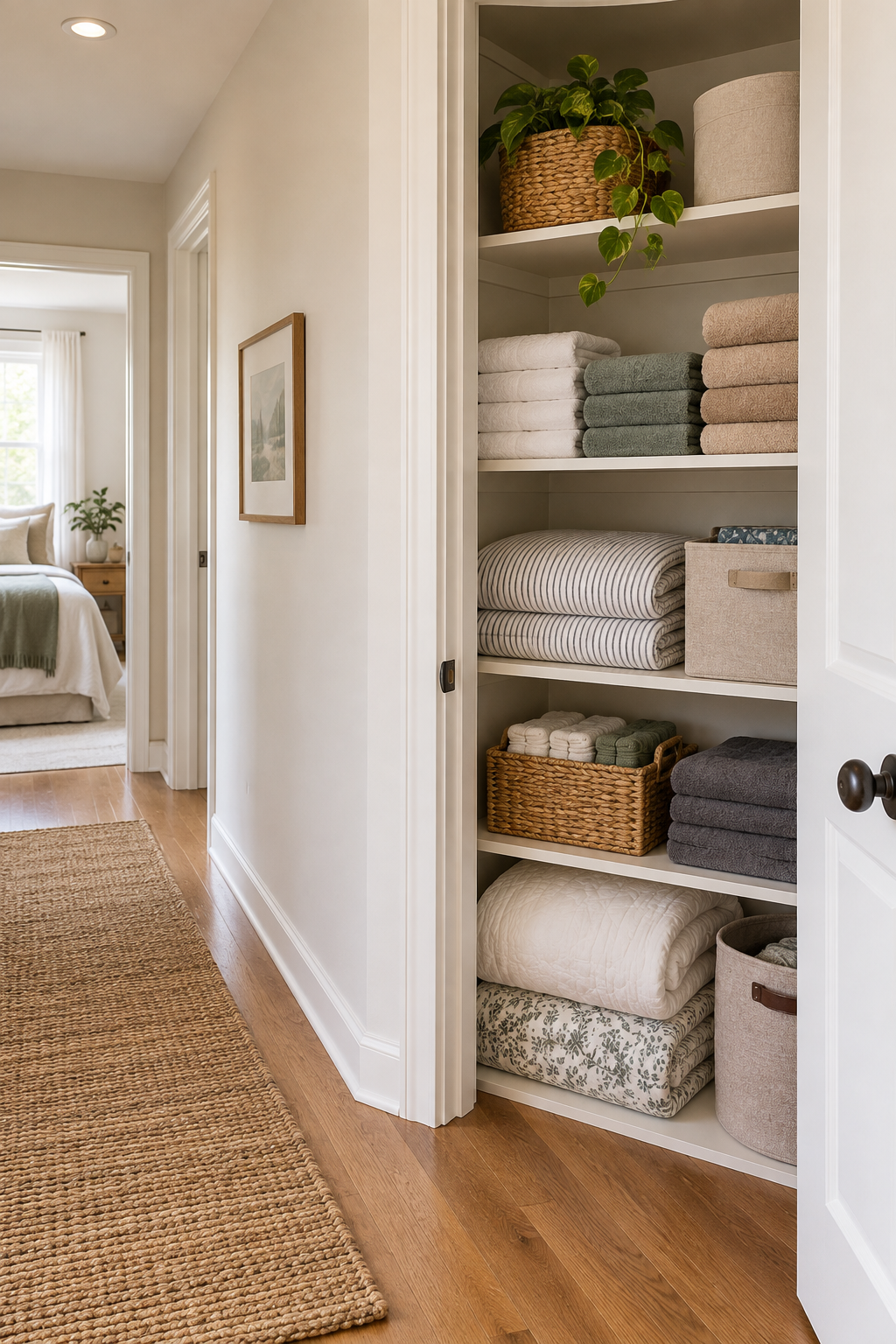
1. Set Inventory Limits Around Your Laundry Routine
Empty one shelf at a time and count complete, usable linens by bed and person. Set a working limit that reflects laundry frequency rather than an idealized minimum. For example, a household that washes sheets weekly might keep one set on each bed and one clean replacement, then add extras for overnight guests, illness, or children who need frequent changes.
The mistake is treating every extra as clutter or keeping everything for an undefined emergency. Keep a deliberate buffer where household needs justify it, and separate worn cleaning towels from bathing towels. Aggressive limits are unsuitable when laundry access is unreliable or care needs create frequent changes. The goal is a manageable inventory, not a closet that looks nearly empty.
2. Turn Deep Shelves Into Pull-Forward Storage
Measure shelf depth and the usable door opening, including hinges. On a deep shelf, use a lightweight open bin that brings the back contents forward in one motion. A bin roughly 16–20 inches deep may suit some closets, but dimensions vary. For example, keep washcloths and hand towels upright in one removable bin instead of losing them behind bath towels.
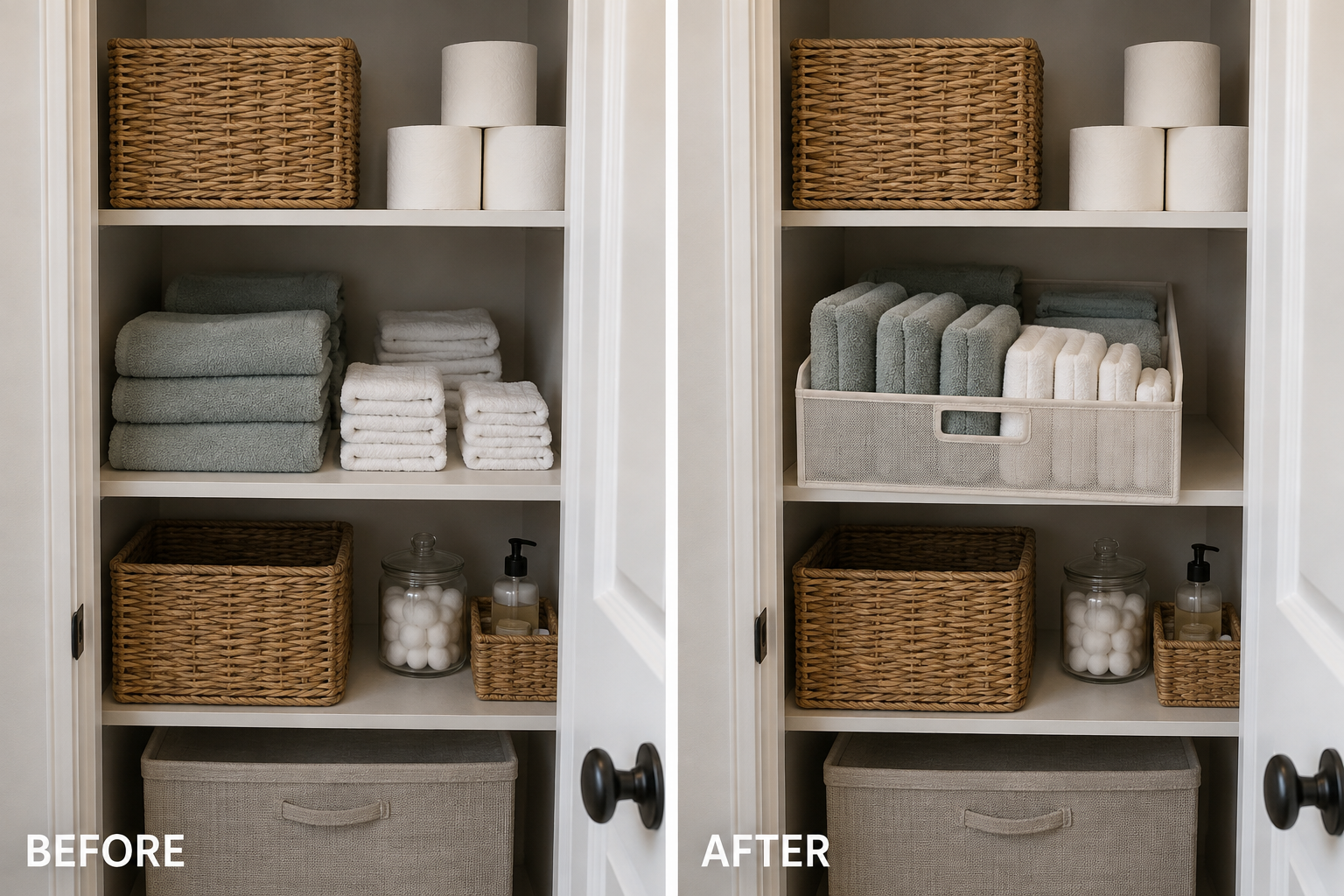
Avoid buying containers based only on shelf width. A bin can fit inside yet catch on the door frame when pulled out. Full-depth containers also become awkward when packed with heavy bath sheets. Choose easy-grip sides and manageable loads; skip this approach where the opening is too narrow or pulling a loaded bin feels unstable.
3. Fold to the Shelf Footprint
Choose the finished fold by measuring the storage space, not by copying a universal towel fold. On a shelf about 12 inches deep, test a bath towel folded into thirds lengthwise and then into a compact rectangle. Adjust until it sits fully supported, with its folded edge visible. Use that towel as the template for the rest of the stack.
Overly elaborate folds waste time if nobody repeats them after laundry day. Thick towels may need a different fold from thin ones, and rolling can create unstable pyramids on open shelves. Favor a simple, repeatable shape over perfect uniformity. If a fold requires compression to fit, reduce the stack or choose another shelf rather than forcing the door closed.
4. Give Everyday Linens Your Easiest Reach
Place frequently used towels and replacement sheets where the people using them can retrieve them comfortably. For many adults, that means shelves between roughly waist and shoulder height, but test your own reach. A family might give children a lower towel shelf, keep everyday sheets in the middle, and reserve the highest shelf for lightweight, rarely needed guest linens.
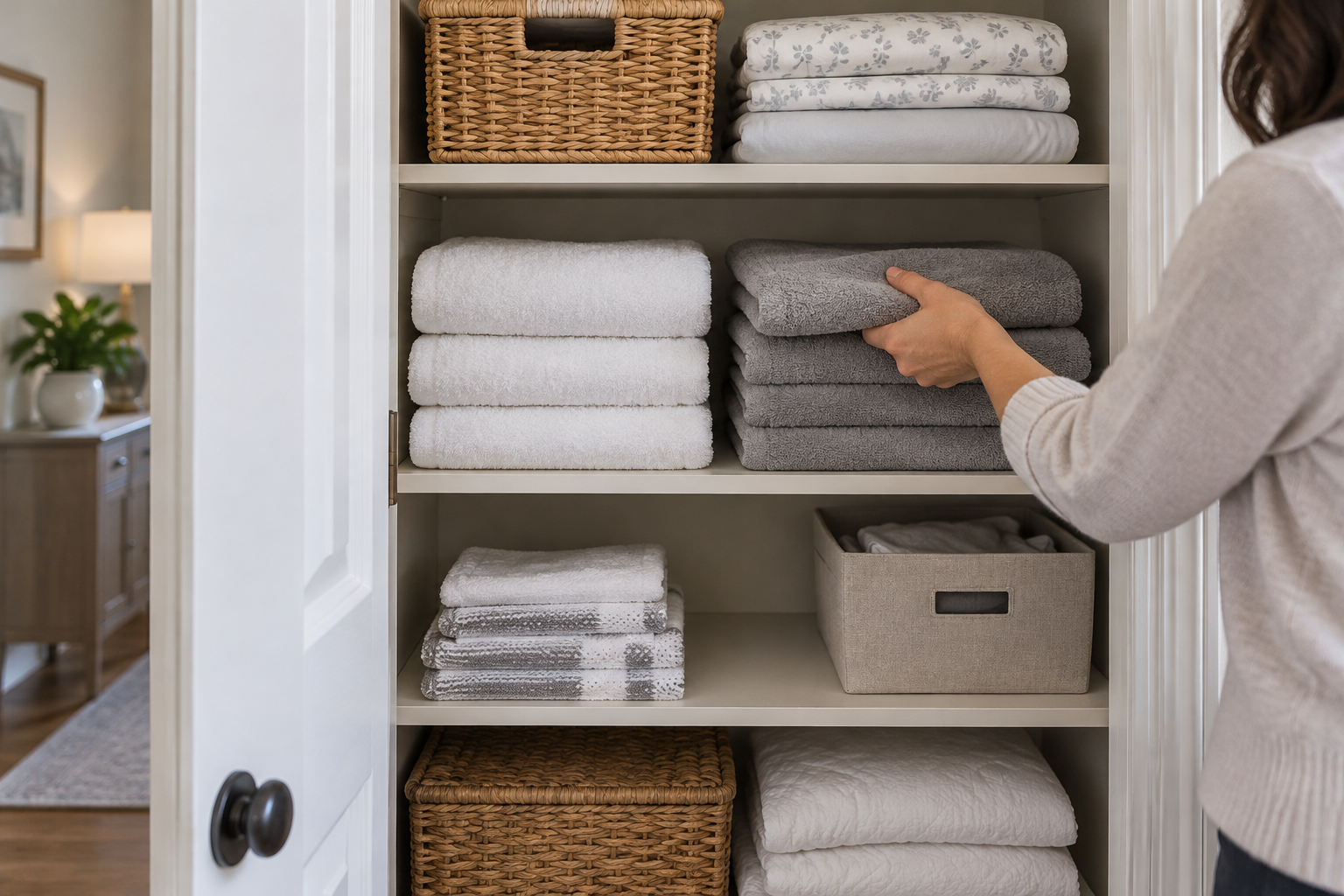
Do not use the highest shelf for heavy stacks simply because it has spare room. Overhead lifting can turn a routine change into a balancing act. These zones are personal planning choices, not accessibility standards. If upper storage requires a step stool, use a stable one on a clear floor; never climb shelves or leave a stool blocking the hallway.
5. Keep Each Sheet Set Together
Fold a fitted sheet, flat sheet if used, and matching pillowcases into one bundle. Slip the pieces inside one pillowcase, leaving the opening loosely tucked rather than stretched tight. For example, place two queen sets side by side so either comes out as a complete package. Separate different bed sizes with distinct shelf positions or simple shelf-edge labels.
Bundling fails when unrelated spare pillowcases get stuffed into every available opening. Keep unmatched extras in their own small section. Deep-pocket sheets and multiple king pillowcases may make a pillowcase bundle too bulky; use a loose fabric wrap or a dedicated shelf space instead. Whatever the method, dry every piece thoroughly before enclosing it, especially at seams and elastic edges.
6. Divide Wide Shelves Into Stable Stacks
Use removable shelf dividers to stop neighboring stacks from leaning into each other. Give bath towels one bay and hand towels another, leaving enough room for fingers at each side. Start with stacks of about four bath towels and test retrieval. If removing the bottom towel topples everything, shorten the stack or add a compatible freestanding shelf insert.
A divider organizes sideways movement; it does not strengthen a sagging shelf. Check that clips suit the shelf thickness and will not damage a rental finish. Inserts also consume vertical space and may not suit thick quilts. Avoid tall, narrow freestanding arrangements that tip during use, and follow anchoring instructions for any storage unit that requires attachment.
7. Leave Air Paths Around Stored Linens
Leave small gaps between stacks and keep fabric from pressing against the back wall. About an inch of rear clearance is a useful starting point where depth allows. For example, spread three towel stacks across a shelf rather than clustering them tightly in one corner. In a humid home, breathable containers and fully dry linens matter more than squeezing in another layer.
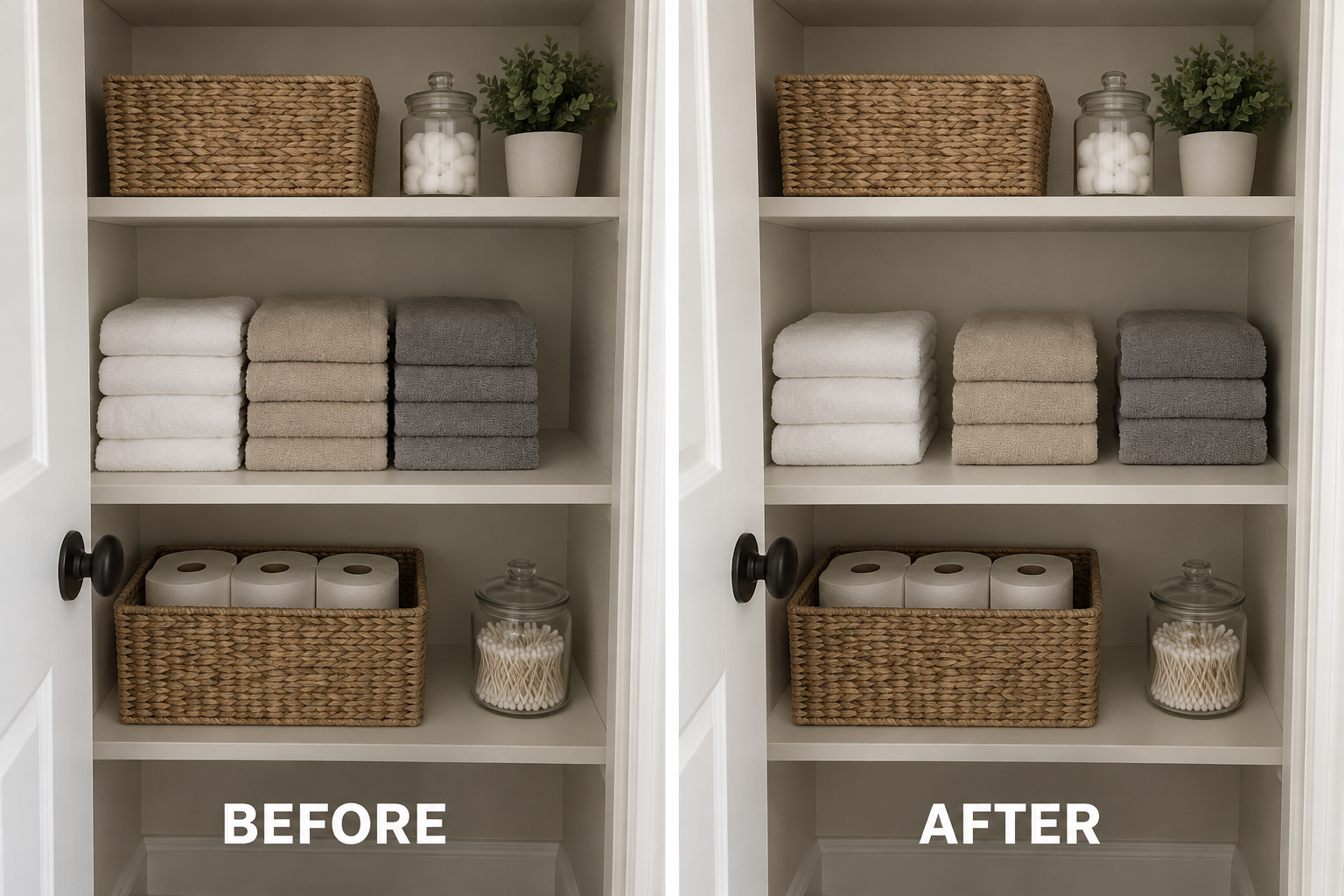
Gaps cannot fix an active leak, condensation, or persistent dampness. Investigate those conditions before putting clean textiles back. Avoid airtight packaging for routine storage unless the linens are completely dry and conditions are appropriate. Leaving the door open briefly may help air exchange, but it is unsuitable if the door obstructs a passage or creates a household hazard.
8. Create a Separate Landing Spot for Used Towels
Keep the clean linen closet from becoming temporary storage for damp towels. Give used towels a drying spot in the bathroom or laundry area, then move them to the hamper when dry. For example, a freestanding towel rack can handle towels awaiting laundry while a small basket elsewhere collects dry, worn linens. This protects clean inventory from accidental mixing.
Hooks are convenient, but several wet towels layered on one hook dry poorly. A rack also needs floor space and should not narrow an exit path or crowd a heater. In rentals, get permission for drilled hardware and check surface requirements for removable products. If no safe drying spot exists, adjust laundry timing rather than stuffing damp textiles into the closet.
9. Use the Door Only for Lightweight Small Linens
A shallow door organizer can move washcloths or spare pillowcases off crowded shelves. Measure the gap between the closed door and shelf fronts before choosing one, then test the door through its full swing. For example, a slim fabric pocket panel may hold rolled washcloths while leaving the shelves available for larger towels and bedding.
Over-door hooks can scrape trim, prevent latching, or place too much weight on the door. Keep loads light and follow hardware limits; do not assume every hollow-core door accepts screws. Rental approval may be needed. Skip door storage when it interferes with closing, swings into a tight passage, or hides contents from someone who needs a simpler system.
10. Give Bulky Bedding One Measured Home
Reserve a defined lower shelf for a spare comforter or seasonal blanket in a breathable zippered bag with handles. Measure the filled bag, not its empty packaging dimensions, and leave room to pull it straight out. For example, one guest comforter can occupy a single bag while its matching sheets stay in the everyday sheet zone.
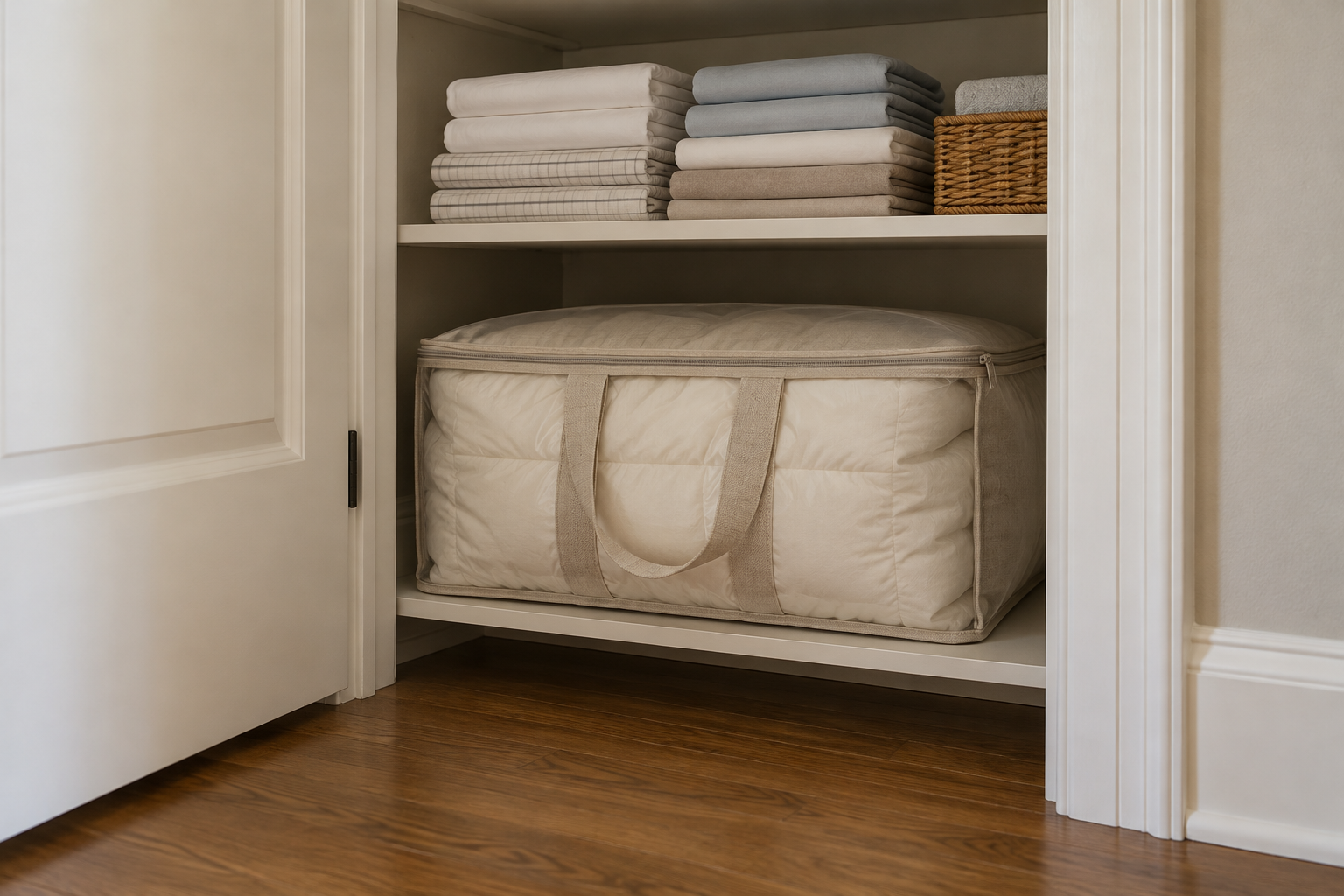
Do not turn that shelf into a compressed tower of every blanket in the house. Vacuum bags save volume but can leave bedding creased, and some fills need gentler storage; follow care guidance. A heavy bag may be unsuitable for someone who cannot lift from a low position. Move it to another measured, dry location rather than blocking the closet floor.
A useful linen closet lets you take one item without rearranging five others. Start with inventory, then test shelf depth, folding, and reach before adding organizers. After the next laundry cycle, notice what was easy to put away and what resisted. Keep the changes your household can repeat, with enough breathing room for both the linens and the routine.
Leave a Reply