Your friend can stay Saturday night—but once a second bed opens, where does the coffee table go, and can either of you reach the bathroom? Hosting in a studio works better when you plan a temporary sleeping place, not a second bedroom. You can keep your own bed and most of your daytime arrangement, provided the guest setup has a workable footprint, a storage home, and a clear pack-away routine.

1. Test the bed with someone actually lying on it
Measure the proposed sleeping place before committing to equipment. A roughly 30-by-75-inch cot may fit on paper, but its frame, bedding, and the person getting into it need room too. Use the actual product dimensions to mark a footprint with removable tape suitable for your floor, then check the room, furniture, door swings, and access routes.
If you can borrow the bed first, open it completely and have someone lie down, turn over, and get up. Check whether feet extend into the kitchen route or a blanket catches a cabinet handle. Relocate the coffee table to a measured parking spot—not the entryway. A setup that fits only with the exit blocked does not fit.
2. Choose a cot or floor mattress by its stored shape
Compare where each option lives between visits, not just how it looks open. A folding cot becomes a narrow but sometimes tall bundle; a folding foam mattress becomes a shorter, bulkier stack. Measure the folded dimensions against a specific storage spot, such as the closet’s lower compartment. Include handles, hinges, and the space needed to pull it out.
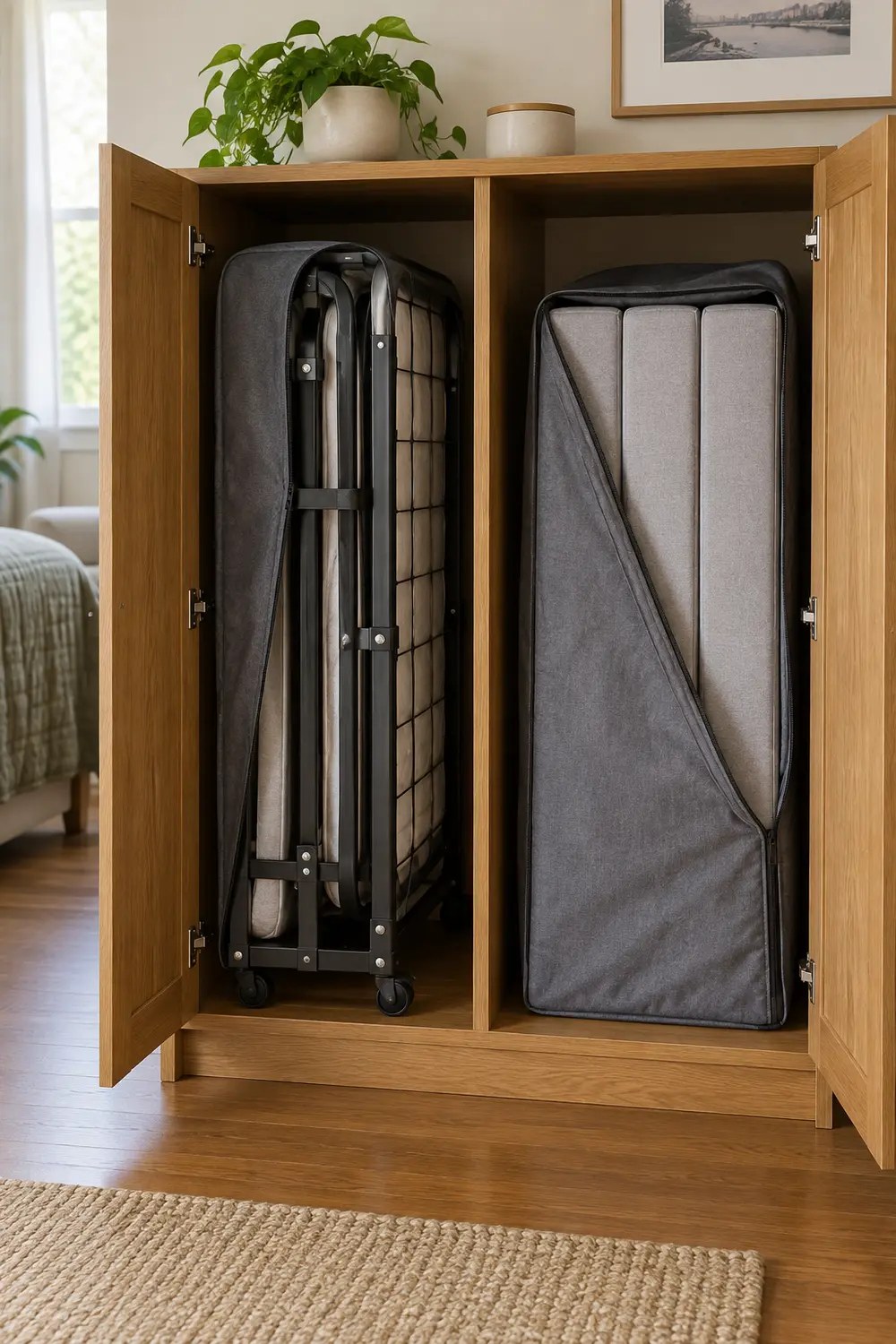
Then consider the guest. A floor mattress requires getting down to floor level; a cot offers a raised surface but may feel narrow or have noticeable support bars. Ask what they can comfortably use rather than assuming. Follow the manufacturer’s weight limits and setup instructions, and never perch a floor mattress on improvised furniture to raise it.
3. Rehearse the setup before a late arrival
Run through the entire job once: move the table, retrieve the equipment, open it, and make the bed. This reveals effort that dimensions miss. A cot stored behind a vacuum and three bins may technically have a home, yet require emptying half the closet every visit. Move frequently used guest equipment closer to the front.
For a guest arriving after dinner, you might shift the dining chairs beforehand while leaving the bed folded until you finish eating. If the same floor area serves both purposes, these pack-away dining setups can help you choose furniture that clears more easily. Frequent visits may justify easier equipment; occasional hosting may not justify replacing furniture.
4. Store guest bedding as one complete kit
Gather a correctly sized sheet, pillowcase, light blanket, and any mattress protector into one labeled bag or bin. Keep the guest pillow with it if space allows, without crushing everything into an overfilled container. The improvement is practical: instead of hunting through several shelves, you retrieve one kit and know which pieces belong to the temporary bed.
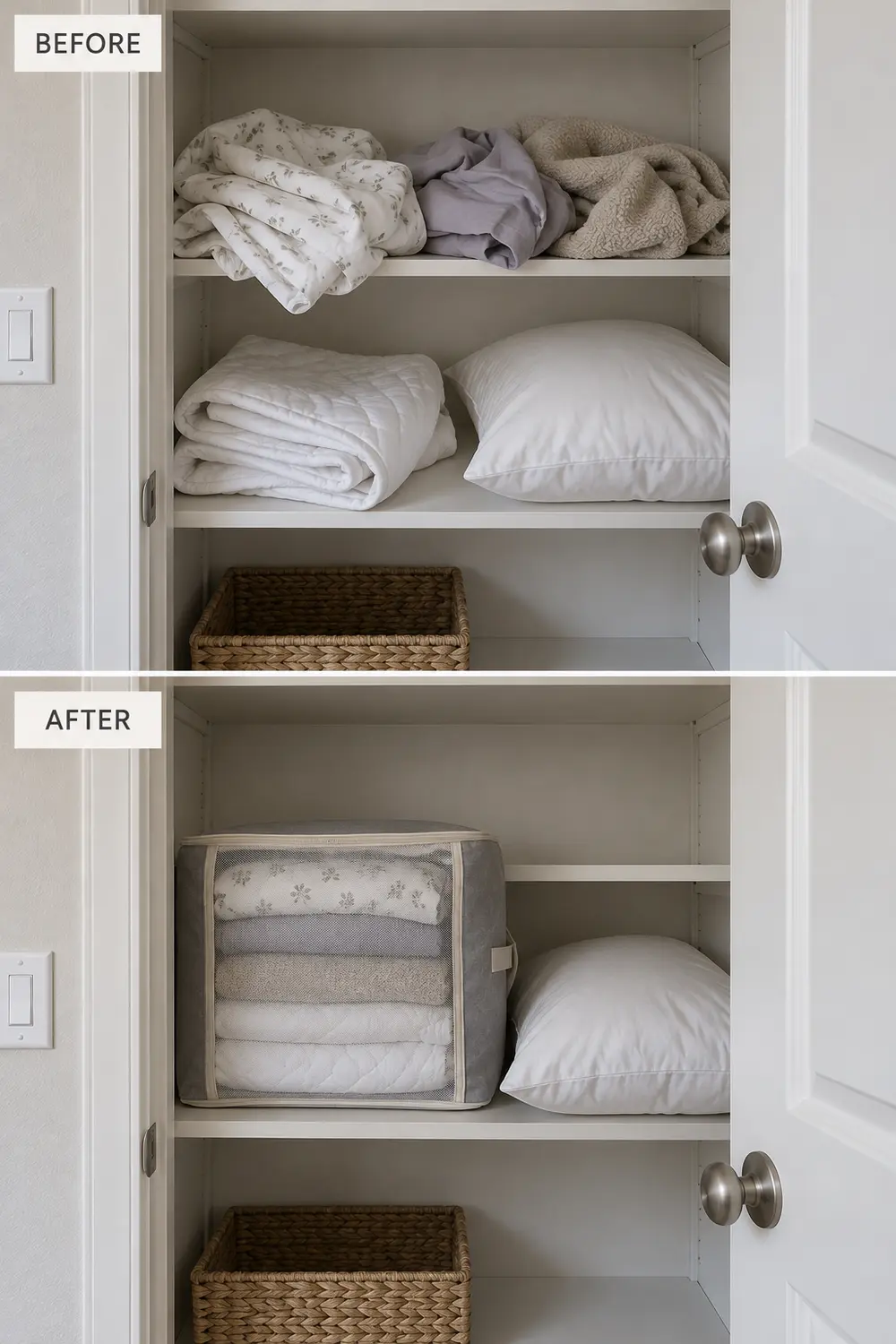
Use what you already own where sizes work, but test the fit: a sheet that repeatedly slips off a narrow mattress is an irritating overnight compromise. Store the kit only when everything is fully dry. If finding room means sorting the whole shelf, start with this linen closet storage reset rather than buying another container.
5. Give the guest a reachable landing spot
From the guest bed, check where glasses, a phone, water, and a small light can go. A stable stool or cleared shelf may do the job without adding permanent furniture. For a floor mattress, a low tray beside the head can work, provided it sits outside the place where the guest steps when getting up.
Charge a portable light before the visit so it does not introduce a cord across the floor. Keep water away from electrical connections, and avoid balancing a heavy lamp on a narrow folding surface. These bedside storage solutions offer other compact options, but choose one the guest can reach without leaning over an unstable edge.
6. Assign luggage a parking place before it arrives
Clear a luggage spot that remains usable after the bed opens. An empty lower shelf, a corner beside the dresser, or space beneath a compatible raised cot may hold a small bag. Check under-cot storage against the frame and manufacturer’s instructions; luggage must not interfere with supports or the bed’s stability.
Tell your guest if a soft overnight bag will be easier to accommodate than a large suitcase. For a rolling case, plan where it can open briefly for unpacking, then close it again before bedtime. Do not count on the hallway, entrance, or bathroom doorway as overflow storage. If no luggage spot exists, reduce another item’s footprint before adding the bed.
7. Walk the nighttime route with the bed open
After setup, walk from both sleeping places to the bathroom and apartment exit. Open the relevant doors fully and look for cot legs, loose bedding, rug edges, and bags along the route. As an approximate planning target, try to preserve a continuous path about 30 inches wide where possible; this is not a building-code or accessibility standard.
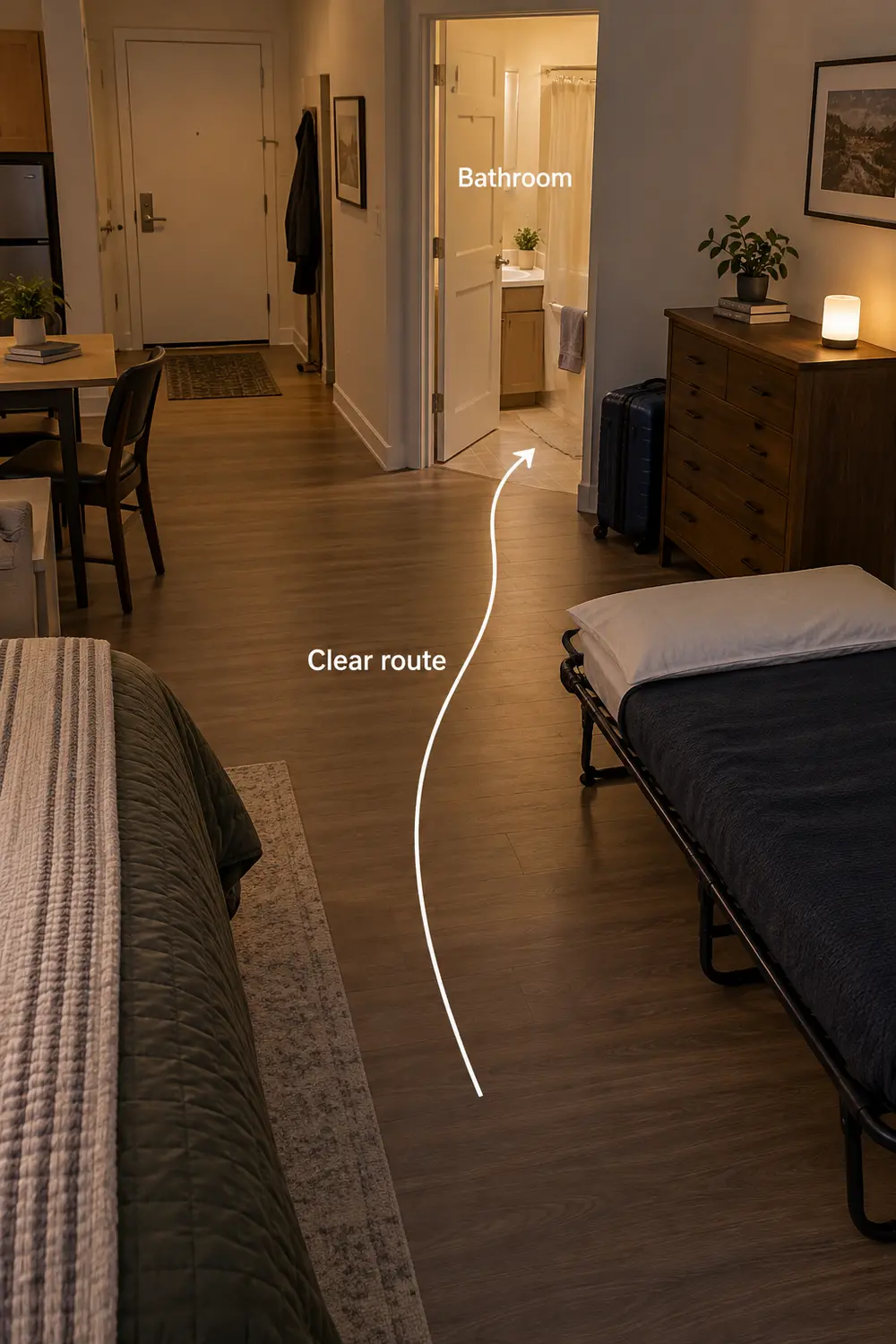
Walk it again with the overhead lights off and a small night-light on. Neither person should have to step over the other’s bedding. Keep exits clear regardless of the available width, and maintain required heater and appliance clearances according to manufacturer instructions. If reaching the bathroom requires climbing across a bed, change the arrangement or reconsider the overnight plan.
8. Agree on lights-out before anyone is tired
A temporary bed does not solve different sleep schedules. Discuss bedtime, wake-up time, and the last bathroom trip while you are still making plans. If you need to answer work messages after your guest turns in, identify a seated spot with a directed light that does not shine across their pillow, and silence notifications.
Explain the morning realities too: the coffee grinder, a pet’s breakfast, or an early video call may affect sleep more than the mattress does. Headphones help with audio, not conversation or bright screens. A sleep mask can be offered, but it should not substitute for agreeing on reasonable quiet hours in a room you both occupy.
9. Air the bedding before putting it away
When your guest gets up, pull back the covers rather than immediately bundling everything into storage. Remove used sheets for laundering and give the sleeping surface time to air, following its care instructions. For a floor mattress, check the underside as well; do not fold it away with a damp surface trapped inside.
If the manufacturer permits standing the mattress on edge, use a stable position away from doors and heaters while you have breakfast. Keep ventilation openings clear, and do not drape bedding over a heater to hurry drying. Airing adds a delay to the morning reset, so plan a temporary spot that does not obstruct your exit or work area.
10. Put the room back in a repeatable order
Choose a morning sequence that restores the living area without burying unfinished jobs. Move luggage to its daytime parking spot, strip and air the bedding, then fold and store the sleep equipment once it is ready. Return the coffee table and chairs last. You should not have to move the same chair three times to reach the storage cabinet.

Make the timing explicit if you work from home: “I need this floor clear by nine” is more useful than silently packing around a sleeping guest. Replace the clean, dry linens in their kit later rather than delaying the whole room reset for laundry. A quick check for forgotten chargers and glasses finishes the job without turning departure into a major cleanup.
Start by marking the proposed bed’s full footprint and walking from your own bed to the bathroom and exit. If that arrangement works, choose equipment you can both store and set up comfortably. If it does not, solve the layout before buying bedding or promising the overnight stay.
Leave a Reply