A small living room often handles several jobs: a place to unwind, welcome friends, fold laundry, and sometimes work. The most useful small living room ideas start with those routines rather than a shopping list. These ten approaches help you decide what deserves floor space, what can move, and where a modest change will make daily life easier. All dimensions below are approximate planning guidelines; measure your room, furniture, doorways, and clearances before buying or rearranging.
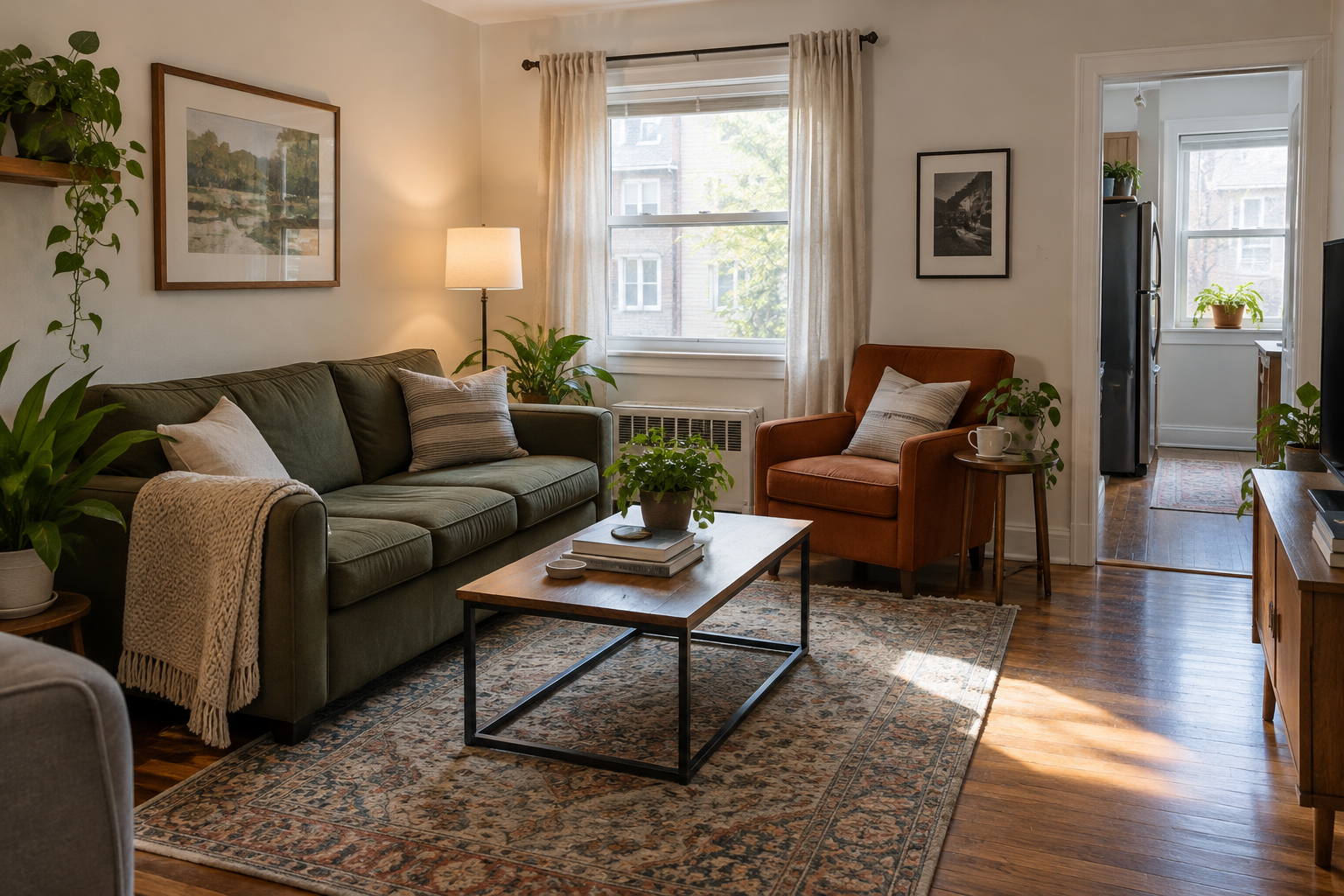
1. Protect the Route You Use Most
Map the walk from the entry to the next room before positioning seating. Aim for about 30–36 inches along the main route as an approximate planning guideline, allowing more for accessibility needs. In a living room that connects to a kitchen, shifting the sofa a few inches toward the window may create a continuous passage behind it without changing the entire arrangement.
A common mistake is centering every piece on the room instead of respecting how people move through it. An off-center arrangement can look less formal, but it often functions better. This approach may not suit a room where moving the sofa would block a heater, door swing, or essential outlet; in that case, reduce furniture depth rather than forcing a passage.
2. Choose a Sofa by Usable Seating, Not Bulk
Compare a sofa’s seat width with its overall width. Slim arms can preserve sitting space without consuming extra floor area, while moderate depth leaves room in front. For example, a sofa about 72 inches wide may accommodate your household better than a bulky loveseat with oversized arms. Tape the footprint on the floor and check how the seat depth feels in person.
Buying the smallest sofa available is a common mistake when it leaves everyone uncomfortable. Narrow arms may be less pleasant for leaning, and a shallow seat may disappoint someone who likes curling up. This strategy may not suit a household that needs a sleeper sofa or supportive reclining seats. Prioritize those requirements, then simplify the other furniture around the larger piece.
3. Add Guest Seating That Can Change Jobs
Let occasional seating serve another purpose between visits. A firm upholstered stool can sit beneath a console, then move beside the sofa when a friend arrives. A lightweight dining chair can also join the conversation area. For example, keep one attractive wood chair at a small desk and bring it forward for short gatherings instead of permanently squeezing in another armchair.
The mistake is counting every stool as equivalent to a comfortable chair. Backless seating saves space but offers less support, especially during long visits. Moving furniture also creates a small setup task each time guests arrive. This idea may not suit households that entertain frequently or need supportive seating for older relatives; one permanent, well-chosen armchair may be the better investment.
4. Break the Coffee Table Into Smaller Surfaces
Replace one large coffee table with nesting tables or two compact side tables when the center of the room needs flexibility. Keep a surface within comfortable reach of each primary seat. For example, a small round table beside the sofa can hold a mug while a nesting partner slides forward for snacks, then returns underneath when you want floor space for stretching.
Choosing tables that are too light or too small is a common mistake; they can wobble or become crowded after one drink. Separate surfaces improve flexibility but provide less continuous space for games or shared meals. This approach may not suit a room where the coffee table regularly serves as a dining spot. A single stable table could better support that routine.
5. Use One Rug to Connect the Seating
Choose a rug that connects the sofa and primary chair rather than sitting alone beneath the coffee table. As an approximate planning guideline, placing the front legs of the main seats on the rug usually creates a coherent group. In a compact apartment, test a 6-by-9-foot footprint with tape before assuming a smaller rug is the only option. Measure nearby door clearances too.
A common mistake is choosing a tiny rug because the room is tiny, which can make the seating look disconnected. A larger rug brings visual continuity, but it costs more to clean and may cover flooring you enjoy. This idea may not suit a room with difficult door clearance or a household that needs especially easy rolling access; a low-pile option or bare floor may work better.
6. Put Closed Storage Where Clutter Collects
Locate storage beside the activity that creates the mess. A shallow cabinet near the sofa can hold chargers, game controllers, and reading glasses; a lidded basket can contain throws. For example, replace an open accent table with a small cabinet that has one drawer and an adjustable shelf. Check the interior dimensions against the actual objects, not just the cabinet’s exterior footprint.
The common mistake is adding storage without leaving room to open it. Doors and drawers need clearance, and closed cabinets can feel visually heavier than open tables. This solution may not suit a narrow pinch point beside the entry or a spot where a recliner extends. Consider sliding doors or accessible baskets instead, while keeping frequently used items easy to retrieve.
7. Use Wall Height Without Filling Every Inch
Concentrate vertical storage in one useful zone, such as a tall bookcase beside the media cabinet. Keep everyday items on reachable shelves and reserve higher shelves for lightweight, infrequently used belongings. For example, a narrow bookcase can hold books below shoulder height and a few fabric bins above. Anchor furniture according to its instructions and confirm that the wall and fasteners are suitable.
Filling every wall with shelves is a common mistake that trades floor clutter for visual clutter. Vertical storage increases capacity, but reaching high items can be inconvenient and anchoring may require landlord approval. This idea may not suit walls with unsuitable construction or rooms where safe anchoring is not possible. A lower, stable storage unit is preferable to an unsecured tall piece.
8. Keep Window Treatments Clear of Daily Obstacles
Choose window coverings around how the window, radiator, and nearby furniture operate. Where wall space allows, extending a curtain rod beyond the frame lets panels stack away from the glass. For example, use simple panels that stop just above the floor beside a sofa, or select an inside-mounted shade when curtains would brush a desk. Confirm mounting permissions in a rental.
Hanging long panels automatically is a common mistake when fabric would cover a heat source or catch behind furniture. Curtains soften a room, but they require stacking space and cleaning; shades keep the perimeter simpler. This approach may not suit windows close to cooking splatter, damp areas, or heating equipment. Follow equipment clearance instructions rather than prioritizing a particular curtain length.
9. Give Each Lighting Source a Specific Job
Combine general illumination with light where you read or work. A compact floor lamp beside a chair and a small table lamp across the room can provide useful coverage without a large central fixture. For example, place an adjustable reading light behind the chair’s shoulder, then use a shaded lamp on a cabinet for softer evening light. Keep cords outside walking routes.
The mistake is adding lamps wherever an outlet happens to be, leaving glare at eye level or cords crossing the floor. Multiple lights offer control but occupy surfaces and require accessible switches. This setup may not suit a room with very limited outlets or no safe cord route. A well-positioned ceiling fixture and one task light may be a more practical combination.
10. Build a Calm Backdrop With a Few Repeated Colors
Create visual continuity by repeating two or three colors across the room rather than matching every object. Start with a piece you already own, such as a blue sofa, and echo that color in one print or pillow. Warm off-white walls, wood furniture, and a muted rust accent can then provide variety without making each corner compete for attention.
A common mistake is interpreting coordination as a requirement to replace everything or use only pale neutrals. A restrained palette can feel calmer, but too much matching can flatten the room’s character. This approach may not suit someone who enjoys a lively collection of colorful art. Keep the surrounding large surfaces quieter instead, allowing the collection to remain the focus.
Start with the inconvenience you notice most, whether it is a blocked walkway, an unreachable lamp, or nowhere to set a drink. Test one change using furniture you already have, then live with it before buying anything. A successful small living room does not need every space-saving trick; it needs a few thoughtful choices that fit the people using it.
Leave a Reply