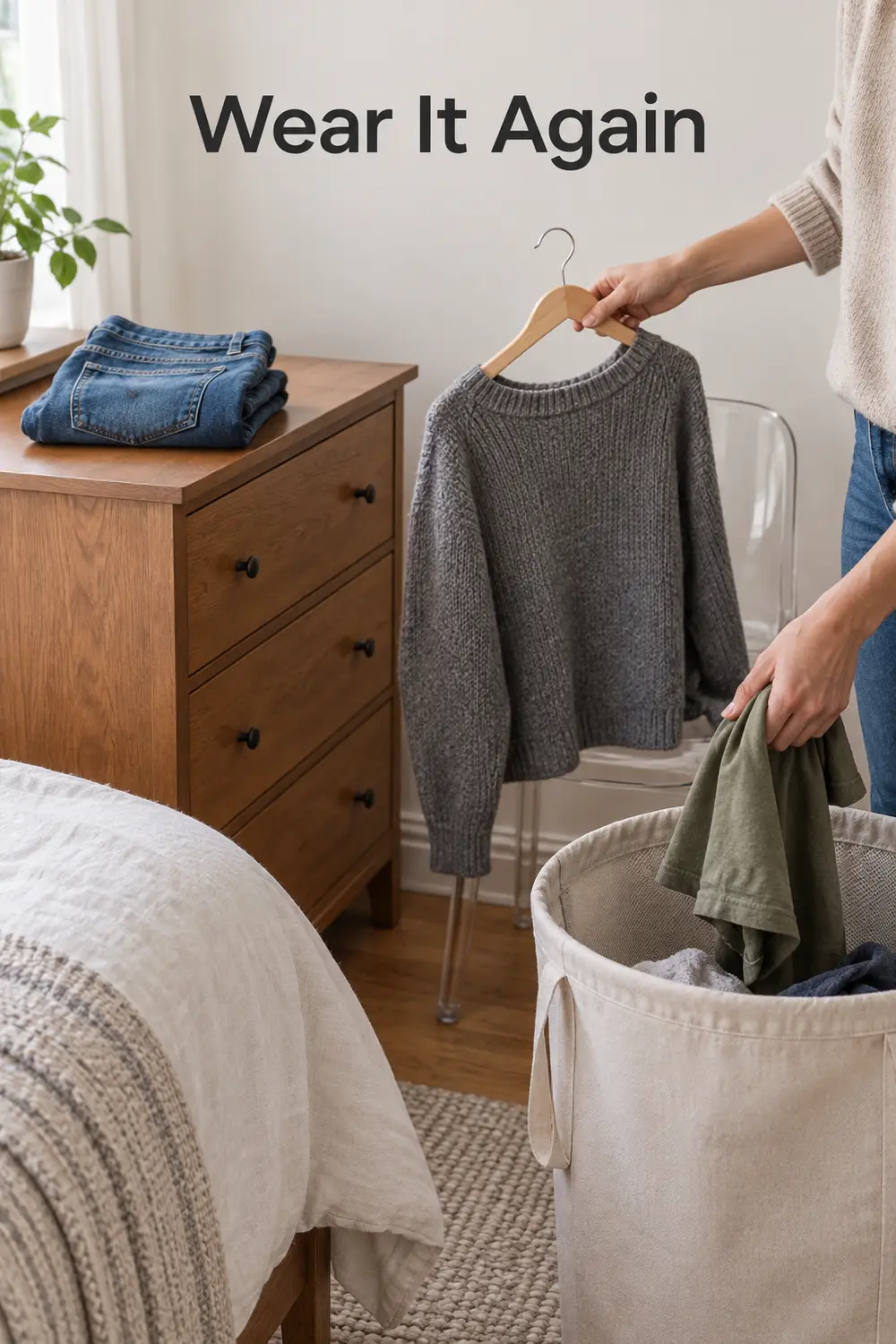
The jeans on the chair are still wearable. The sweater over them needs airing, and somewhere underneath is yesterday’s T-shirt, which probably belongs in the hamper. Once those decisions share one seat, getting dressed becomes an excavation. A between-wears system gives these clothes a temporary address—not another permanent storage area. Choose one main holding spot, add a place to air garments, and give everything a deadline.
1. Decide what qualifies for another wear
Before choosing storage, establish a rewear test: Is the garment dry, free of noticeable odor, and free of stains or visible dirt? Check the underarms, collar, and cuffs rather than judging the whole shirt from a distance. Jeans worn for a quiet evening might pass; a shirt with a food spill needs attention, even if you wore it for only an hour.
Send underwear, sweaty base layers, and anything you would hesitate to put back on straight to the laundry stream. Follow care labels when a garment needs spot treatment or special cleaning. Airing is useful for assessing a piece after wear, but it does not remove dirt. If you keep reconsidering the same questionable top, washing it is usually simpler than storing the uncertainty.
2. Give clean and previously worn clothes separate addresses
Create a visible boundary between freshly washed clothing and pieces awaiting another wear. That could mean two dedicated hooks beside the dresser for worn shirts while clean clothes stay inside the closet. As a rough starting point, place hook centers about 8–12 inches apart, then test with your actual garments: a broad sweater needs more room than a narrow camisole.
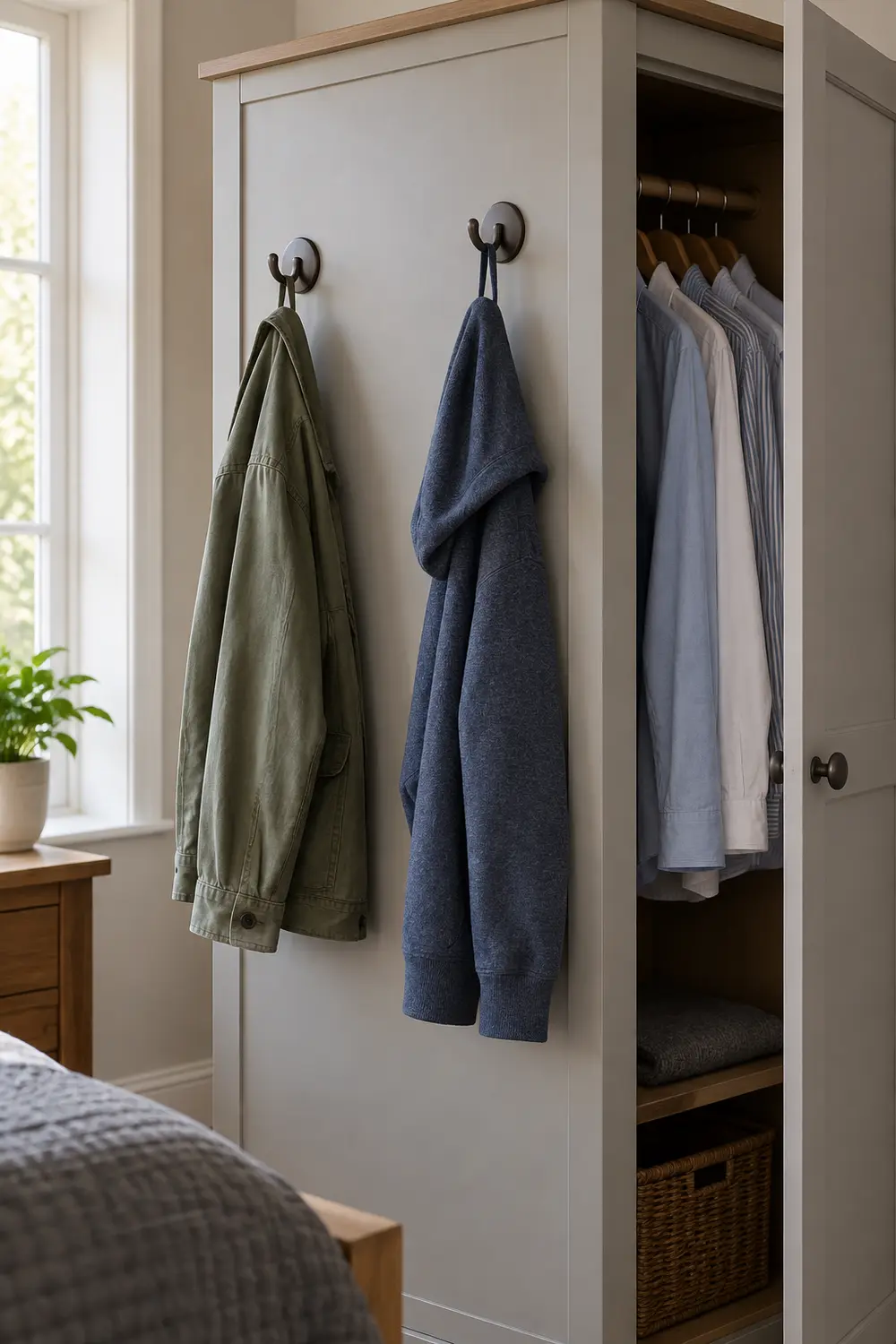
The boundary matters more than matching containers. In a shared bedroom, assign each person a hook or short section of rail so one person’s outfit does not swallow the other’s space. Avoid returning worn pieces to random gaps among clean clothes; that makes their status invisible. A small, clearly understood zone also shows when you have more waiting clothes than you can realistically rewear.
3. Air garments before putting them away
Let clothing release body warmth and moisture before folding it into your holding spot. Hang a shirt with its front open, or spread a sweater over a suitable drying rack rather than bunching it on a knob. A place you pass while getting ready for bed works well: you can check the garment again before transferring it to its designated zone.
There is no useful universal airing time; fabric, room conditions, and how you wore the item all matter. Check that it feels fully dry, including thicker seams, before storing it. Keep the airing station away from heaters, supply vents, and exit paths. Heavy knits may stretch on hangers, so follow their care instructions and support them appropriately instead of hanging everything the same way.
4. Use a valet stand for one outfit, not a wardrobe
A valet stand can replace the chair pile when you regularly rewear the same trousers and jacket. Put the jacket on its shaped support and the trousers over a separate bar, leaving each piece accessible. Its advantage is visibility: you can see tomorrow’s outfit without uncovering it. Treat the stand as space for one outfit, not permission to start a taller pile.
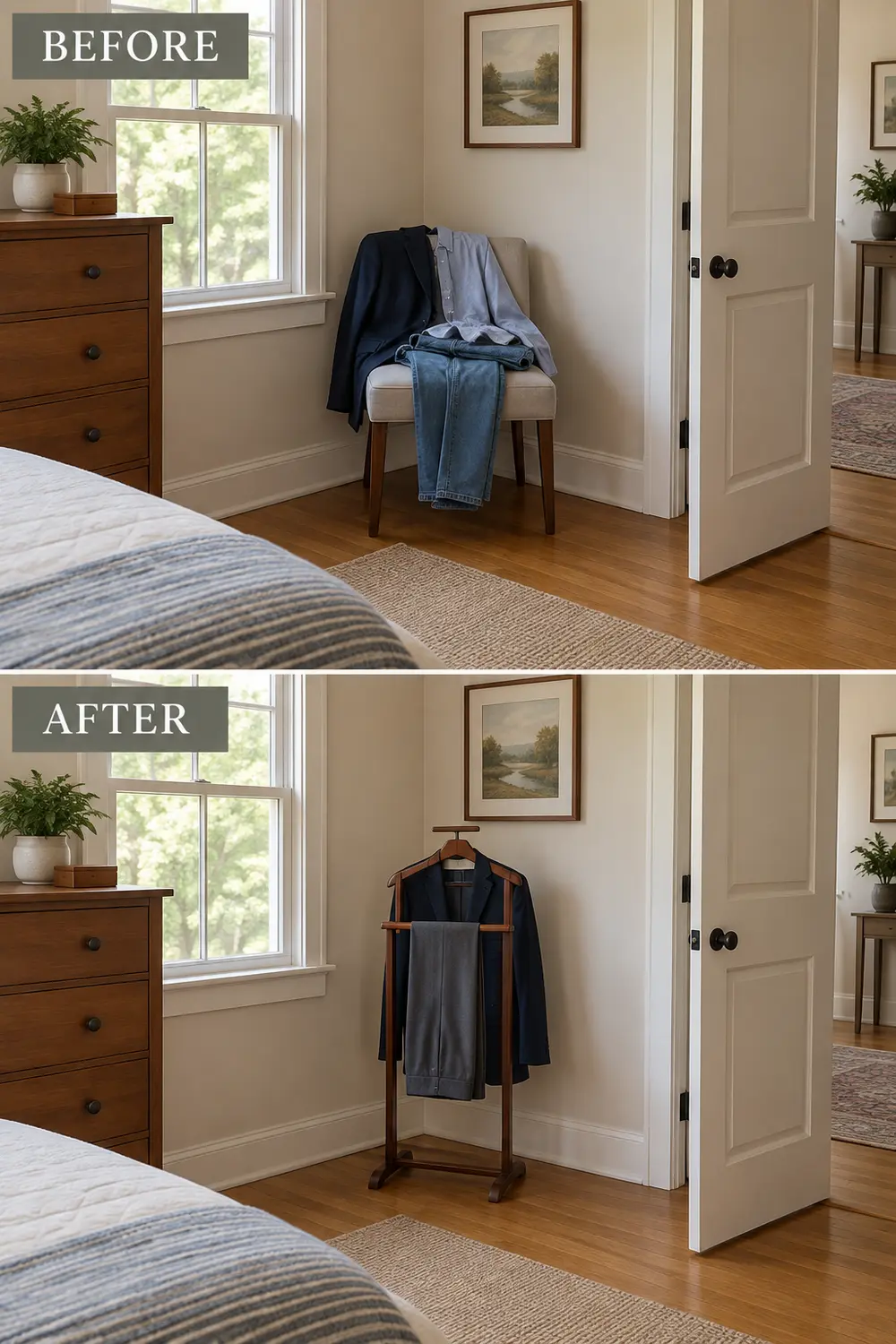
Check the stand’s full footprint and stability before buying; projecting feet can take more floor space than the upright suggests. Measure the room, furniture, door swings, and your route around the bed. If that corner already interferes with closet access, address the conflict with these small-bedroom closet clearance fixes rather than squeezing in another freestanding object.
5. Reserve hooks for garments that can hang loosely
Hooks work best when each one holds a single suitable garment, not a stack of sleeves. Use sturdy hanging loops where provided, and choose broad, rounded hooks for pieces that tolerate them. A lightweight overshirt can wait beside the closet; a delicate knit may be better folded. Leave enough space that neighboring clothes do not press together and hide what is underneath.
For rentals, an over-door rack may avoid drilling, but check that the door closes freely and follow the rack’s load limits. Adhesive hooks also have surface and weight restrictions; they are not automatically damage-free. Keep hanging hems off the floor and clear of handles. If a robe already fills the back of the door, adding four shirts creates another pile, just upright.
6. Hang trousers where each pair stays reachable
Give rewearable trousers individual hangers or separate bars so removing one pair does not disturb three others. Fold jeans once over a sturdy hanger bar; hang dress trousers in a way that preserves their existing crease. Reserve a clearly defined end of a rail for worn pairs, with a divider or gap separating them from freshly cleaned clothing.
A multi-tier hanger saves width, but closely packed bars can make lower pairs awkward to retrieve. Test it with your heaviest jeans before committing your whole system to it. For a daily rotation, two easy-to-reach pairs may be more useful than five tightly layered ones. Do not hang trousers from a door handle, where the fabric can interfere with opening and closing.
7. Reserve a shallow drawer for dry folded pieces
If you dislike visible clothing, dedicate one shallow drawer to fully dry, aired pieces that passed your rewear test. Fold them in a single layer or short upright row so every item remains identifiable. A casual T-shirt and soft lounge pants might fit comfortably; a deep stack of sweaters makes this temporary drawer as difficult to read as the chair pile.
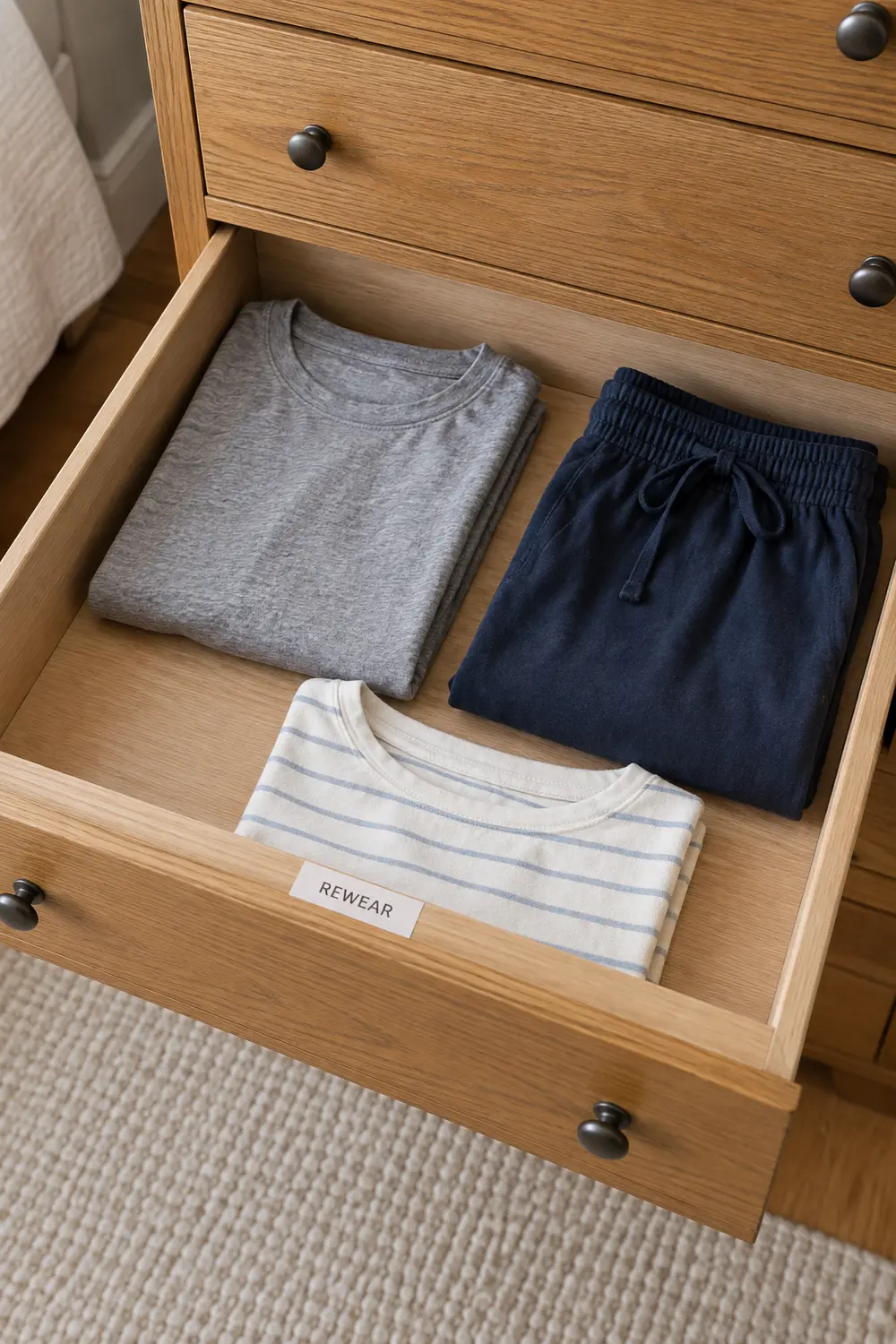
This approach costs you a drawer that could hold clean clothing, so try it with your smallest practical compartment first. Keep freshly washed items elsewhere and empty the drawer during your weekly reset. An enclosed drawer is not an airing station: putting warm or damp clothes inside defeats the purpose. If you cannot spare a drawer, a shallow open tray on an existing shelf provides a similar boundary.
8. Give sleepwear its own small spot
Sleepwear follows a different rhythm from clothes you wear outside, so keep it out of the main rewear zone. Let pajamas air after you get up, then fold them into a small bedside basket or a dedicated corner of a shelf. That keeps tonight’s sleep shirt easy to find without mixing it into tomorrow’s jeans and work clothes.
Limit this spot to the set currently in use; clean replacements belong with clean laundry. Avoid tucking worn pajamas beneath a pillow while they are still warm or damp. If bedside space is already crowded, borrow an idea from these bedside storage solutions for bedrooms without nightstands, choosing a reachable shelf or pocket rather than adding furniture beside the bed.
9. Route damp exercise clothes toward laundry
Sweaty workout clothes need a separate route, not a place among tomorrow’s outfits. If you are not washing them immediately, spread them over a washable drying rack or dedicated rail until dry, then transfer them to the hamper. Keep this drying position separate from the rail used for rewearable shirts so the two categories remain unmistakable.
Do not seal damp leggings and socks in a gym bag or tuck them beneath dry laundry. A bathroom may be convenient only if there is room and ventilation; clothes should not block a fan, heater, doorway, or someone’s access to fixtures. The inconvenience is real: this requires a temporary drying spot. A foldable rack you put away afterward may be the most workable compromise.
10. Set a weekly return-or-wash deadline
Choose one repeatable moment—before your weekend laundry load, for instance—to empty the between-wears zone. Pick up every item and decide: wear it next, wash or clean it, or return it to regular storage if it is still suitable. Refold the keepers and clear the supports. The goal is a deliberate decision, not moving the entire pile somewhere less visible.
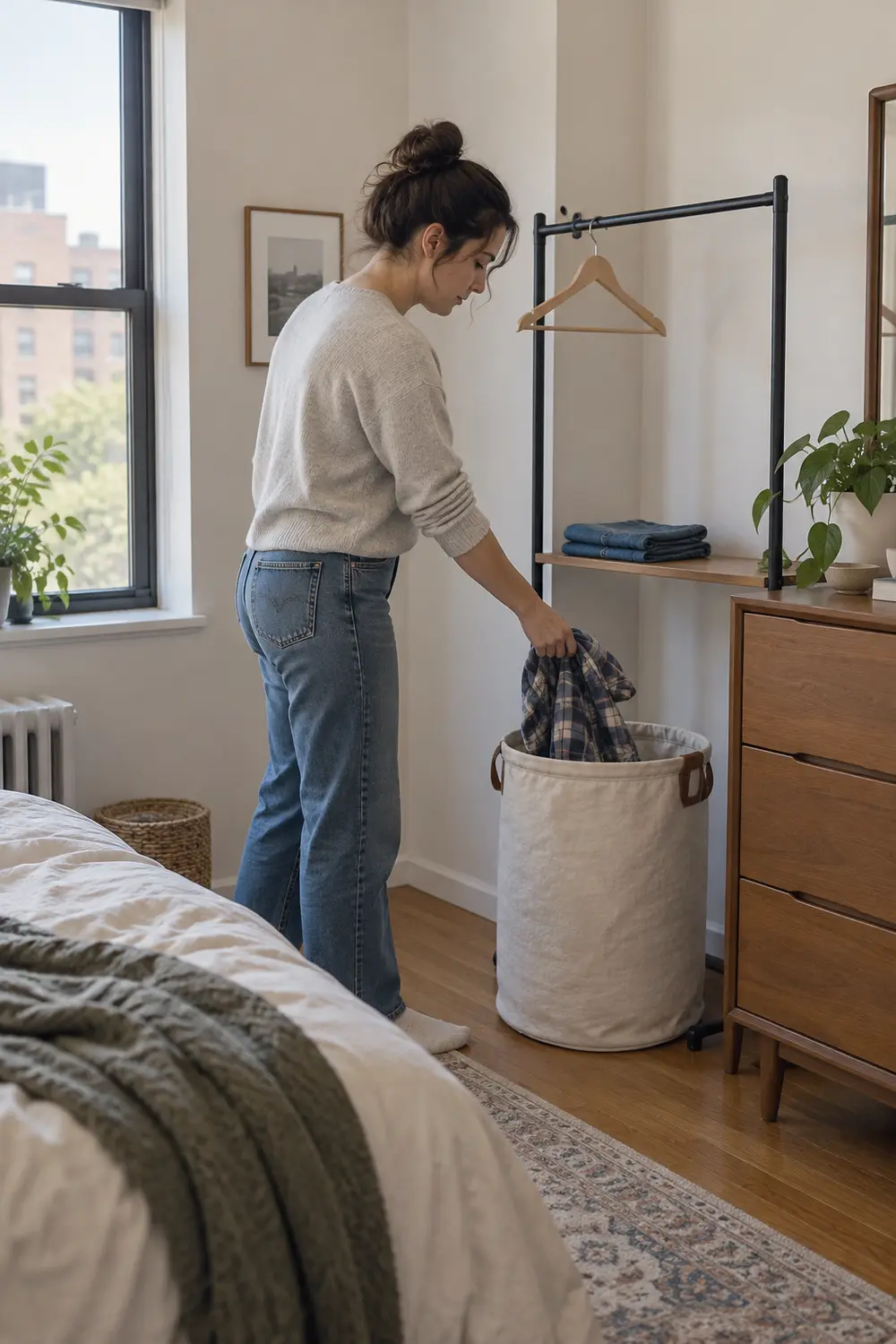
If the zone overflows before that deadline, reduce what you keep or reset more often rather than automatically adding storage. Clothes left untouched for several resets probably do not need a permanent halfway home. Like other daily drop zones that keep collecting clutter, this spot needs a next step for its contents, not just a tidier container.
Start with the clothes on the chair tonight. Send definite laundry to the hamper, air the plausible rewears, and choose one existing hook, rail section, or drawer as their destination. Set the reset day before adding any new storage.
Leave a Reply