A rental living room can feel unfinished even after the sofa arrives: bare walls, flat lighting, and builder-basic finishes leave little sense of who lives there. The most useful small living room ideas add character without making the security deposit part of the decorating budget. These ten changes rely on freestanding pieces, fabric, and movable arrangements rather than holes or adhesive. Check your lease, measure your space, and remember that reversible does not automatically mean damage-free.
1. Give the Seating Area a Grounding Rug
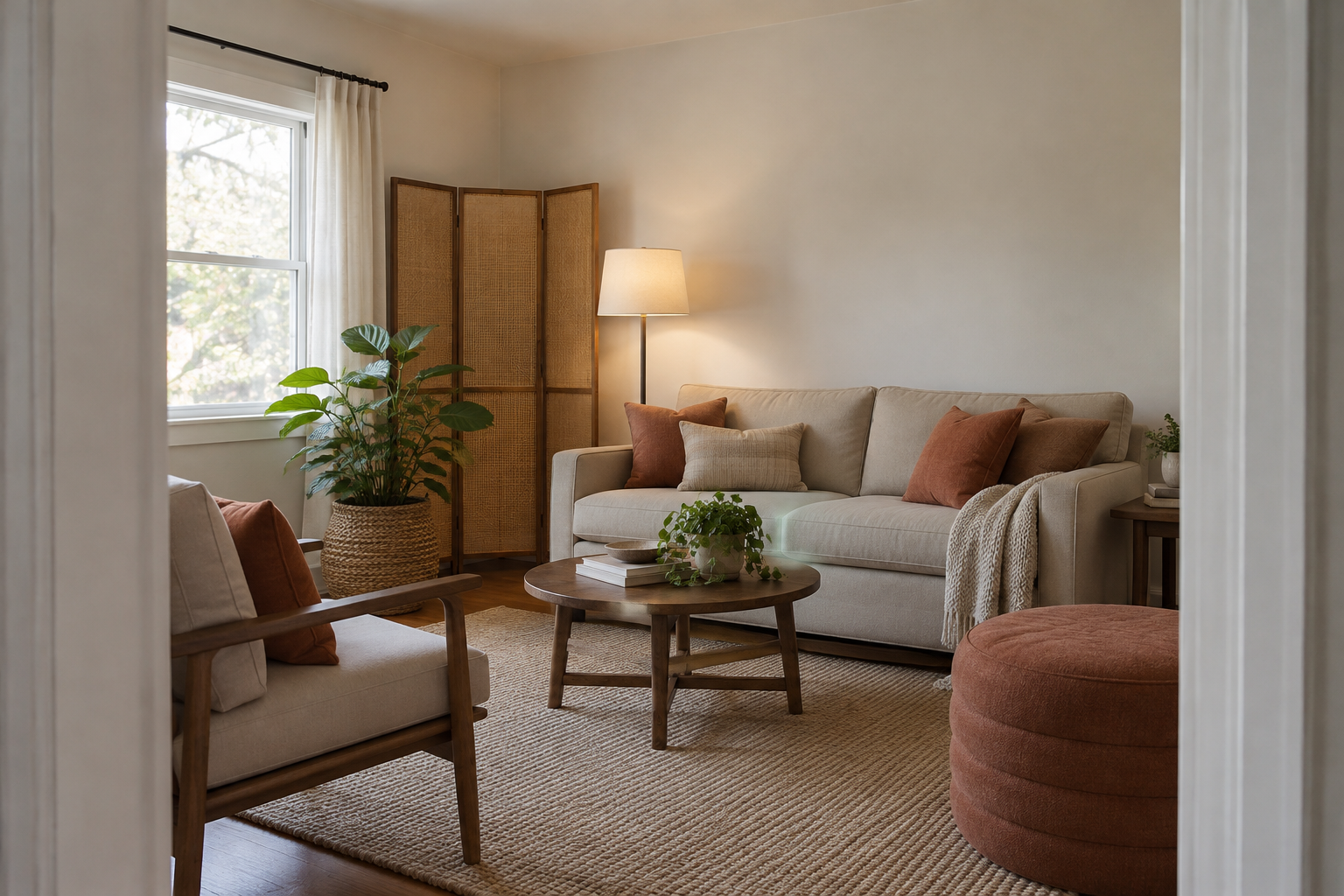
Use a rug to give anonymous flooring a deliberate color story and define the seating area. For example, a muted rust-and-cream flatweave can connect a beige sofa with a secondhand wood table. An approximately 5-by-8-foot rug may work in a compact room, but treat that as a planning guideline: measure so the sofa’s front feet can sit on it without blocking doors.
The common mistake is choosing a tiny rug that floats between the furniture, making the room feel fragmented. A larger rug provides continuity but costs more and adds a door-clearance concern. Choose a pad explicitly compatible with your floor finish; some rubber or latex backings can discolor certain surfaces. This approach may not suit thick existing carpet if the rug creeps or creates a trip edge.
2. Change the Sofa’s Expression With Removable Textiles
Make the largest upholstered piece feel intentional with washable pillow covers and one textured throw. On a gray sofa, try two rust-colored covers, one small-scale striped cover, and an oatmeal throw folded over an arm. Reuse existing pillow inserts where possible. Repeating one color elsewhere, perhaps in a bowl on the coffee table, makes the change look connected rather than like a collection of unrelated accessories.
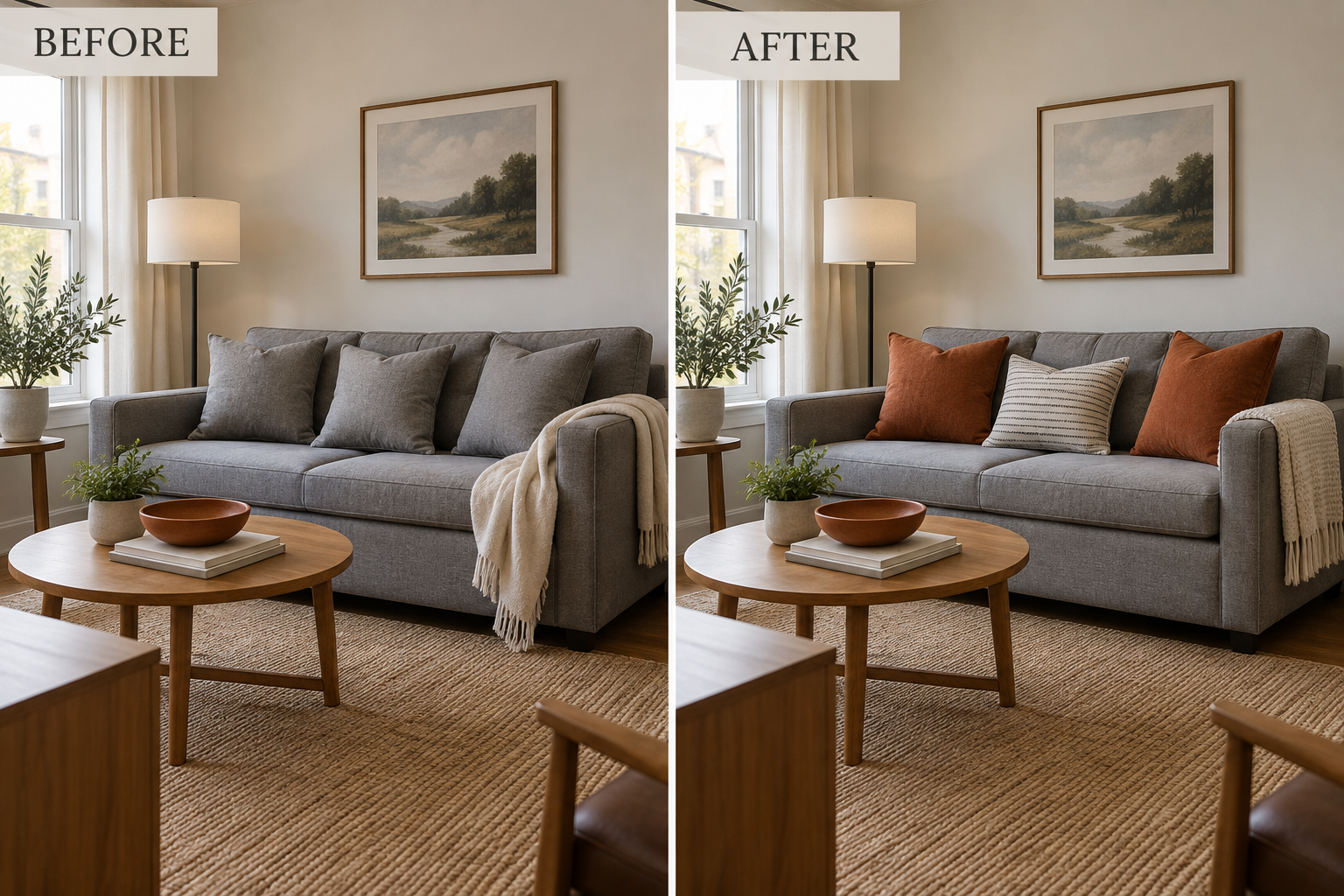
Avoid covering every seat with pillows; constantly moving them defeats the purpose of a comfortable living room. Fewer, better-chosen textiles offer character with less clutter, though washable covers still require care. Dark or saturated fabric can transfer dye onto pale upholstery, particularly when damp. If the sofa already has a busy pattern or serves as a nightly bed, keep this layer especially restrained.
3. Use a Folding Screen as Movable Architecture
A freestanding folding screen can give a blank corner texture or soften the view of an awkward utility door without covering it permanently. Try a woven three-panel screen behind an accent chair, opened in a shallow zigzag according to its stability instructions. It creates a backdrop without fastening anything to the wall. Keep access to outlets, vents, and required exits fully available.
Buying a screen solely for its folded width is a common mistake: its stable open footprint is larger. The tradeoff is useful visual separation at the expense of floor area and some daylight. Look for smooth, floor-compatible feet and inspect contact points for scratching. Skip this idea in a tight circulation route or where children or pets could easily knock the screen over.
4. Create an Evening Corner With a Plug-In Floor Lamp
Replace the overhead-only feeling with a freestanding floor lamp beside the sofa or reading chair. A shaded lamp that directs comfortable light toward a book adds both atmosphere and a useful vertical shape. Choose a stable base that fits outside the walking path, and route its cord along the room’s perimeter without adhesive clips. Use a bulb within the fixture’s stated rating.
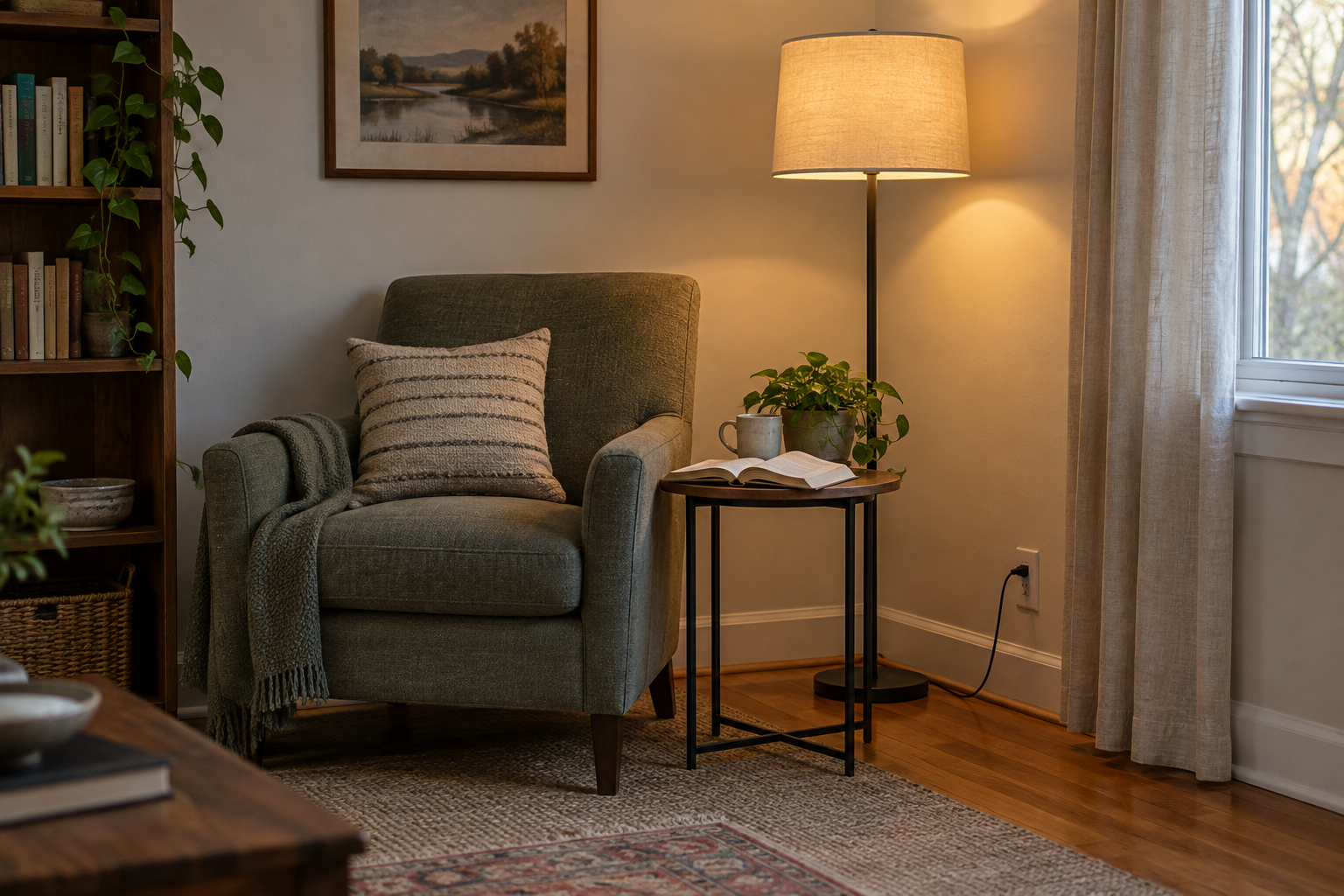
The usual mistake is selecting a dramatic arc lamp whose base or shade overwhelms the seating area. A slimmer lamp takes less space but may illuminate a smaller zone. Never hide cords under rugs or place them where furniture can crush them. This solution may not suit a corner without a safely reachable outlet; avoid turning a character-building detail into an extension-cord obstacle course.
5. Soften Utility Storage With a Skirted Side Table
Turn an ordinary sturdy side table into a softer accent with a removable fabric skirt. A tailored cotton cover over a small round table can conceal a basket of chargers or game controllers while introducing a stripe or check. Keep frequently used items on top and storage contained underneath. Hem the fabric above the floor so it does not collect dirt or catch underfoot.
Do not use fabric to disguise a wobbly table or overloaded storage pile. The skirt adds softness and concealment, but reaching underneath is less convenient than opening a drawer. Check that the textile is colorfast and dry before placing it against finished furniture. Skip this treatment if pets tug hanging fabric or if the table sits near a heater, where clearance requirements take priority.
6. Display Small Artwork on Tabletop Easels
Bring art into the room at furniture height rather than treating every blank wall as a hanging problem. Set a small framed print on a tabletop easel atop an existing console, then pair it with one low object. For example, a landscape print and a ceramic dish can create a focal point beside the sofa. Choose an easel rated for the frame’s size and weight.
Avoid balancing a heavy frame against the wall and assuming friction will hold it. A tabletop display sacrifices some usable surface and cannot replace the scale of large wall art, but it is easier to relocate. Use clean, finish-compatible protective pads beneath the stand. This idea is unsuitable on narrow, frequently bumped tables or anywhere a child can pull the frame down.
7. Reorient Existing Furniture Around Conversation
Character sometimes comes from arrangement rather than another purchase. In a room with a sofa, one chair, and a coffee table, angle the chair toward the sofa instead of lining everything against separate walls. Keep the same furniture and let the seating relationship become the change. Approximately 30–36 inches for a main passage is a planning guideline, not a guarantee; measure your room and accommodate household mobility needs.
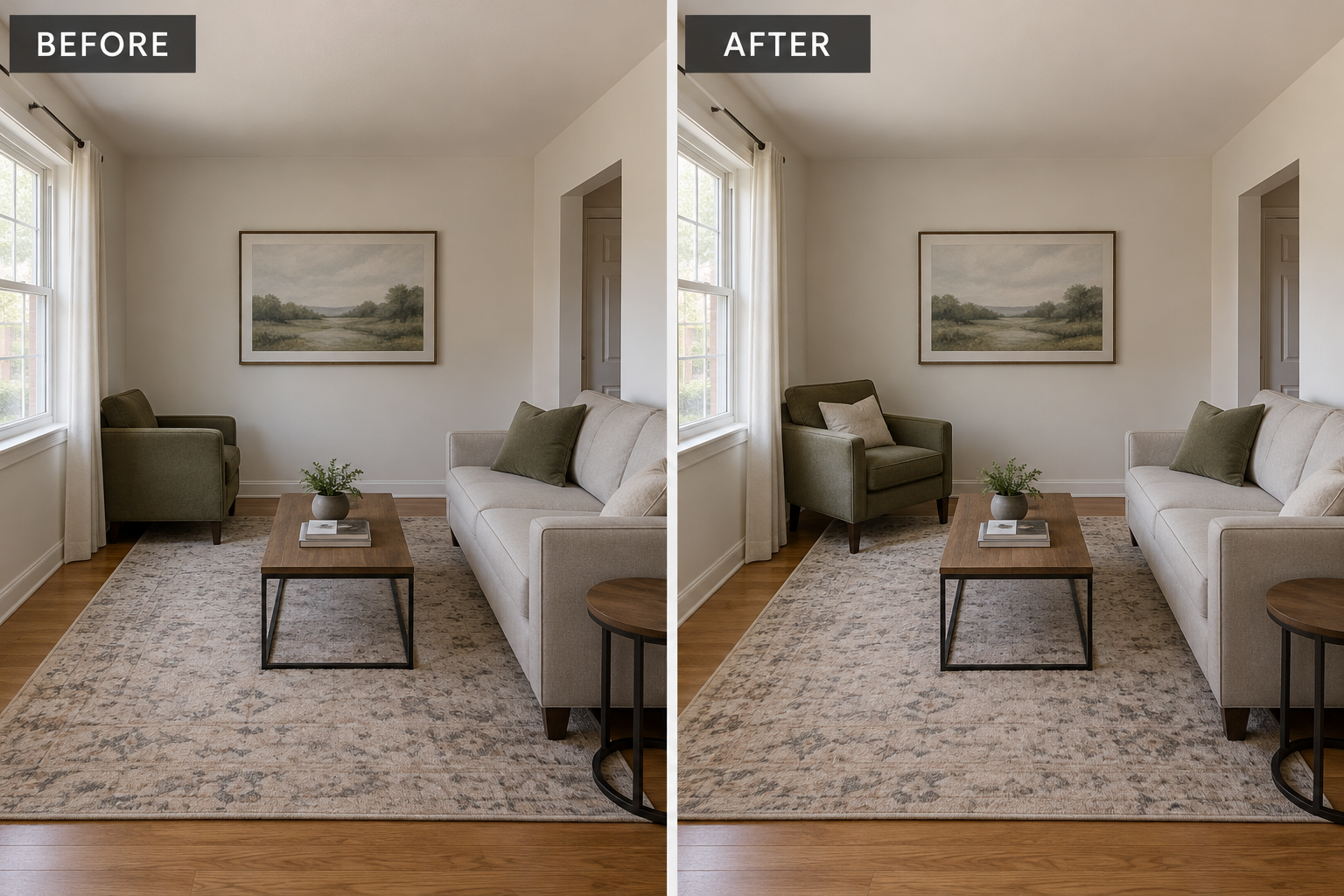
The mistake is copying a floating furniture layout without checking what remains behind it. Better conversation can come at the cost of a direct television view or generous circulation. Lift furniture when moving it, and use suitable protective glides rather than dragging legs across the finish. In a very narrow room, a subtle chair rotation may work better than pulling the sofa away from the wall.
8. Frame a Suitable Window With a Tension Rod
If the window recess and lease allow it, an inside-mounted tension rod can support lightweight curtains without brackets. Try airy ivory panels to soften a plain window while retaining the existing blinds. Measure the recess and follow the rod’s span and load limits; this is not a solution for heavy drapes. Check that curtains will stay clear of heaters and will not interfere with window operation.
Overtightening the rod to stop slipping can dent soft trim or mark paint, while too little pressure risks a fall. The no-hole benefit therefore comes with finish and load limitations. Check the manufacturer’s surface guidance and inspect contact points periodically; rubber ends can still leave marks. Skip tension hardware on fragile finishes, unsuitable recesses, or windows where curtains would obstruct required emergency access.
9. Give an Existing Bookcase a Clear Display Rhythm
Restyle a stable, existing low bookcase instead of adding more decorative furniture. Gather books into a few upright groups, leave breathing room, and repeat one material across the shelves. For example, two small wooden bowls can connect mismatched paperbacks with a wood coffee table. Keep heavy books low, and follow all furniture safety instructions, including any anchoring requirements; styling does not make an unstable case safe.
A common mistake is filling every gap with an object, which makes a small room visually restless and leaves no useful storage capacity. Editing creates a calmer display but may mean storing some belongings elsewhere. Avoid damp pottery or abrasive objects directly on finished shelves. If the case requires anchoring that your lease prohibits, choose another display surface rather than leaving the furniture unsecured.
10. Add Living Shape With a Protected Plant Group
Use one medium plant and one smaller companion to break up the room’s straight furniture lines. Place them near an appropriate window on stable freestanding supports, not suspended hooks. For example, a leafy upright plant beside a low pot creates varied height without filling the floor with separate stands. Select plants for the actual light available, and check household pet safety before bringing them home.
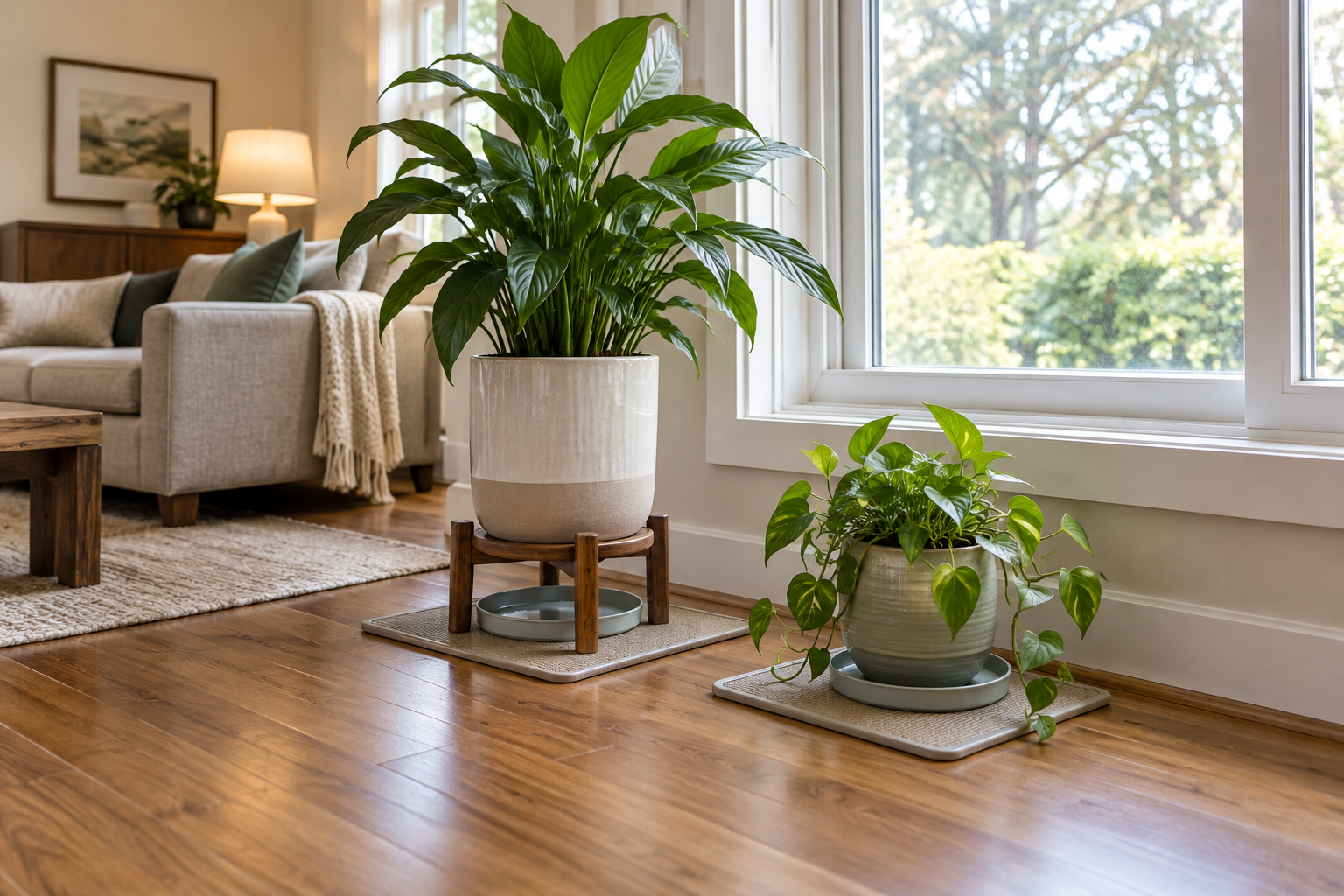
The mistake is trusting a decorative cachepot to be waterproof. Plants bring organic texture but require maintenance, and trapped moisture can stain wood, swell laminate, or damage furniture finishes. Use watertight saucers plus finish-compatible barriers, water at the sink when practical, and check underneath regularly. This idea may not suit a dim room, a frequently traveled corner, or a household unable to keep plants safely out of reach.
Start with the room’s most noticeable gap: a bare floor, harsh lighting, or an impersonal sofa. Make one change, live with it, and check both circulation and contact surfaces before adding another. A rental gains character through deliberate choices, not permanent installation—and the best additions can leave with you without leaving damage behind.
Leave a Reply