You clear a place on the sofa, sit down in dark pants, and stand up wearing half the cat. When that sofa is also your reading chair, guest seating, and evening landing spot, keeping it usable matters more than making the whole room spotless. These ten changes target where fur collects and how you remove it, without requiring a new furniture set. The aim is less visible hair and easier upkeep—not an allergen-free room.
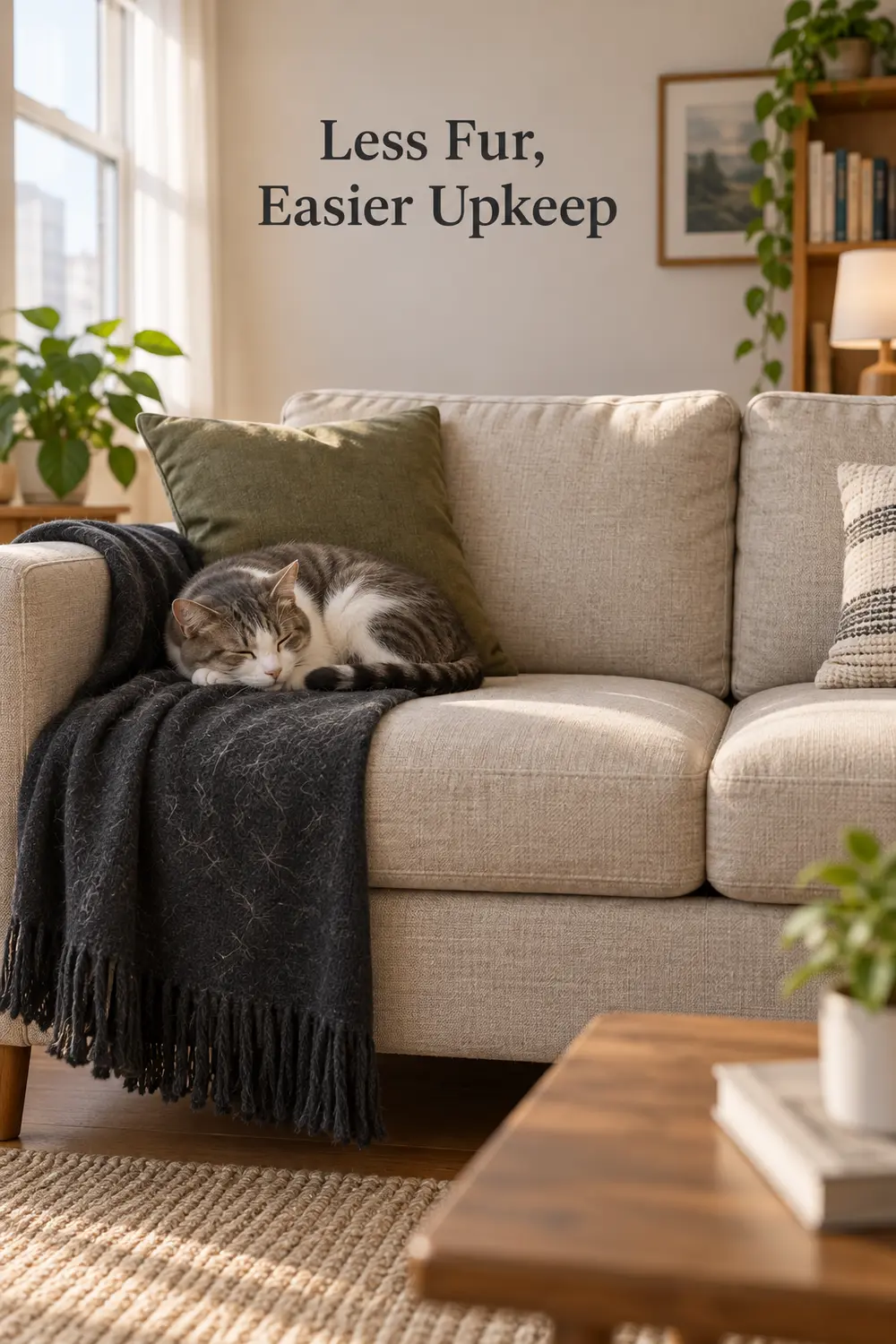
1. Find the collection points before cleaning everything
Before the next cleanup, look at the room in daylight from a low angle. Check the pet’s favorite seat, the crease beside the arm, the rug edge, and the floor beneath the sofa’s front rail. Note three places that collect the most hair. These are your priority zones, even if the middle of the floor looks more obvious.
Separate resting spots from traveling fur. A dog may sleep beside you but leave loose hair along the route between the sofa and water bowl. Clean those routes as well as the seat. Don’t move a lamp or pet bed into a walkway just to contain shedding; a more convenient cleaning route is the better adjustment.
2. Give the favorite resting spot a washable boundary
Work with the place your pet already chooses. Cover that sofa corner with a washable pad large enough to catch hair when your pet curls up or stretches out. A fitted pad with enclosed elastic corners can stay put better than a loose towel. Check the attachment regularly, and avoid exposed straps or loops your pet might chew.
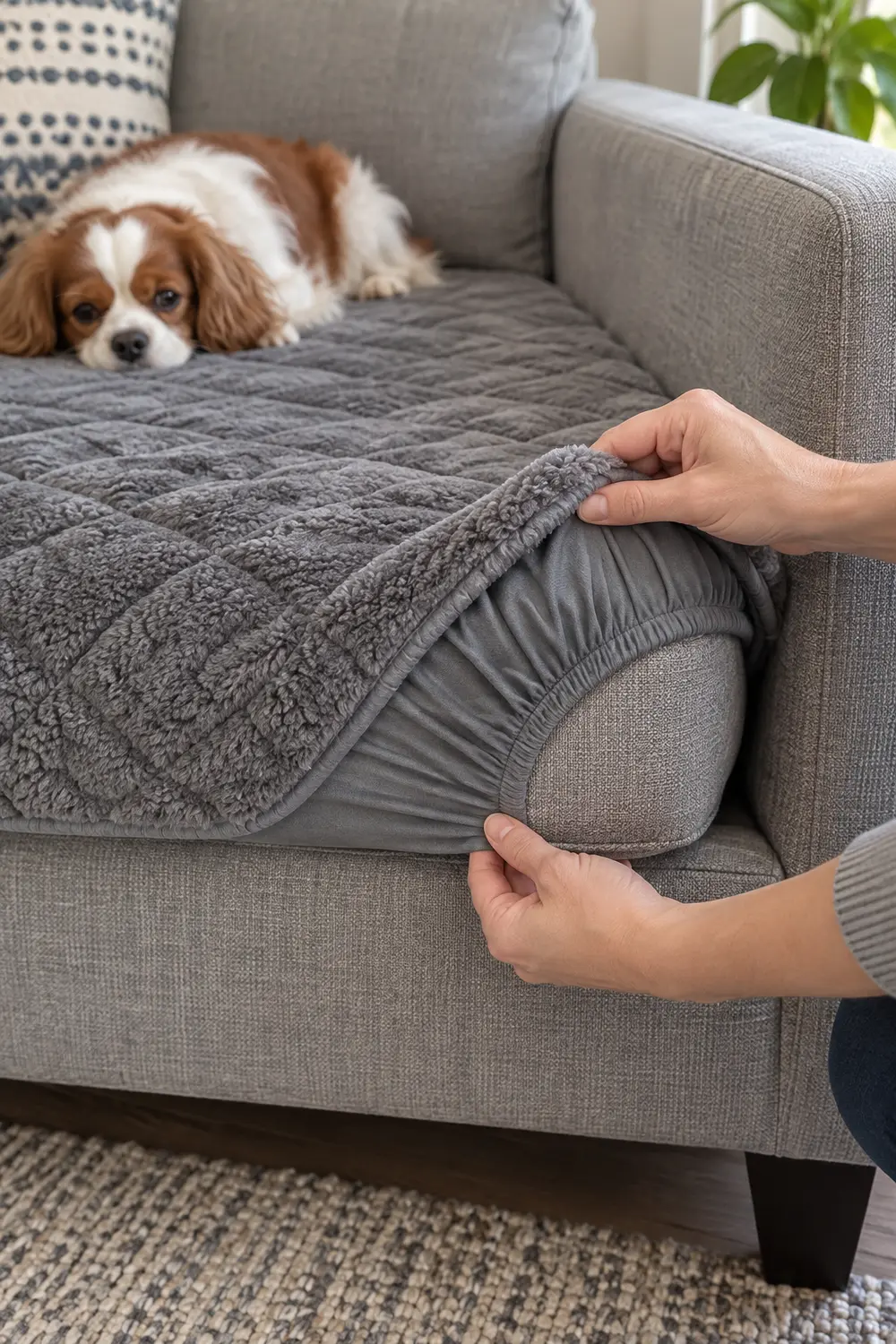
Keep one spare if storage allows, so the seat stays protected while the first pad dries. Choose a size your washer can handle according to its instructions; an oversized blanket can turn a small cleanup into a bulky laundry job. A designated spot concentrates some fur, but it won’t persuade every pet to stop using the other cushions.
3. Make the people’s seats removable too
Protect the seats people actually use, not just the pet’s corner. Separate removable seat covers let you clean one cushion after a shedding-heavy afternoon instead of stripping the whole sofa. Measure cushion width, depth, and thickness before buying. Check that the cover’s care instructions permit the cleaning method you intend to use.
On a sofa with attached cushions, a washable seat-and-back protector may be more practical, though it will need straightening. Tuck it only where the furniture design allows, and keep fabric away from reclining mechanisms. Don’t assume the original zippered cushion casing is washable: the zipper may exist for assembly, and laundering could shrink or distort the fabric.
4. Compare upholstery by how readily it releases hair
If you’re choosing a cover or replacing worn seating, compare actual fabric samples rather than relying on a “pet-friendly” label. With permission, test your usual lint tool on samples carrying a little of your pet’s shed hair. Look for strands that lodge in loops, resist brushing, or remain after a light vacuum pass.
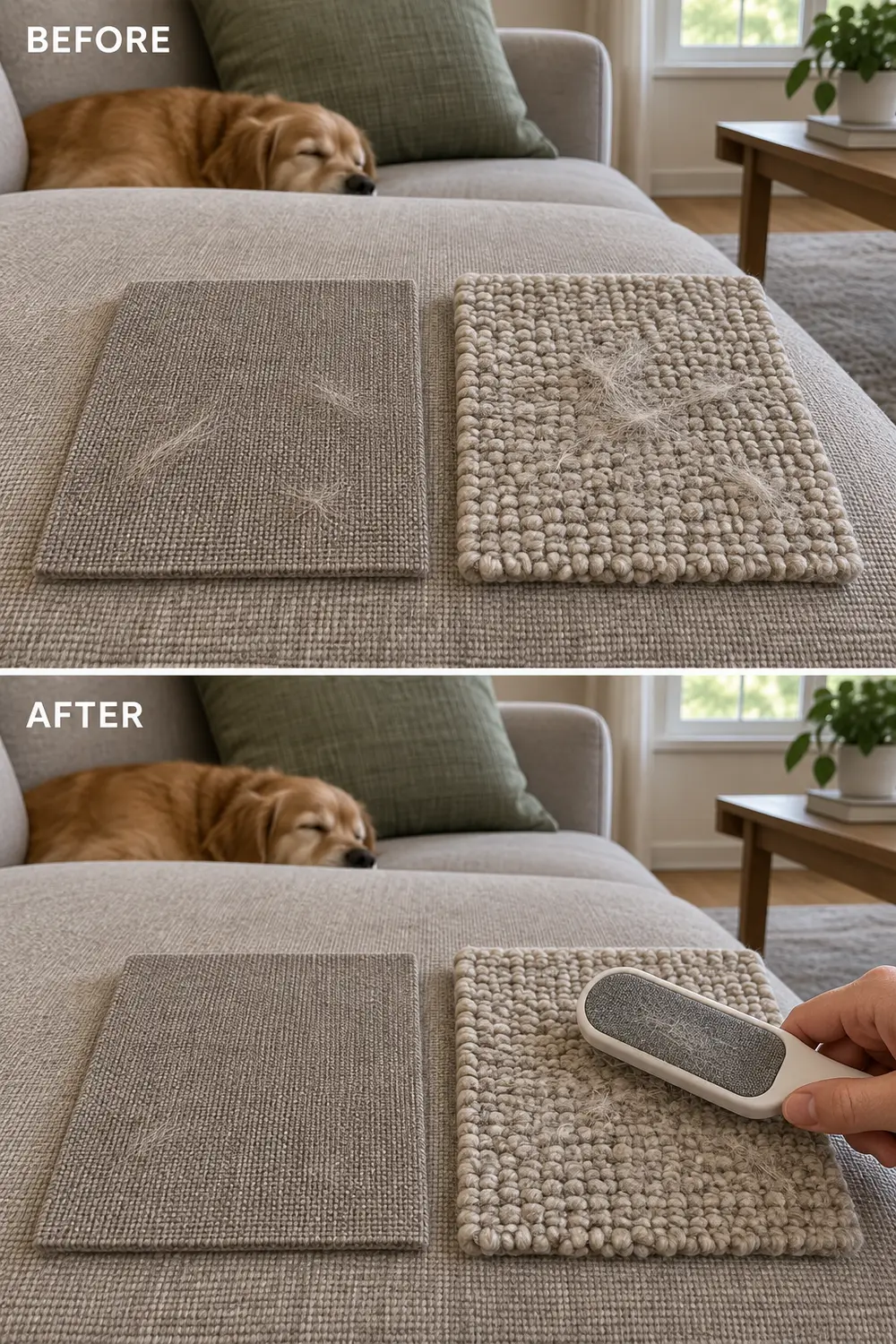
A tight, relatively smooth weave may be easier to clear than a deeply textured one, but pet hair and fabrics vary. Leather and coated surfaces can be easier to wipe, yet claws may mark them and finishes need appropriate care. Matching upholstery to your pet’s coat disguises shedding; it doesn’t reduce the amount you need to remove.
5. Reduce the cushion layers you have to clean
Every extra pillow creates another face, seam, and sheltered pocket for fur. Keep the cushions that support someone’s back or make the sofa comfortable, then remove the ones that spend every evening on the floor. Two useful pillows with removable covers are often less work than a stack of decorative cushions with different care requirements.
Try one washable throw instead of layering a knitted blanket over a fuzzy throw over the seat protector. Open knits and fringe can hold strands and take longer to clear. You don’t need a bare sofa: keep a favorite textured piece if you enjoy it, but recognize it as an item that requires separate attention.
6. Choose furniture bases your tools can reach
The useful gap under a sofa is one your actual vacuum head can enter. Measure the head’s height and how much room it needs to pivot, then check the lowest rail—not just the leg height. Before rearranging, measure the room, furniture, door swings, and access routes so cleaning access doesn’t come at the expense of a usable walkway.
For existing furniture, move a lightweight side table out of the vacuum’s approach instead of buying taller sofa legs. Replacement legs can affect stability and should be used only when approved for the furniture. Cozyana’s guide to a living room arranged for everyday use can help you balance cleaning access with seating and storage.
7. Match the tool to the surface
Use a crevice attachment for sofa seams and narrow edges, an upholstery attachment for broad fabric areas, and a suitable floor head beneath furniture. Check the vacuum and surface manufacturers’ instructions before using powered brushes. A low-profile head may reach under the sofa while an upholstery tool handles the seat; one attachment rarely does both jobs well.
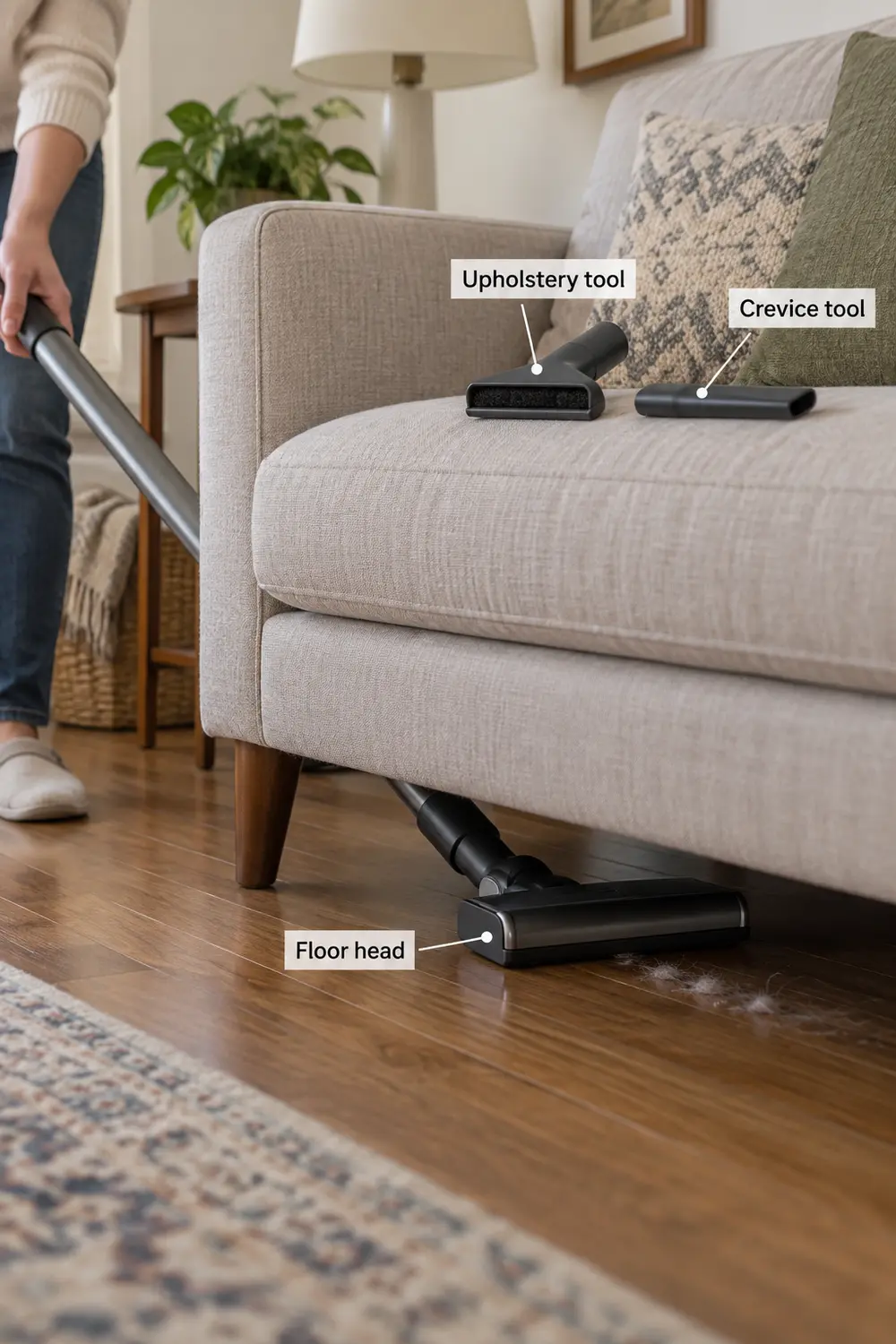
A reusable lint brush can be convenient for a quick seat cleanup, while a rubber hair tool may help on compatible fabric. Test either in a hidden spot and stop if it snags, changes the nap, or leaves marks. Avoid dragging an abrasive carpet rake across upholstery simply because it collected hair well from a rug.
8. Keep vacuum attachments ready to collect
Before blaming the vacuum, inspect the attachment. Hair wrapped around a brush roll, a blocked opening, or an overfilled bin can interfere with pickup. Switch off and unplug the machine—or follow its battery-disconnection instructions—before clearing it. Use the manufacturer’s method for removing tangled hair rather than pulling hard against bristles or belts.
Check the upholstery tool after a heavy shedding session; felt strips and small wheels can collect their own fringe. Maintain filters on the schedule in the manual, washing only those identified as washable and allowing them to dry fully before reinstalling. Keeping the attachments together in one accessible container also makes a two-minute cleanup more likely to happen.
9. Remove loose fur before moving textiles
Don’t snap a hairy throw into the air in the middle of the room. Brush or vacuum off loose hair first, then fold the dirty surface inward and carry it to the laundry area. For a cushion cover, remove it gently rather than peeling it off with a shake that drops collected fur onto the newly cleaned seat.
Follow the textile’s care label and your washer’s load guidance. Heavy bedding may need its own load, and some throws cannot tolerate machine drying. Remove visible hair from the washer gasket or drum afterward as appropriate for the machine, and clean the dryer lint screen according to its instructions. Washing is a finishing step, not a substitute for removing loose clumps.
10. Build a short reset around the next person sitting down
Choose a repeatable cue: before evening TV, clear the pet’s corner, brush the next person’s seat, and vacuum the strip of floor in front. Work from seating down to the floor so fallen strands get collected last. Keep the routine short enough to do regularly; save cushion removal and full under-sofa cleaning for a separate session.
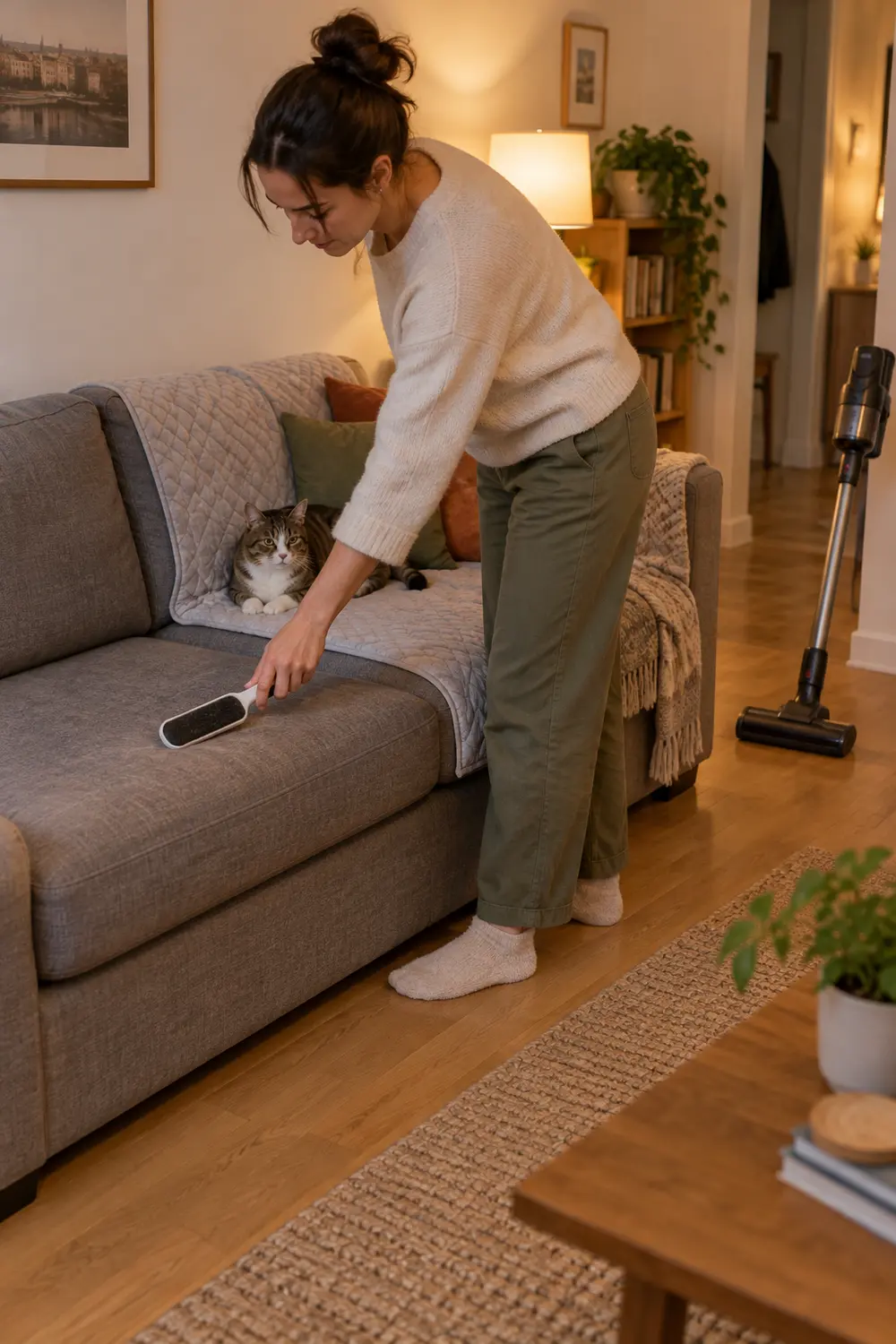
If toys, chargers, and shoes block that strip, give them nearby homes rather than moving them twice a day. These daily drop-zone fixes address the clutter that slows cleaning down. Increase attention to your three hotspots during heavier shedding, but don’t turn every reset into a whole-room project. The goal is seating someone can use now.
Start with the seat you keep brushing off before sitting down. Identify its worst collection point, fit one washable layer, and put the right cleaning tool within easy reach. Try that smaller routine before buying furniture or adding another cover.
Leave a Reply