You finally get into bed, but sunlight outlines the curtains, a charger glows beside your pillow, and someone rolls a suitcase down the hallway. Daytime sleep calls for more than dark fabric. In a small rental, the useful approach is to tackle the light that reaches your pillow, the sounds you can control, and the routines that keep waking you—without making the bedroom difficult to ventilate or leave.
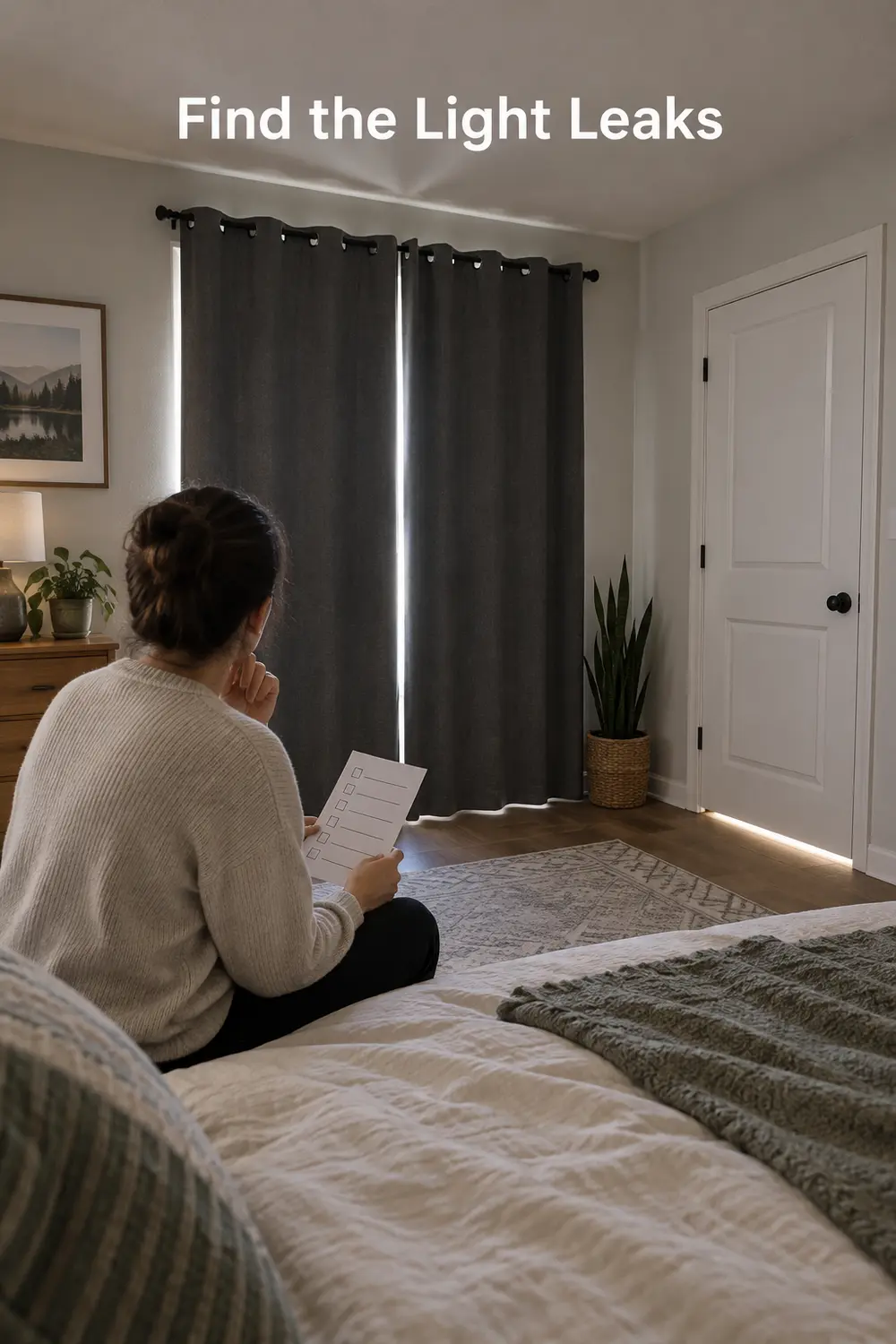
1. Map the light from your pillow
Check the bedroom near your actual bedtime, not just when you get home. Close the door and existing curtains, switch off lamps, and lie where your head normally rests. Give your eyes a few minutes to adjust. Note the bright spots: a curtain seam, a window corner, the door bottom, or a device facing the bed.
Separate steady leaks from interruptions. A stripe beside the window needs a different fix from light appearing whenever a roommate opens the hallway closet. Repeat the check later if your sleep spans several daylight hours; the sun’s angle changes. Start with the brightest source visible from the pillow rather than trying to make every surface equally dark.
2. Fit a removable blackout panel to the window
A removable blackout panel can address glass that existing blinds leave exposed. Measure the opening at several points and follow the panel system’s instructions for sizing and attachment. With a surface-mounted fabric panel, the opaque material should extend beyond the glass without gaps at its fasteners. Test the fit in daylight before committing to a second window.
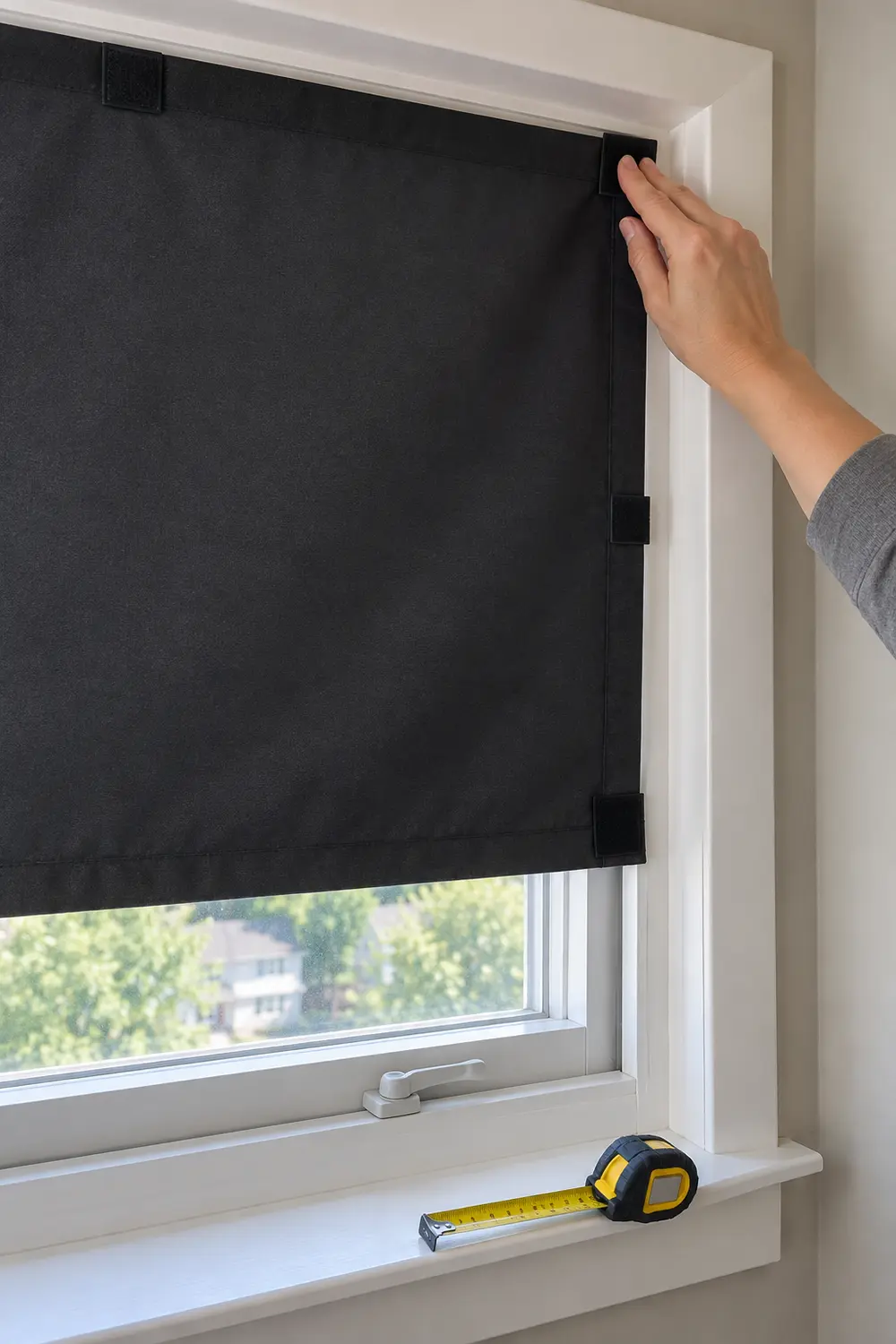
Choose attachments rated for the panel’s weight and compatible with the surface; removable adhesive can still lift paint. Check rental restrictions and removal directions first. Light control is not ventilation: don’t cover vents or assume a covered window can provide airflow. Keep operating hardware accessible, and any emergency-escape window readily usable without tools or furniture moving.
3. Turn off small lights before covering them
A charger’s blue dot can become surprisingly noticeable once the window is dark. Look for settings that disable indicator lights or dim a clock display before adding anything. Turn a digital clock away from the pillow if you don’t need to read it while sleeping. Put a phone face down and configure its notification settings to prevent screen wake-ups.
For an ordinary status LED that cannot be disabled, a small purpose-made opaque sticker may help if the device instructions permit it. Cover only the light, never cooling openings, sensors, or controls. Don’t obscure smoke or carbon monoxide alarm indicators or disable alarms. Relocate an unnecessary charging device instead of wrapping the whole unit in fabric.
4. Treat door light without obstructing the doorway
First ask whether the hallway light needs to stay on during your sleep hours. If it does, inspect where it enters. A lightweight removable draft blocker placed against the bedroom side of the door can reduce a bottom-edge stripe where appropriate. For side gaps, consider only a compatible removable light-blocking strip that leaves the latch and door operation unchanged.
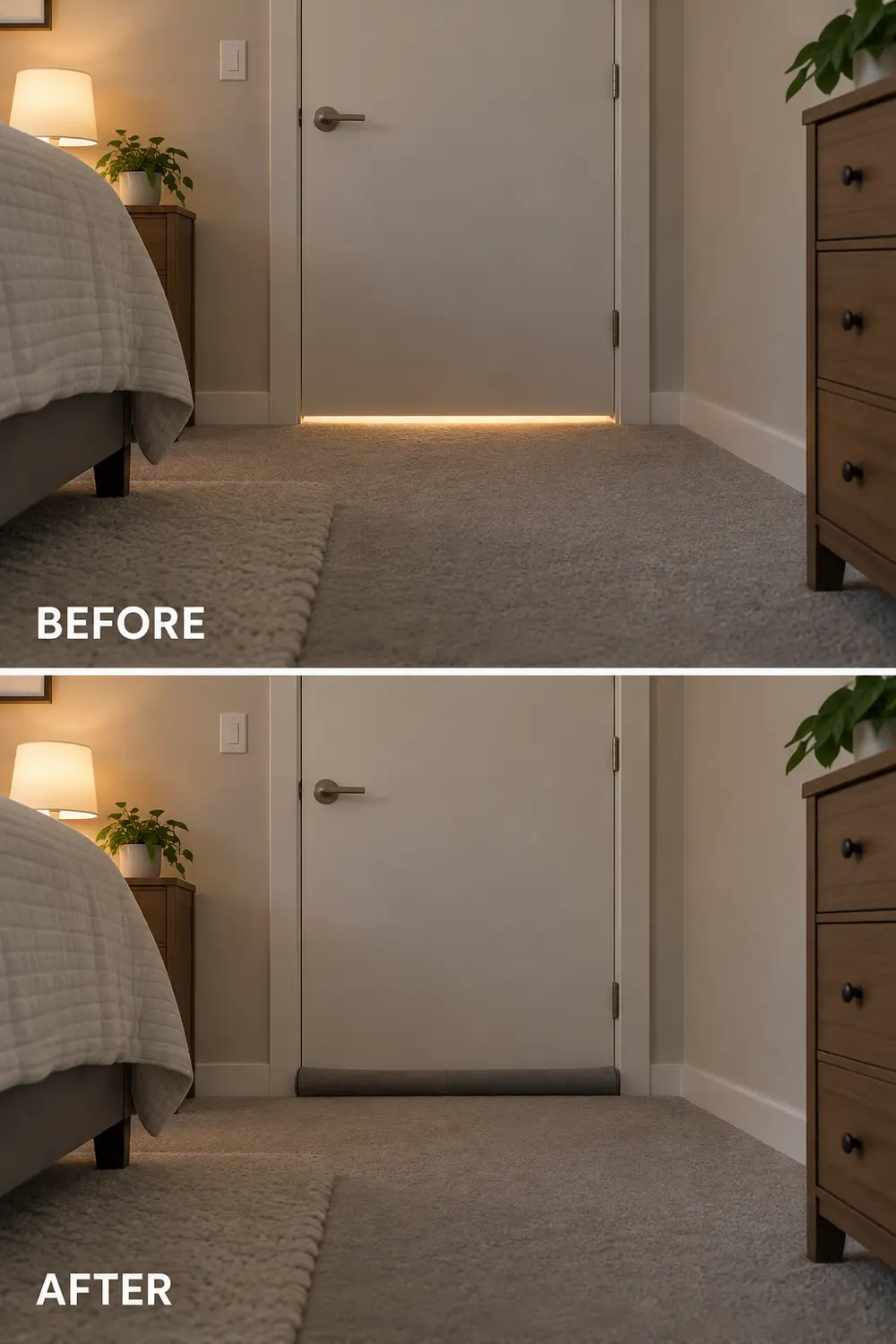
A door gap may be part of the home’s air-return path, so don’t seal it if that would restrict required airflow; ask property management when unsure. Test that the door still opens, closes, and latches normally. Avoid altering a rated door assembly. Skip a floor blocker if it creates a tripping hazard or complicates a quick exit.
5. Reduce the hallway sounds you can influence
Listen for the specific interruption before buying acoustic products. If shoes and keys land against the bedroom wall, move their landing spot. If a shared hallway door slams, report the closer to management rather than adjusting building hardware yourself. A washable runner inside your apartment may soften footsteps, provided its backing is secure and it doesn’t bunch at doors.
Curtains and rugs won’t soundproof a thin door or stop voices traveling through a corridor. A fan or steady background sound may make passing noise less distinct, but keep its volume low enough that important alerts remain noticeable. Position it away from loose fabric, follow its operating instructions, and leave its air intake and outlet unobstructed.
6. Move your pillow away from the disturbance
Sometimes shifting the sleeping position is easier than treating another surface. If your pillow sits beside the hallway wall or directly in a curtain-edge beam, try the opposite end of the bed before moving furniture. That simple trial can reveal whether a different bed orientation is worth the work. Check daylight and household noise from the proposed position first.
Measure the room, bed, door swings, and access routes before rearranging. Keep a usable path to the exit and any emergency-escape window, and follow heater clearance instructions. A quieter corner is a poor trade if the bed traps the closet door; these small-bedroom clearance fixes can help you evaluate the layout without assuming the bed must move.
7. Overlap curtain edges instead of stretching them flat
If curtains are your main light barrier, inspect their edges before replacing the fabric. Center panels need enough fullness to overlap rather than merely touch. Where the existing hardware allows, bring the outer edges toward the wall to reduce side spill. A removable curtain clip can hold a center overlap during sleep without requiring a new rod.
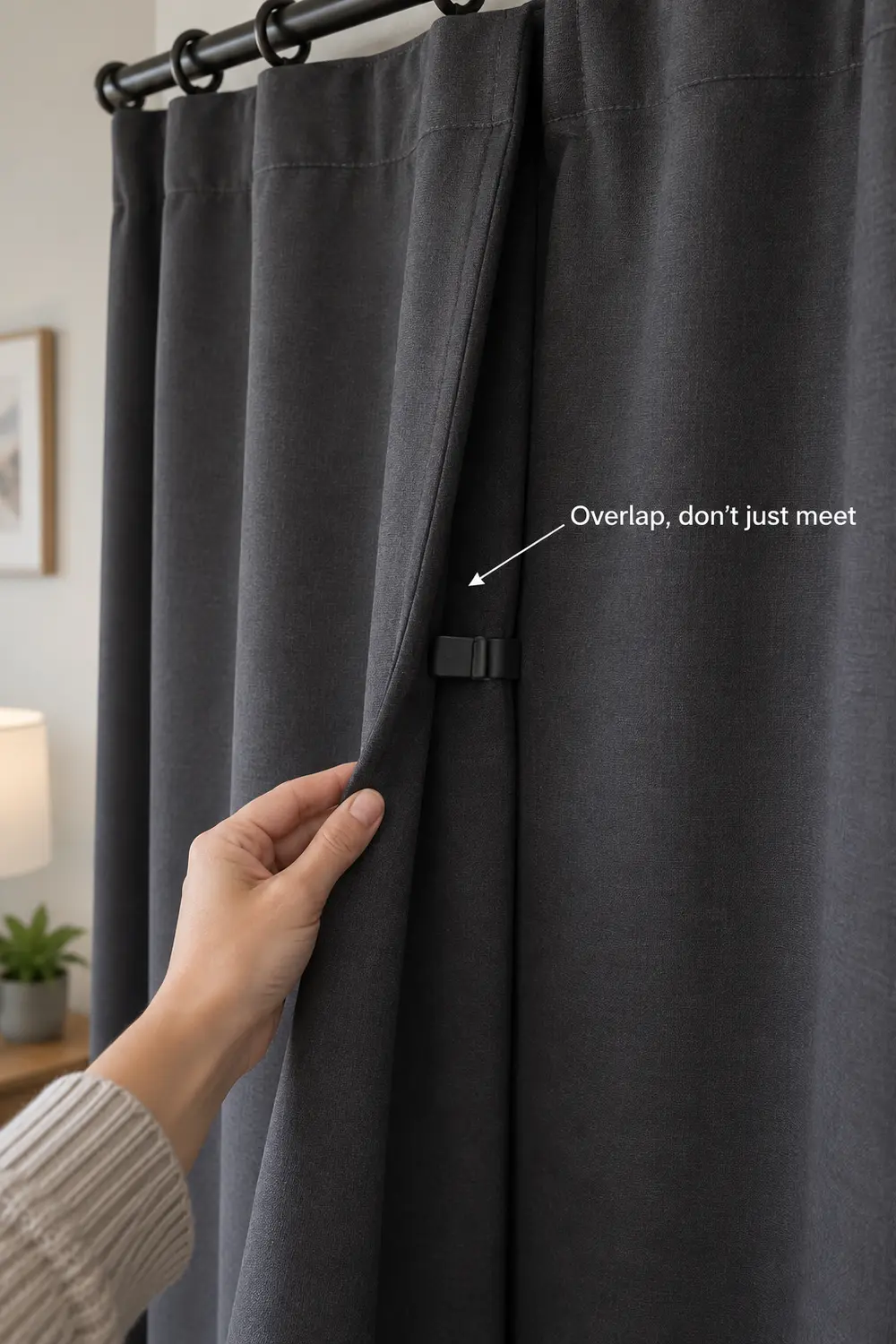
An overlap of roughly 3 to 6 inches is a starting point, not a guarantee; test it from the bed. Short panels may still leak light below the sill, while a larger rod may exceed adhesive hardware’s weight limit. Keep curtains clear of heaters and ventilation openings. Don’t tuck fabric around operating hardware or make window access depend on dismantling the treatment.
8. Separate deliveries from your sleep window
A dark bedroom cannot prevent a doorbell, an intercom call, or a roommate asking where to put groceries. Move recurring deliveries outside your sleep hours where scheduling allows. Use delivery instructions for an approved drop-off location, and tell household members which packages can wait unopened. Avoid instructions that compromise building security or leave shared exits blocked.
Create one receiving spot away from the bedroom: a shelf near the entry may be enough for small parcels. These tiny-entry drop-zone ideas can help keep packages, shoes, and bags out of the walking route. In a building without secure delivery space, pickup or a later delivery day may be more practical than silencing every alert.
9. Agree on specific household quiet hours
“I’m sleeping during the day” leaves plenty open to interpretation. Give housemates an actual window and identify the disruptive tasks: vacuuming outside the bedroom, speakerphone calls, or unloading clattering cookware. A shared calendar entry or a simple door sign can prevent accidental interruptions. Agree on how someone should contact you for something genuinely urgent.
Make the agreement workable for everyone. A roommate working from home may still need to take calls, and children or pets cannot promise silence. Shift movable chores rather than demanding an unused apartment. Arrange pet feeding and care before bed, and review the plan when schedules change instead of assuming one conversation will cover every week.
10. Create a sleep setup you can repeat
Keep the final routine short enough to use when you’re tired: attach the panel, overlap the curtains, check the door treatment, set phone notifications, and confirm household quiet hours. Store removable pieces together in one slim pouch or basket. A fixed place for clips prevents the daily search that makes an otherwise useful setup feel too demanding.
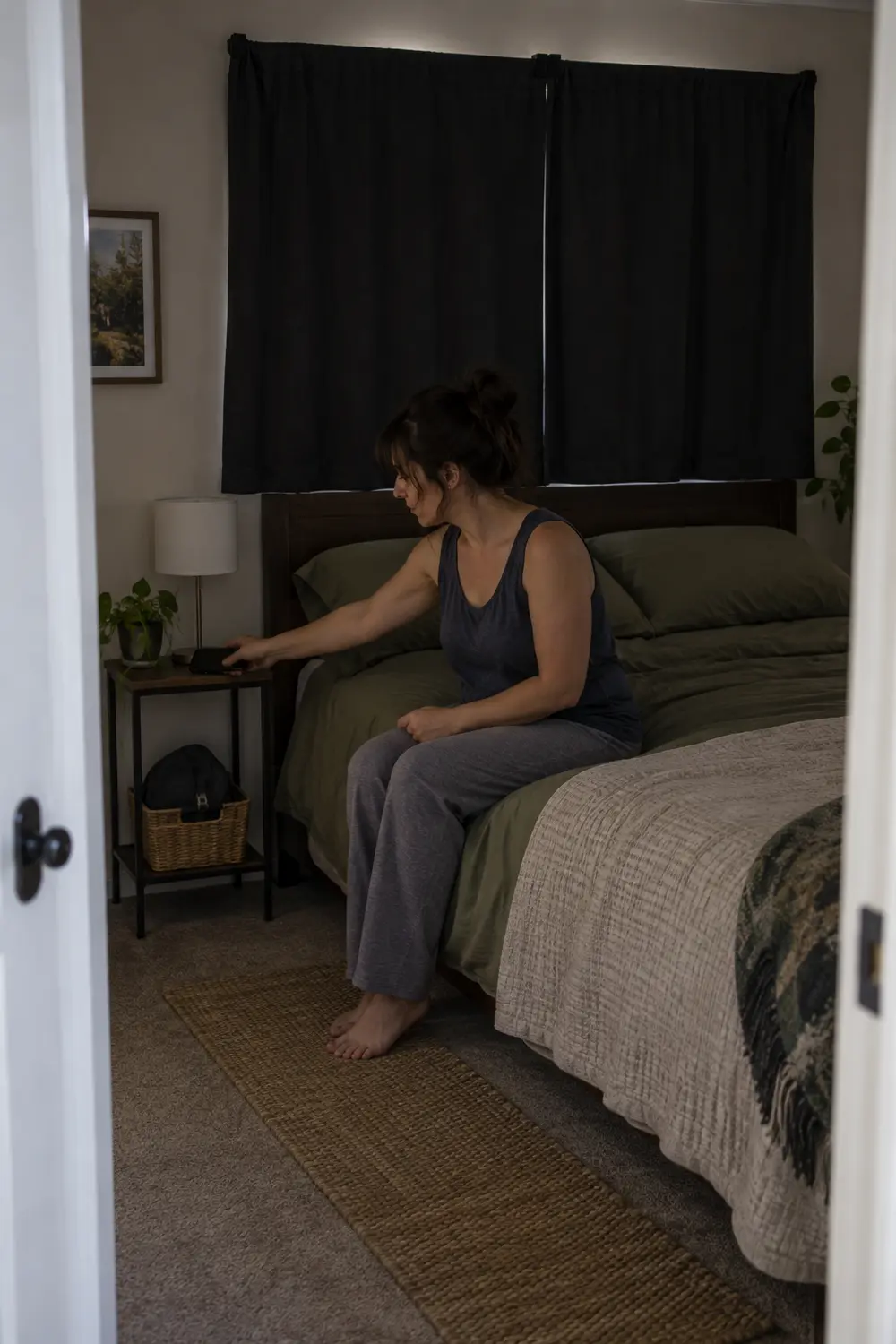
Build the wake-up reset into the same routine. Remove or open the panel, restore daylight, and put loose pieces away so the bedroom can function normally again. After several sleep periods, change only the weak point you keep noticing. If hallway conversations still wake you, another layer of window fabric is unlikely to be the useful next step.
Start with a five-minute check from your pillow at your usual bedtime. Choose one visible light leak or predictable interruption, address it reversibly, and test the result before adding more. The best setup is one you can use daily while keeping airflow, doors, and essential access clear.
Leave a Reply