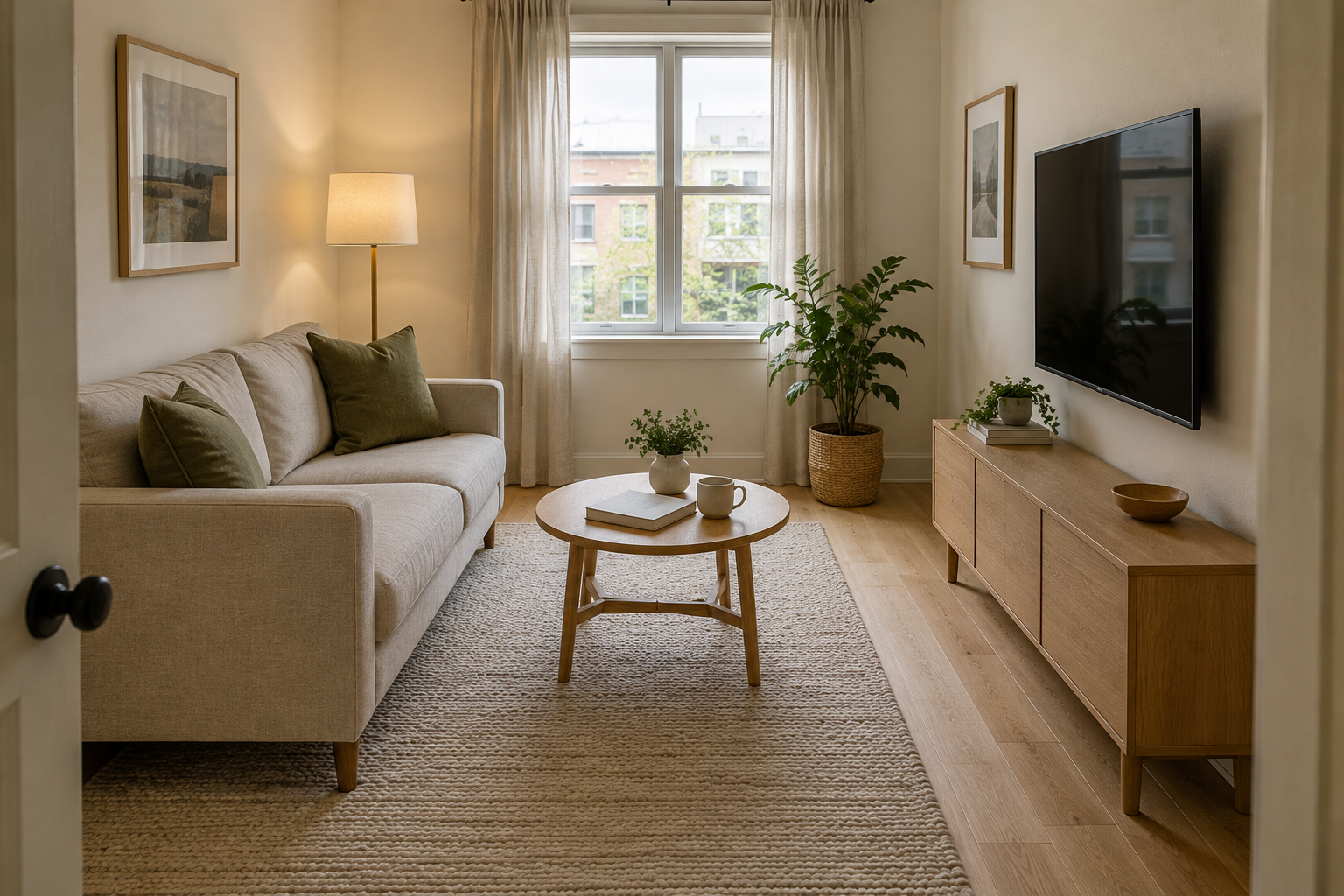
A small living room still needs to handle ordinary life: a quiet evening, a visiting friend, laundry waiting to be folded. The most useful small living room ideas start with those routines, not a shopping list. Before changing anything, notice what feels awkward and what already works. The dimensions below are approximate planning guidelines, not rules; measure your room, furniture, doorways, and delivery route before buying or rearranging.
1. Choose a Sofa for Sitting, Not Just Fitting
Start with the seat you use most. Compare overall width and depth with usable seating space: thick arms can consume precious inches without giving you more room to sit. Tape a potential sofa’s outline onto the floor, then check whether nearby doors and drawers still open.
For example, a sofa approximately 72–80 inches wide and 34–38 inches deep may work along one wall of a compact apartment. Those are planning guidelines, not a universal fit. Sit on similar-size furniture before committing, especially if you like curling up or need supportive arms.
Avoid choosing the smallest sofa automatically. A shallow loveseat may save floor space but leave a tall household uncomfortable. Conversely, a deep sectional can be worthwhile if lounging matters more than adding separate chairs.
2. Establish One Clear Walking Route
Arrange the room around the path people actually take between the entrance, kitchen, hallway, and seating. Keep that route from cutting through the middle of a conversation area when possible. Moving a chair a few inches can help more than replacing it.
In a living room with a balcony door, place the sofa so people can reach the balcony without stepping between the coffee table and television. As approximate planning guidelines, aim for a main passage around 30–36 inches wide and roughly 16–18 inches between a sofa and coffee table. Measure and test the arrangement yourself.
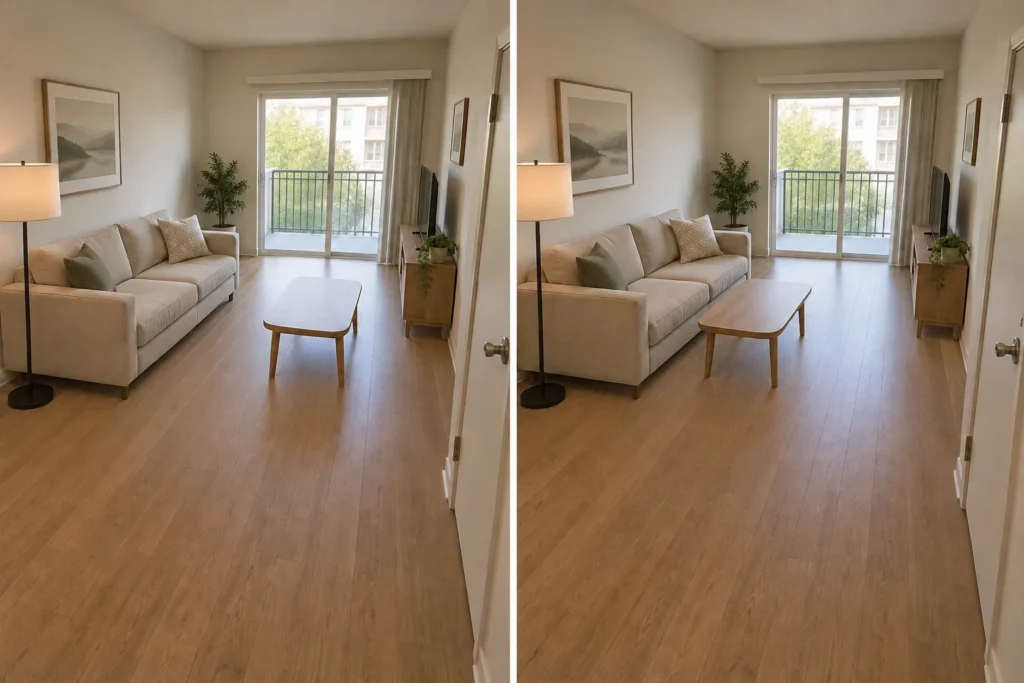
Avoid pushing every piece against a wall by default. However, floating furniture is not always better: in a narrow room, a wall-backed sofa may preserve the only comfortable route.
3. Match Your Table to Your Actual Habits
Decide what a table needs to hold before choosing its shape. Someone who eats dinner on the sofa needs a different surface than someone who only sets down a mug. Try rearranging existing side tables before buying a new centerpiece.
For example, two lightweight nesting tables can sit together for snacks, then separate when a friend visits. A rounded coffee table can make moving around tight corners easier, while a firm tray can turn an existing ottoman into an occasional drink surface.
Avoid assuming every living room needs a coffee table. Side tables may be enough. The tradeoff is less shared surface area, and nesting tables can feel unstable if they are too lightweight. Check height, balance, and reach from your seat.
4. Give Everyday Clutter a Defined Home
Choose storage based on what keeps appearing in the room. Measure board games, folded blankets, electronics, and other bulky items before selecting shelves or cabinets. A shallow cabinet with doors can hide visual clutter without projecting as far into the room as a deep chest.
For example, use one lower cabinet for games and charging supplies, with a basket inside for loose cables. Leave a modest amount of empty space so putting things away does not require rearranging everything.
Avoid buying decorative baskets before knowing what they will contain. Open shelves are easier to access but need regular editing; closed storage looks calmer but may restrict remote signals or equipment ventilation. Anchor furniture as directed, and renters should check lease requirements before drilling.
5. Spread Light Across the Room
Use several sources of light rather than asking one ceiling fixture to do everything. Combine general illumination with a lamp near your favorite reading seat and a softer light elsewhere. Start with lamps you own, moving them before purchasing more.
For example, place a floor lamp beside the sofa and a small table lamp on a cabinet across the room. Choose bulbs with a similar warm appearance so the room feels cohesive. Check fixture wattage limits and whether any dimmable bulb works with your dimmer.
Avoid positioning a bright exposed bulb at eye level or directly opposite a television. Floor lamps cost you some floor area; a plug-in wall light may help, but only if you can mount it safely and manage its cord.
6. Use a Rug to Connect the Seating
A rug can make separate pieces read as one seating area. Instead of centering a small rug in the empty floor, choose a size that reaches under at least the front legs of the main seats when the room allows. Tape out the footprint first.
For example, an approximately 6-by-9-foot rug might connect a sofa and one chair in a compact room, while another layout may need a different size. Measure around doors, vents, and furniture rather than relying on standard room labels.
Avoid layering several small rugs just to cover more floor; edges can bunch and create obstacles. A low-pile rug is easier to maintain and move chairs across, but a bare floor may suit rolling mobility equipment or frequent spills better.
7. Let Window Treatments Work With the Room
Keep useful daylight available while addressing privacy and glare. Check the view from outside at different times of day before choosing coverage. Light-filtering curtains can soften daylight; blinds or shades offer more adjustable control where neighboring windows are close.
For example, use simple curtain panels that pull mostly clear of the glass during the day, with a shade for evening privacy. Position hardware only after checking wall space, window operation, and any lease restrictions.
Avoid hanging fabric where it blocks a heater, air conditioner, or frequently used door. Full curtains add softness but take up space beside a window. In a cramped corner, a fitted shade may be more practical. Follow manufacturer guidance for safe operation, especially around children.
8. Plan Extra Seating Without Crowding Daily Life
Furnish for the people who live there first, then make a realistic plan for guests. One comfortable chair may serve everyday life better than two chairs that squeeze the walkway. For occasional gatherings, borrow seating from another part of the home.
For example, keep the sofa and one armchair in place, then bring in two dining chairs when friends come over. A folding chair stored in a closet can also work if you have somewhere convenient to put it away afterward.
Avoid counting every ottoman or floor cushion as equivalent to a chair. Some guests need back support, arms, or a higher seat. Occasional seating saves room between visits, but frequent hosts may reasonably prefer more permanent seats over extra open floor.
9. Edit Soft Furnishings for Real Comfort
Choose pillows and throws for how they feel and function, not just how they photograph. Keep enough exposed seat depth to sit comfortably. If the sofa already supports your back well, you may need only a small lumbar pillow and a washable throw.
For example, replace a pile of oversized cushions with two smaller pillows that can stay in place while someone sits. Keep the blanket within reach where it gets used, rather than styling it on a chair nobody occupies.
Avoid buying delicate, high-maintenance fabrics for a room that handles snacks, pets, or children. Removable covers can simplify cleaning, but check care instructions before assuming they are machine-washable. Fewer accessories are easier to manage, though a very spare room may need some texture to feel welcoming.
10. Give a Second Activity a Clear Boundary
If the living room also serves as an office, hobby area, or exercise space, define what that activity requires and how it ends. A small dedicated spot can be more manageable than spreading supplies across every available surface. Use existing furniture when it supports the task comfortably.
For example, position a compact desk behind a sofa only if the chair can pull out without blocking circulation. Keep work supplies together and establish a short evening reset so the room can return to relaxing.
Avoid treating a narrow console as an all-day workstation without checking legroom and working height. A permanent desk provides convenience but consumes space; occasional laptop use may suit a dining table better, provided the setup remains comfortable.
You do not need to make all ten changes. Start with the problem you notice every day: an awkward route, nowhere to put a drink, or lighting that makes reading difficult. Rearrange, measure, and live with the change before spending more. A small living room works best when its furniture and routines support each other, with enough breathing room for the way you actually live.
Leave a Reply