A dark living room does not automatically need white walls or another lamp. Sometimes the bigger problem is a curtain covering precious glass, a sofa blocking the sill, or dark surfaces absorbing the daylight that does arrive. The most useful small living room ideas start with those conditions. These ten changes focus on getting daylight farther into the room and making existing surfaces work harder, while leaving room for color, privacy, and furniture you already own.
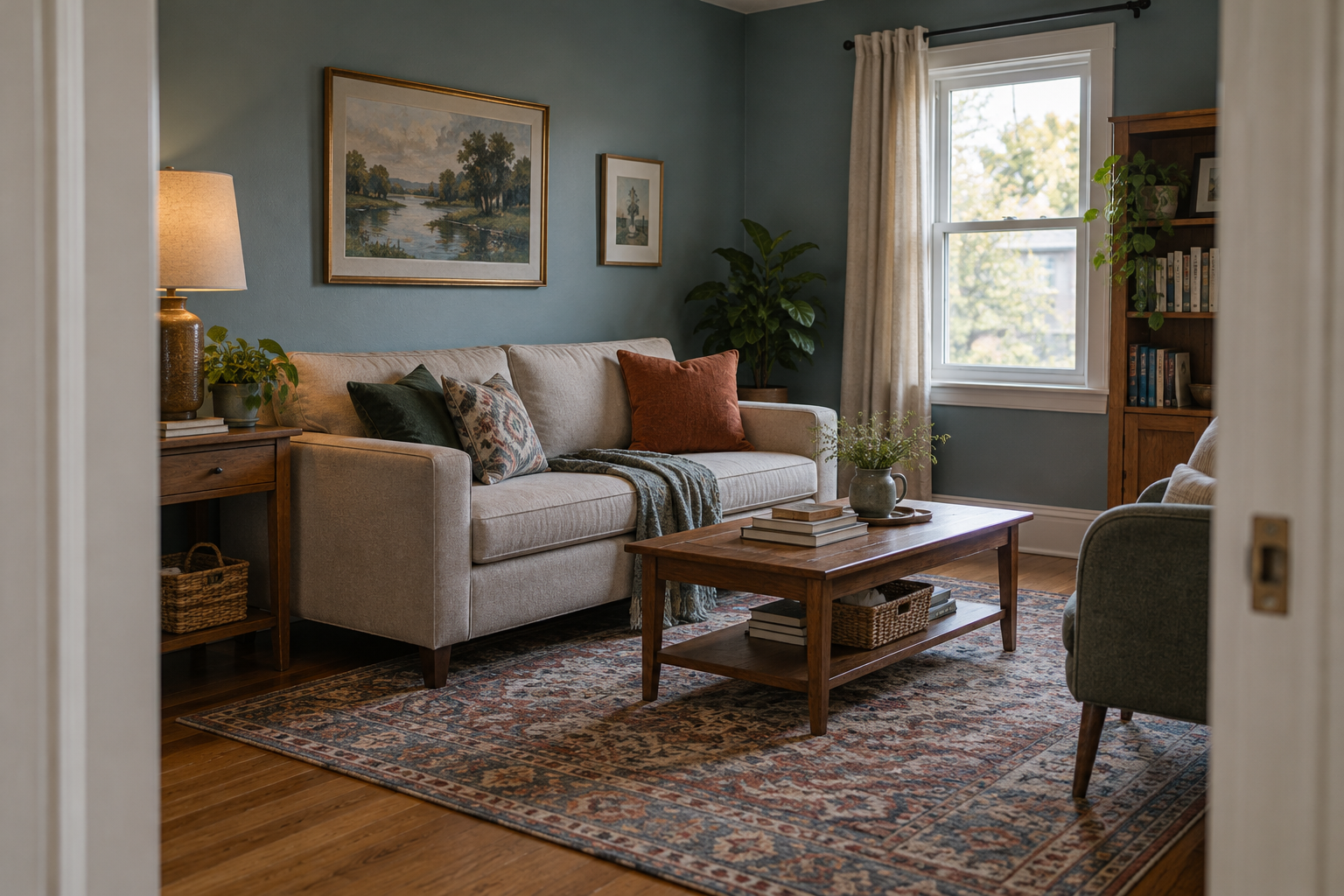
1. Start With the Glass, Screens, and Window Ledge
Before buying anything, clean the interior glass and any safely accessible exterior glass, following the window manufacturer’s care instructions. Dust removable insect screens and clear objects from the ledge. In a living room with one window, a dusty screen and a row of tall plants can noticeably dull the opening. Move those plants to a nearby stand that sits outside the glass area.
The mistake is assuming every obstruction is yours to remove. Exterior screens, storm windows, and nearby branches may require landlord approval or professional access. Cleaning will not overcome a shaded courtyard or deep roof overhang, and reaching outside an upper-story window is not worth the risk. Treat this as a low-cost baseline, not a guarantee of a dramatically brighter room.
2. Give Open Curtains Somewhere to Go
Open curtains should rest mostly beside the window, not across it. If wall space allows, extend the rod approximately 8–12 inches beyond each side as a planning guideline; measure your window, panel bulk, and neighboring walls first. For example, reposition existing linen-look panels so their gathered folds clear the glass instead of leaving a narrow strip of daylight down the middle.
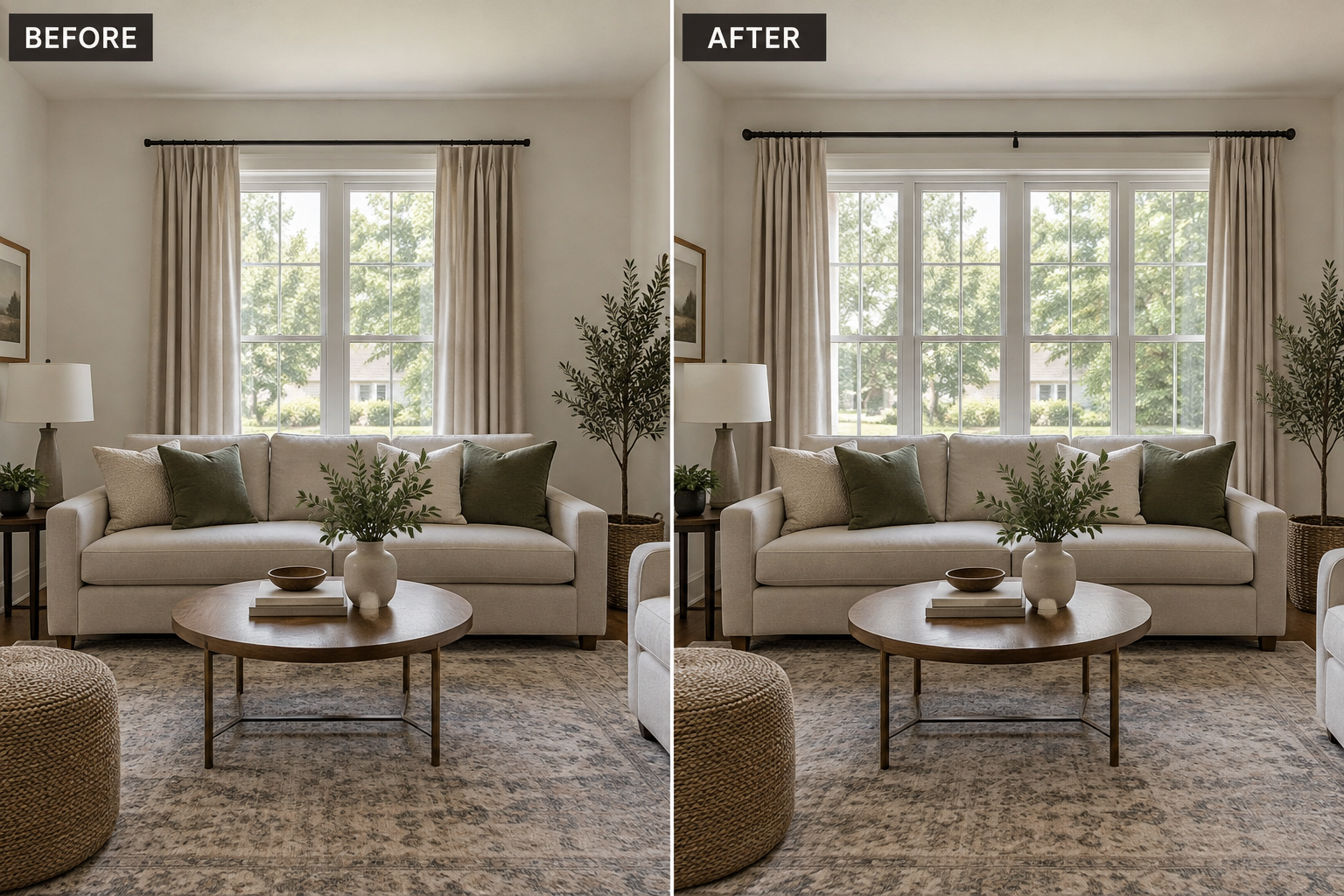
Hanging the rod higher without making it wider does not solve blocked glass. Oversized panels can also create bulky stacks that crowd a corner or heater. Wider placement sacrifices some usable wall space, so it may not suit a window squeezed between cabinets. In that situation, a slim inside-mounted shade can keep the opening clearer, provided its raised stack is compact.
3. Lower the Furniture in Front of the Window
Look at the window from the doorway and notice what cuts across its lower half. A tall sofa back, solid bookcase, or crowded console may interrupt daylight before it reaches the room. Try moving a high-backed chair to an interior wall and putting a low bench beneath the window instead, keeping its top below the sill and required heater clearances unobstructed.
Do not trade a blocked window for a blocked walkway. Moving the sofa may make circulation worse or create an awkward television angle, especially in a narrow rental. Lower furniture also tends to offer less concealed storage. If the window wall is your only workable seating location, prioritize a lower profile when replacement is necessary rather than discarding a serviceable sofa now.
4. Aim a Mirror at Daylight, Not Clutter
Test a mirror’s position before making holes. Have someone hold it securely on a wall perpendicular to the window, then check the reflection from your usual seat. A medium-size mirror above a shallow console might catch bright sky or a softly lit wall and share that brightness with a dim corner. Choose the location by its reflection, not symmetry alone.
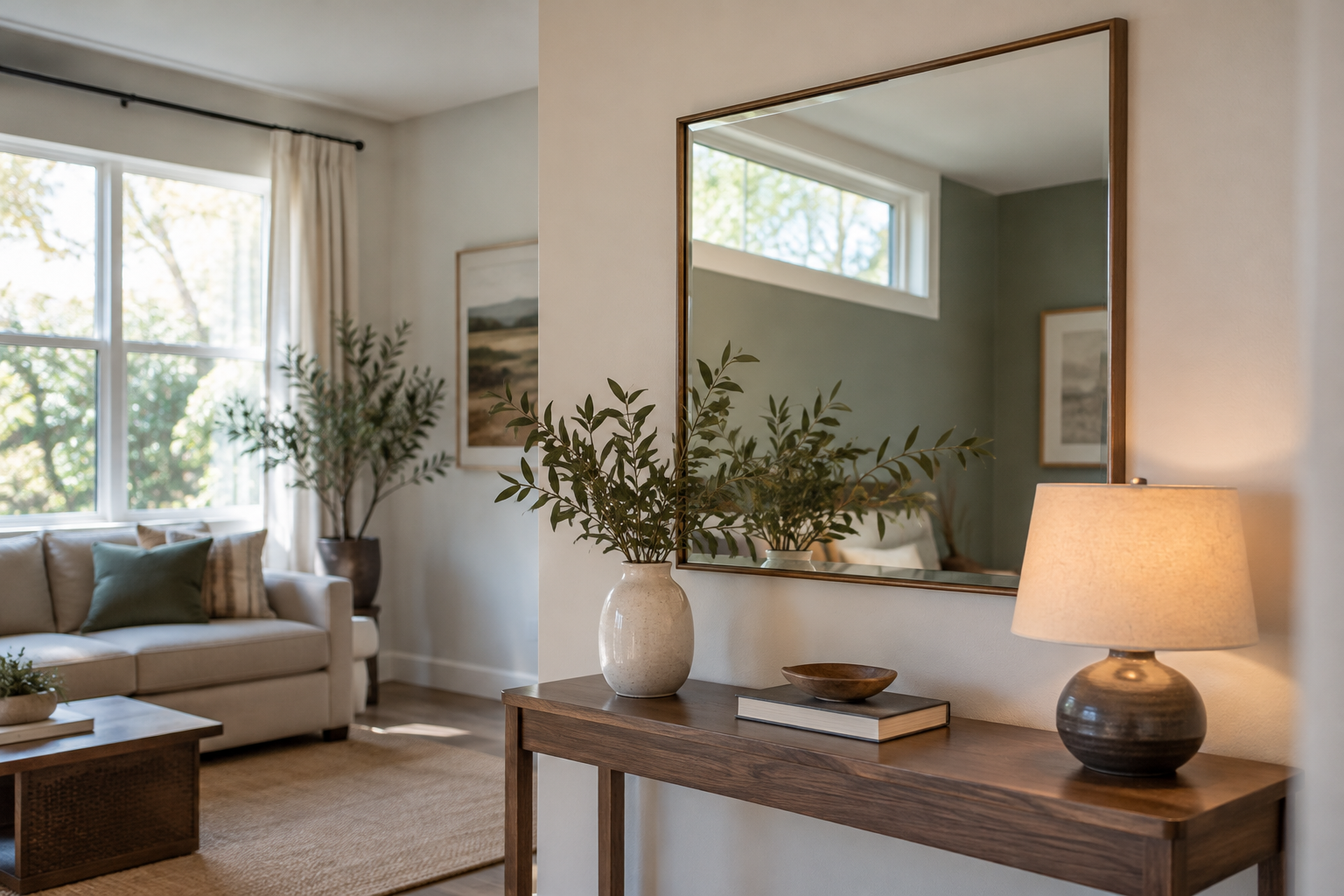
A mirror cannot manufacture daylight, and a poorly aimed one may double the view of a dark hallway or cluttered shelf. Direct sun can also produce uncomfortable reflected glare. This approach may not suit a room where every available wall faces visual clutter. Use appropriate mounting hardware, and avoid an unsecured leaning mirror where children, pets, or tight circulation make tipping a concern.
5. Choose a Lighter Color Without Abandoning Color
If painting is an option, consider a lighter version of a color you actually enjoy: pale sage, soft clay, or warm gray-beige. Compare large samples on more than one wall, morning and afternoon. A light-reflectance value can help compare paint options, but the room test matters most. For example, softened sage can retain personality while reflecting more light than deep forest green.
The common mistake is choosing from a tiny chip under store lighting. A pale color may look muddy in a shaded room or unexpectedly cool beside blue-tinted daylight. Repainting also takes time and may require permission. If you love an existing dark wall, keep it and address the window and furnishings first; lighter paint alone cannot compensate for very little incoming light.
6. Keep Privacy Where You Need It
For a street-facing room, separate the need for privacy from the need to cover the entire window. A top-down shade can screen the lower view while leaving upper glass open to the sky. For example, lower the top edge enough to admit daylight above eye level while keeping the seating area screened from pedestrians. Check sightlines from outside when possible.
Sheer fabric is not reliable nighttime privacy when the room is brighter than outdoors. Likewise, frosted film can obscure a view while still showing silhouettes, and some films are unsuitable for particular glazing. Partial coverage may not work opposite taller buildings. Confirm product compatibility and rental rules, and keep a full-coverage option when neighbors can look down into the room.
7. Let a Lighter Rug Interrupt a Dark Floor
A dark floor occupies a large part of your view, even when the walls are light. Covering some of it with an oatmeal, pale camel, or softly patterned rug can make the room’s lower half feel less heavy. For example, replace a charcoal rug with a low-pile sand-colored version of the same size, leaving the furniture arrangement and visible floor border unchanged.
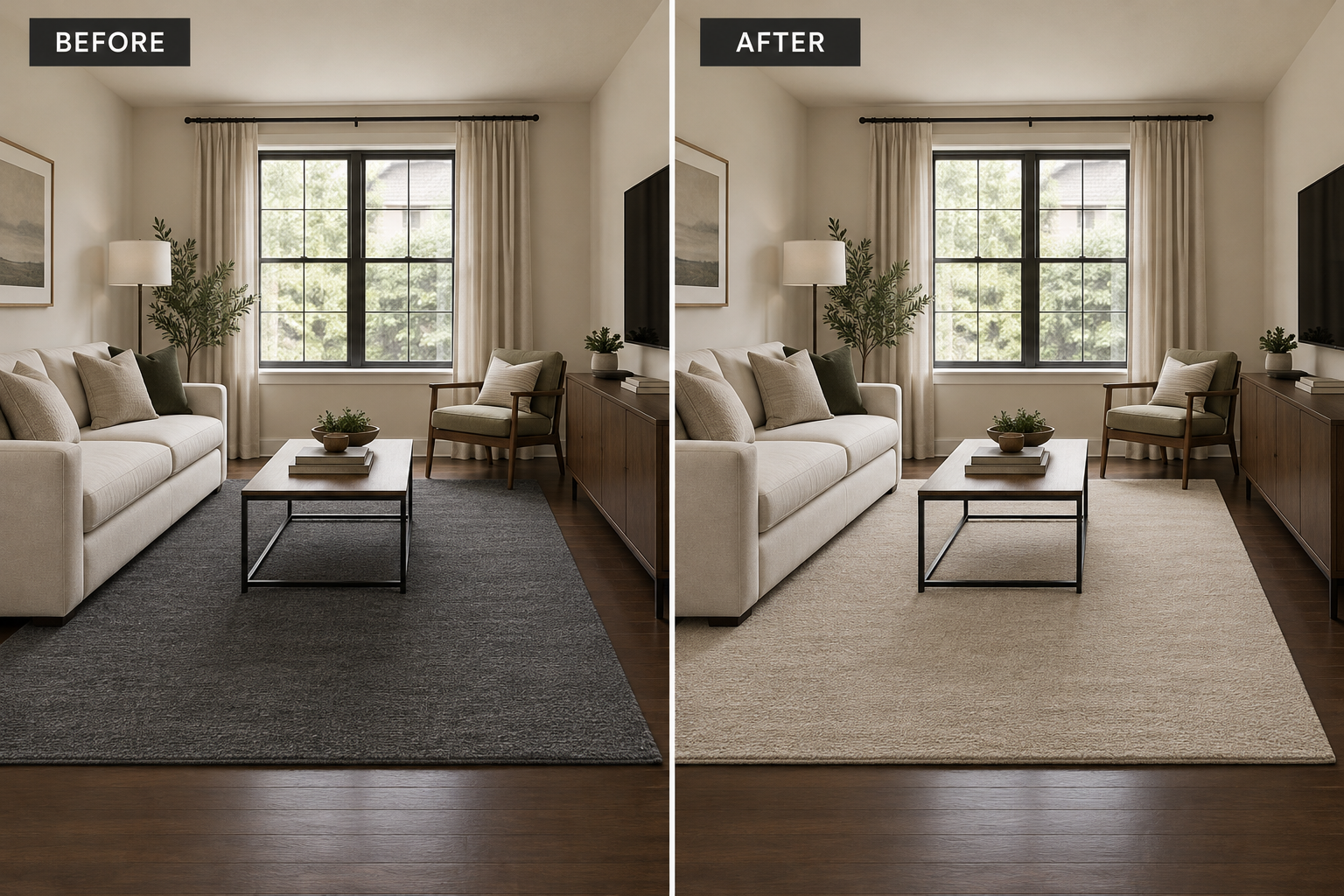
A tiny pale rug floating between furniture can create visual fragments instead of a calmer surface. Measure your seating arrangement before choosing a size, and use a suitable rug pad. Light rugs reveal spills and tracked-in dirt, while thick piles complicate door clearance and mobility. This may not be the best change for a high-traffic entry that opens directly into the living room.
8. Lighten the Largest Upholstered Surface
When a dark sofa dominates the room, change its visible surface before replacing its frame. A well-fitted slipcover in warm flax or light taupe can reduce that large dark area without introducing stark white. Order fabric samples and examine them beside the window. A tightly woven fabric often reads more evenly than deep, heavily textured upholstery with strong shadows between its fibers.
Loose sheets tucked over cushions usually look temporary and shift with use. Slipcovers also do not fit every sofa shape, and pale upholstery requires a realistic cleaning plan. Fabric texture affects appearance, not the amount of daylight entering the room. If pets, spills, or an unusual frame make this impractical, retain the sofa and lighten a different large surface instead.
9. Concentrate Dark Accents Instead of Scattering Them
Brightness is partly about what surrounds it. Keep some dark accents, but gather them into deliberate groups rather than outlining every surface in black. For example, consolidate several small dark-framed pictures into one arrangement over the sofa, leaving a broad area of lighter wall nearby. That uninterrupted area makes the available daylight easier to notice without stripping away all contrast.
Removing every dark detail can make the room feel flat without making it physically brighter. This is a visual adjustment, not a substitute for clearing a window. Large art collections may also need more display space than one grouping allows. Keep meaningful pieces, but consider rotating them rather than covering every available patch of wall with high-contrast frames.
10. Use One Reflective Finish Where Light Already Lands
Introduce a modest reflective surface along an existing daylight path: a glazed ceramic side table, a satin-finished cabinet, or a metal tray on an ottoman. For example, place a pale glazed table beside the sofa where afternoon window light catches its curved edge. The small highlight adds liveliness without requiring a glossy room or another large mirror.
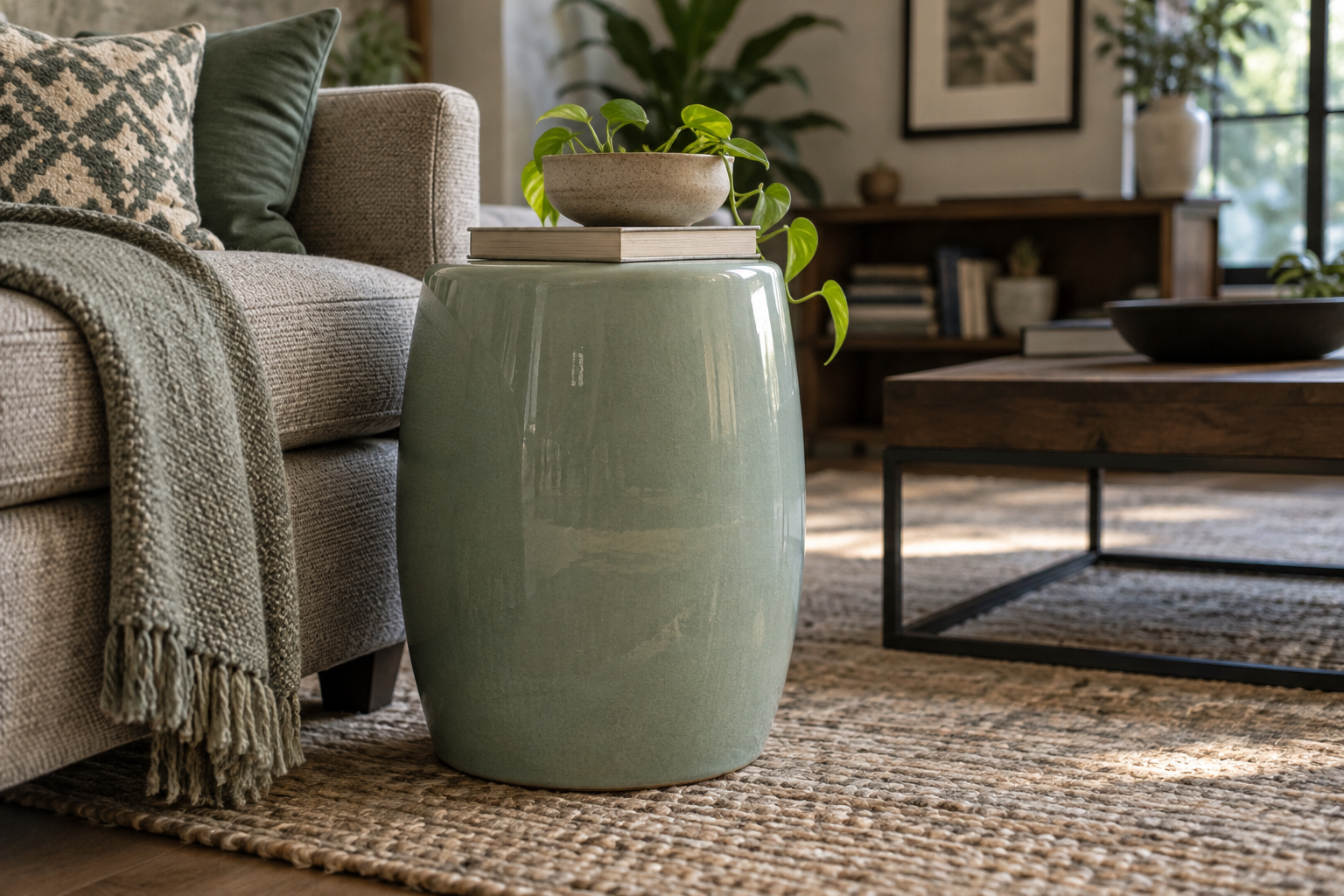
Do not confuse shine with useful brightness. A glass tabletop is mostly transparent, and a shiny surface placed in a dark corner has little light to reflect. Highly polished finishes can show fingerprints or bounce glare toward a television. This approach is less suitable where direct sun is intense; test a movable tray first and check the view from each seat.
Start with the window, then follow the daylight across the room. Clear one obstruction, test one lighter surface, and check reflections from where you actually sit. You may find that your existing wall color works beautifully once the room stops blocking its own light. The goal is a more comfortable balance, not a whitewashed room.
Leave a Reply