If your living room looks tidy after a cleanup but messy again by dinner, the problem may be the return trip. A remote lives across the room, a blanket basket needs unpacking, or incoming mail has nowhere to pause. The most useful small living room ideas shorten the distance between using something and putting it away. These ten fixes target those daily drop zones, with storage that works during ordinary evenings—not just before company arrives.

1. Give Remotes a Home Within Seated Reach
Watch where each remote lands during an evening, then put its home within reach of that seat. A washable armrest caddy works when there is no room for another table. For example, give the television and streaming remotes separate shallow pockets beside the sofa’s usual viewing spot. Returning either remote should take one hand, without standing up or rearranging anything.
The common mistake is choosing a deep catchall that hides remotes beneath glasses and receipts. Dedicated pockets reduce searching, but visible fabric storage can look busier than a drawer and may slide on rounded arms. Skip this approach if the sofa has no stable arm or a reclining mechanism could catch the caddy; use a shallow dish on an existing side table instead.
2. Anchor Charging Cords Where Devices Actually Rest
Put cable clips along the back edge of the table where you actually charge your phone. Leave enough slack to lift the phone comfortably, then secure the excess behind the furniture rather than on the floor. For example, one charging lead can stay threaded through a clip beside the sofa, ready to connect instead of disappearing behind the table after every use.
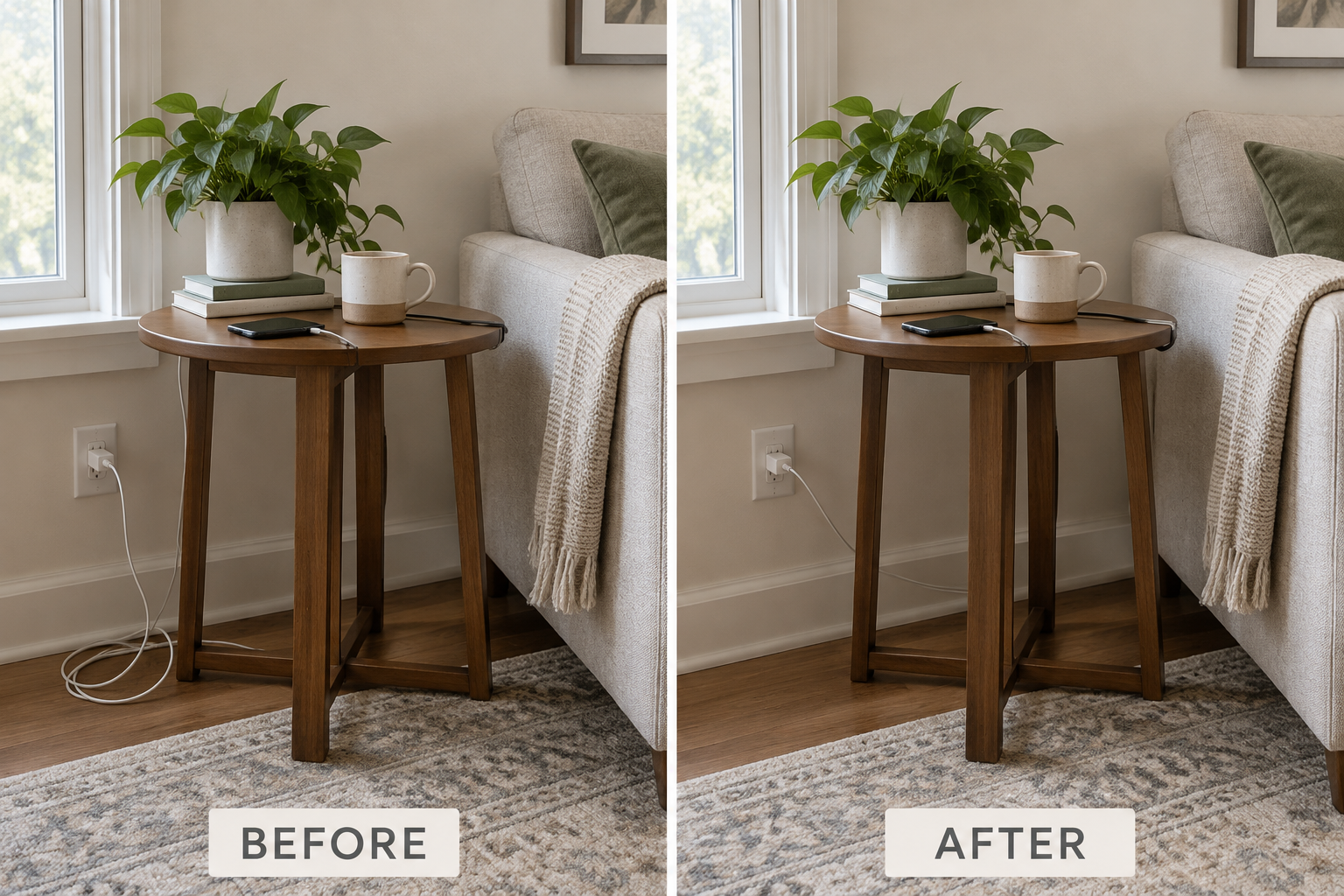
Buying a decorative charging box before checking cord paths often creates another awkward reach. Clips leave some cable visible, but they make daily charging easier and reveal tangled or damaged leads. This setup may not suit a table in a walkway, where a stretched cord could snag someone. Keep cables away from moving furniture, and check adhesive compatibility before attaching clips to a finish.
3. Match Bag Storage to the Bag You Carry
Give the everyday bag a landing spot near the route into the room, not wherever an empty wall happens to be. Use a properly installed hook for a lightweight tote or a sturdy low cubby for a loaded work bag. For example, a single hook beside an existing console lets you unload groceries without first clearing the sofa of your shoulder bag.
A row of hooks becomes another pile when every occasional bag stays there permanently. Limit this spot to current daily bags; store the rest elsewhere. Wall storage saves floor area but requires suitable anchors and enough clearance for loaded bags. It may not suit a narrow passage or a rental with mounting restrictions, and heavy bags can strain handles when hung continuously.
4. Give Mail an Action Slot, Not a Permanent Stack
Sort mail at the first surface where you normally put it down. Place a small upright file there for items requiring action, with recycling immediately nearby. For example, open an envelope at the console, recycle the outer paper, and place the bill in the action slot. Schedule a regular review so that the holder represents unfinished tasks rather than forgotten paper.
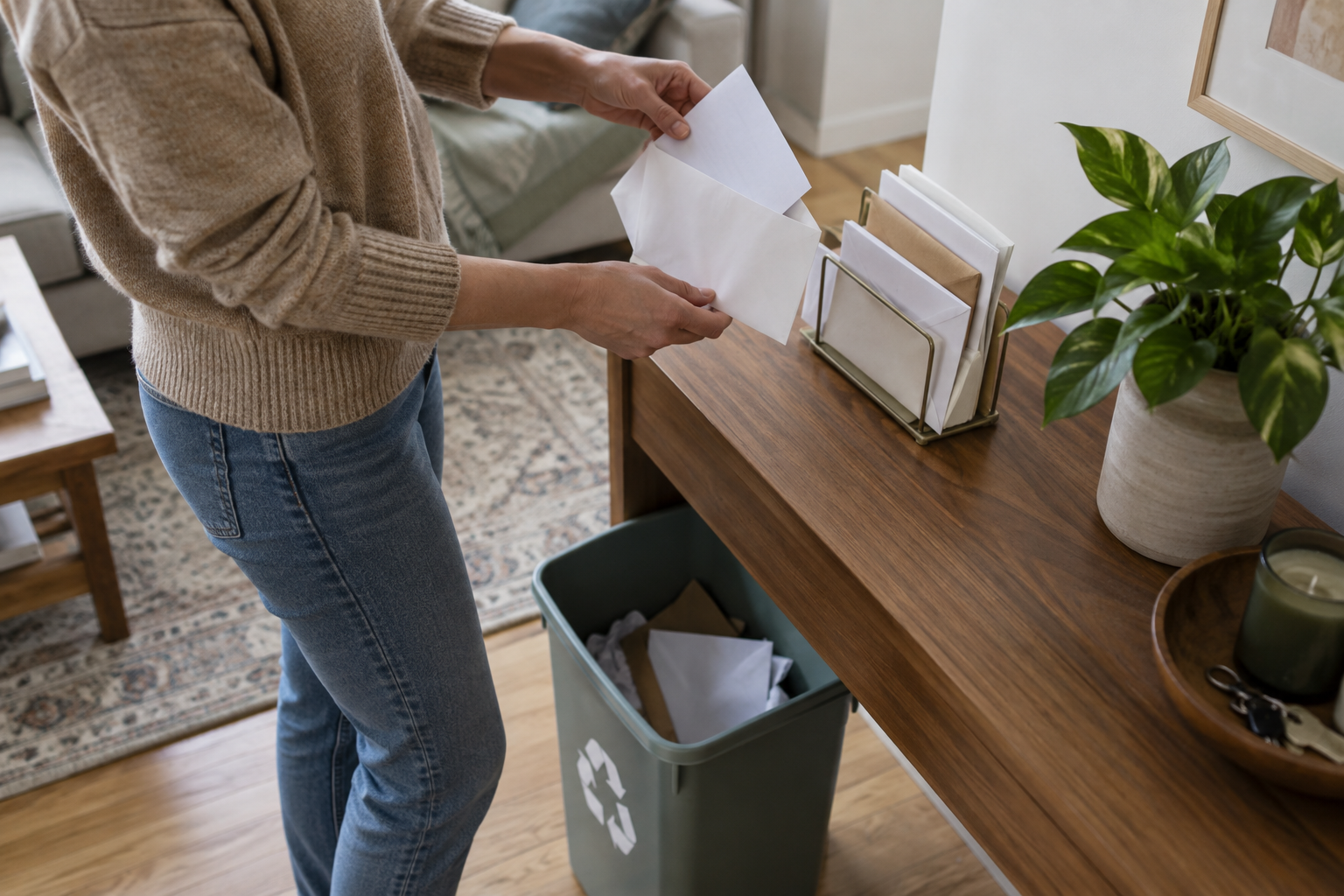
The mistake is treating a beautiful lidded box as a complete mail system. Concealment looks calmer, but it can hide deadlines and adds an opening step every time paper arrives. An exposed file trades some visual quiet for visibility. If the living room is not where you handle household paperwork, keep only a transfer slot here and move its contents to your actual processing spot.
5. Make Blanket Storage Easier Than Folding
Choose an open basket that accepts your everyday throw in one loose fold or roll. Place it beside the seat where the blanket gets used, with the opening fully accessible. For example, a soft-sided basket tucked beside the sofa can hold two lightweight throws without requiring a precise stack. Test the return motion while seated before deciding the basket’s final position.
An undersized basket turns a quick reset into stuffing and refolding. Allow breathing room, but recognize that a larger container consumes valuable floor area. As an approximate planning guideline, a basket around 16–18 inches wide may suit two light throws; measure your space and test your actual blankets. Skip floor baskets where they narrow circulation or invite pets to claim the contents.
6. Separate Fixed TV Wiring From Grab-and-Go Cables
Treat television wiring as a fixed installation, separate from cords you borrow daily. Route connected cables along the rear of the media console using reusable ties, keeping plugs accessible. For example, secure the television and streaming-device leads behind their shelf while leaving the phone charger at the sofa. This prevents someone from dismantling the entertainment setup whenever a device needs power.
The common mistake is packing power strips, adapters, and excess cord into an unventilated decorative box. Hidden wiring looks cleaner, but equipment still needs ventilation, service access, and manufacturer-approved use. Never cover cords with rugs or pinch them behind furniture. This approach may not suit a wall-mounted screen far from an outlet; a qualified installer may be needed for a safe permanent route.
7. Use One Liftable Tray for Temporary Sofa Activities
For activities that spread across the coffee table, use one lightweight tray as a temporary work surface. Keep a notebook, charging lead, and current reading together while you use them. For example, when dinner or a board game needs the table, lift the tray onto a designated console bay. The activity stays intact without forcing every object into permanent storage mid-evening.
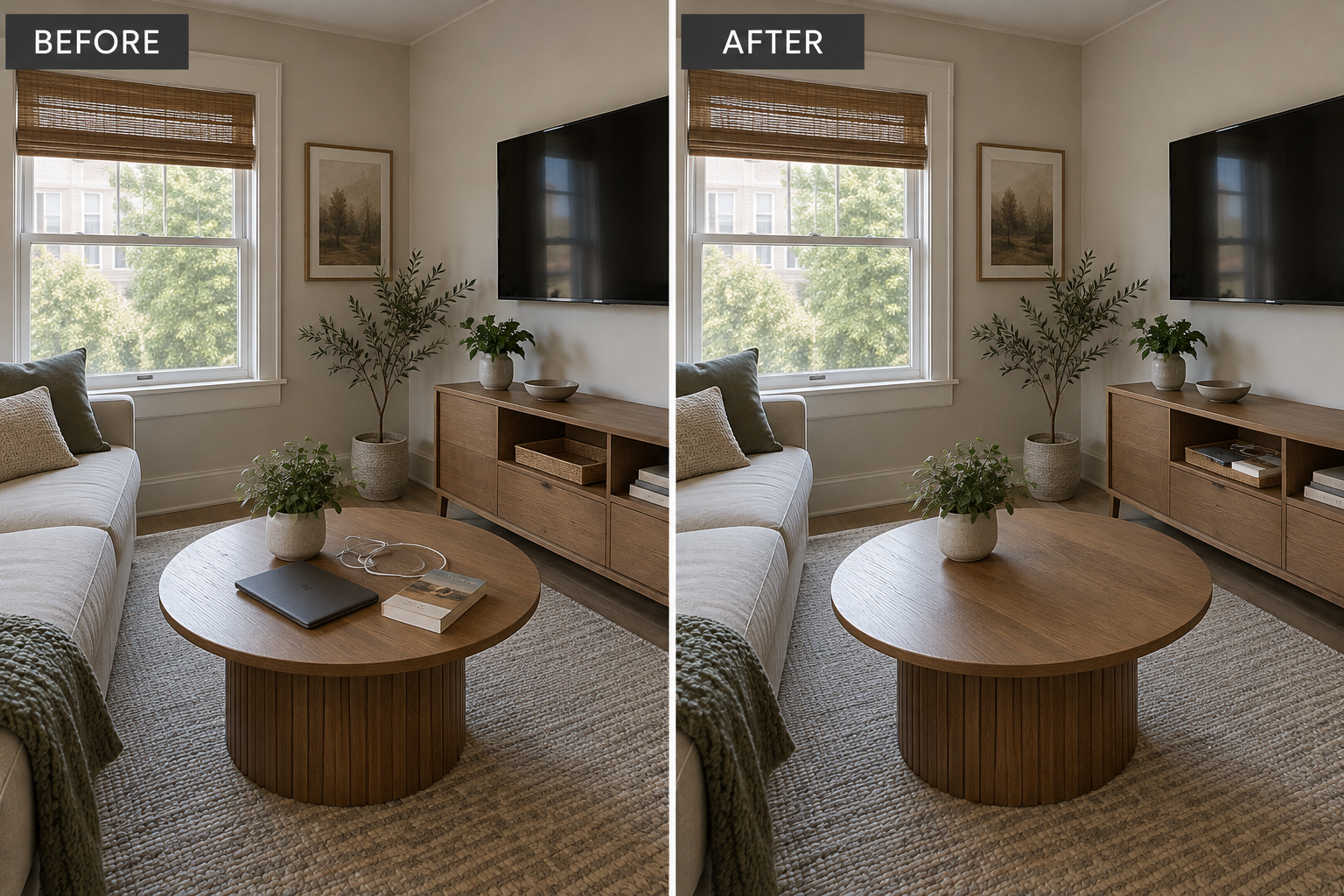
The mistake is letting the tray become permanent parking for unrelated leftovers. Portability speeds a temporary reset, but it does not replace individual homes for remotes, mail, or spare cables. Empty it when the activity ends. This may not suit a room without a stable landing surface, or anyone who would find a loaded tray awkward to lift and carry.
8. Keep Occasional Accessories Out of Daily Storage
Separate daily essentials from accessories needed only occasionally. Put spare charging leads, adapters, and replacement remote batteries in small divided containers inside an existing drawer. For example, keep one compartment for compatible spare cables and another for batteries in their original packaging. The everyday remote pocket and charging spot then stay clear, while backup supplies remain easy to retrieve when something stops working.
Buying more dividers before removing obsolete cords simply organizes the backlog. Check compatibility and condition first, then follow local disposal guidance for electronics and batteries. Compartments make retrieval easier but reduce flexible drawer space. They may not suit a shallow drawer with bulky power adapters; use a removable pouch elsewhere rather than sacrificing the room’s only useful everyday drawer.
9. Set a Seasonal Limit on Living Room Blankets
Keep only the blankets your household regularly uses in the living room. Move extra guest throws and heavy seasonal layers to a closet or suitable under-bed container. For example, if two people usually watch television together, start with two accessible throws and review that number after a week. Reducing the active supply prevents the daily basket from overflowing even when everything technically belongs there.
The mistake is moving blankets into remote storage that you must raid every night. Less visible inventory creates breathing room, but frequent retrieval means the limit is too strict or the wrong blankets stayed. This may not suit households that regularly host overnight guests or have changing comfort needs. Keep genuinely frequent-use layers nearby and rotate clean, fully dry textiles as seasons change.
10. Give Out-of-Room Items a Nightly Return Route
Keep a small handled return basket near the living room exit for items that belong elsewhere, then carry it on your normal evening route. For example, take bedroom charging cords, processed mail, and an empty lunch bag out when you leave to brush your teeth. Empty the carrier at its destinations and bring it back; the routine matters more than the container.

A large return basket can become a second junk drawer if nobody empties it. The tradeoff is accepting a small amount of temporary clutter in exchange for fewer separate trips. Keep the carrier small enough to notice when it fills, and assign the reset to a specific household routine. It may not suit a tight exit; store it on an existing surface instead.
Start with the item you put away most often, then test its new home for several ordinary evenings. Notice both halves of the trip: can you retrieve it easily, and can you return it without clearing space first? When either step feels cumbersome, adjust the location or capacity before buying more storage. A workable living room reset should fit the routines you already have.
Leave a Reply