When your bed shares a room with your sofa, separating sleeping from living is less about constructing another room than controlling what you see. A useful boundary might hide pillows from the front door, soften the view from a chair, or close temporarily when someone visits. These ten approaches work within your studio’s existing footprint. Measure before buying or moving anything; dimensions mentioned here are approximate planning guidelines, not building-code or accessibility standards. Keep required exits, window access, ventilation, and everyday routes usable, and check rental permissions before attaching hardware.
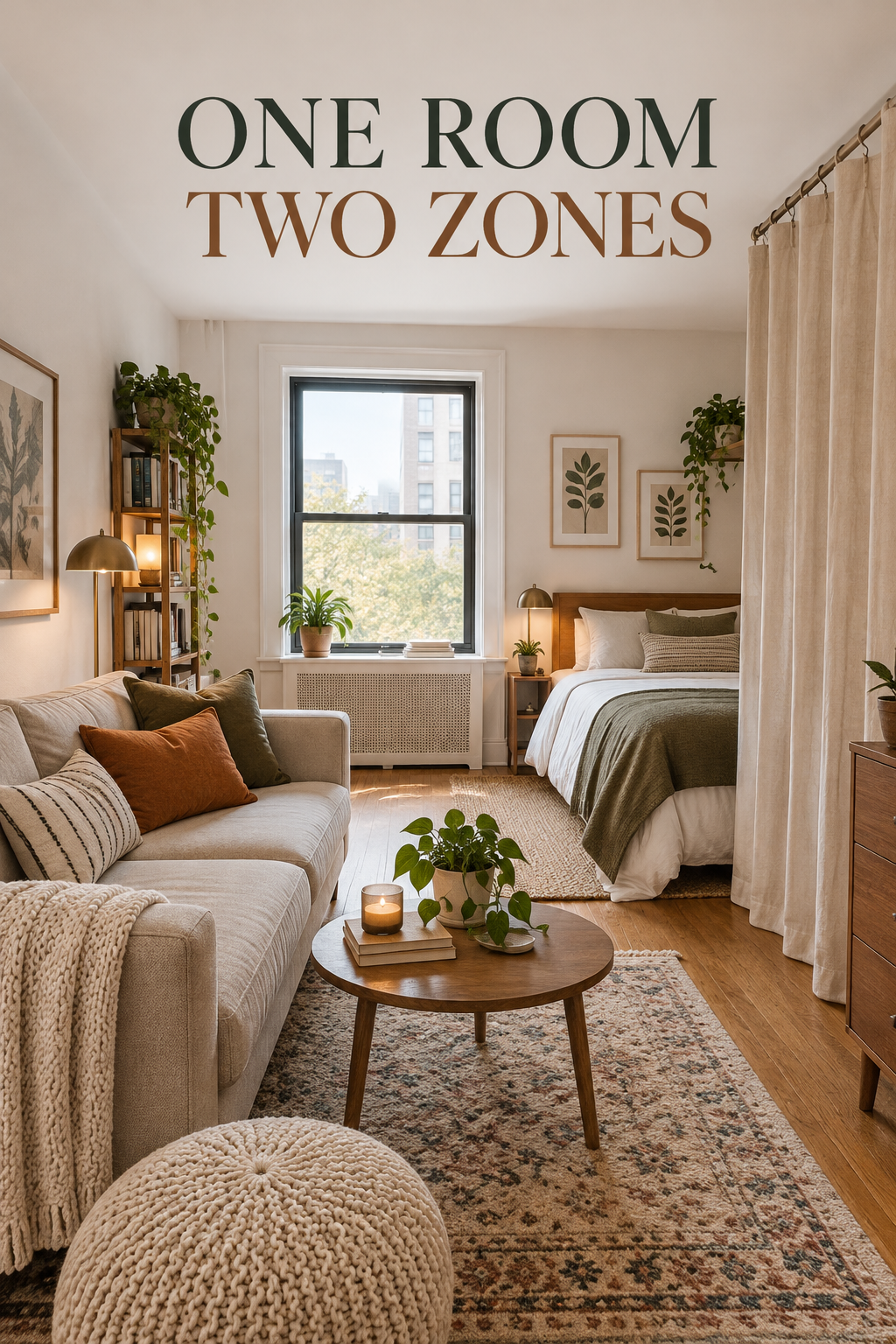
1. Move the Bed Out of the Entry Sightline
Start at the front door and notice which part of the bed appears first. Sometimes rotating the bed or placing its head against an existing return wall removes most of it from that view without adding a divider. For example, a bed running along the entry axis might fit crosswise behind an existing closet projection, leaving the sofa visible when the door opens.
The mistake is improving the doorway view while making the bed awkward to enter or blocking a closet. Map the furniture footprints with tape, then walk your normal routes carrying laundry. This approach gives directional privacy, not enclosure, and may not suit couples needing access on both sides or studios where every alternative placement obstructs a heater, outlet, or exit route.
2. Use the Sofa Back as a Low Visual Boundary
Turn the sofa so its back faces the bed rather than placing every piece against a wall. In a rectangular studio, a compact sofa across the foot of the bed can establish a living area facing the opposite wall. Its back conceals some bedding from seated eye level while leaving the upper room open, preserving daylight and conversation across the apartment.
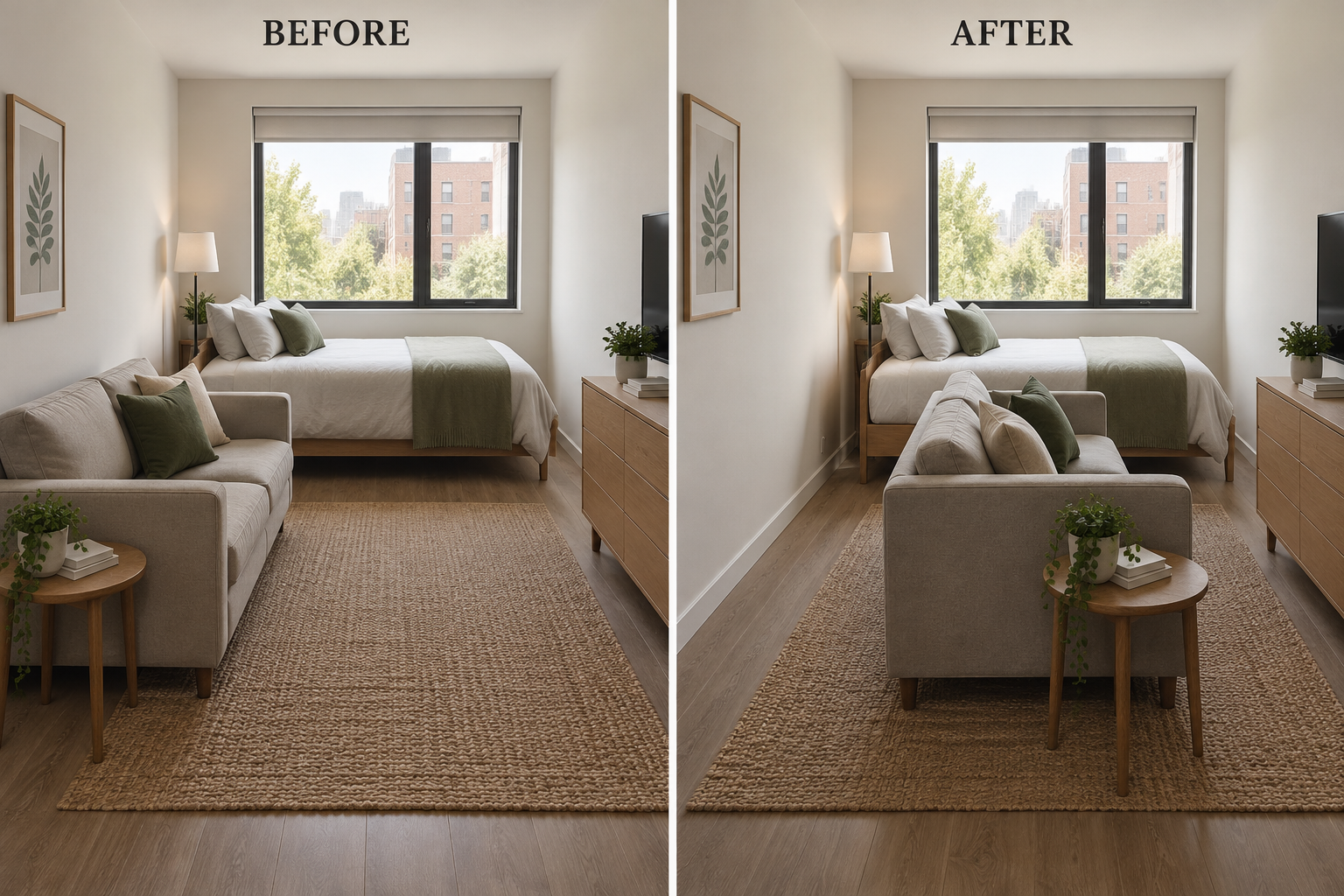
Avoid wedging the sofa directly against the mattress or adding a console simply to fill the gap. You still need space for bedding changes and comfortable passage around the grouping. A low sofa will not hide a standing person or a tall headboard, so this works best when the goal is a calmer living-room view rather than private dressing space.
3. Hang a Curtain That Parks Completely Open
A ceiling-track curtain offers privacy when needed and disappears into a narrow stack afterward. Run it along the exposed side of the bed, with enough fabric to close without pulling taut. In a studio with one shared window, choose a light-filtering textile so the living area still receives softened daylight when the sleeping zone is closed.
Do not assume every ceiling accepts the same anchors, or that a tension-mounted system is suitable for any span. Get rental approval where required and follow the hardware’s installation instructions. Keep fabric away from heaters, cooking appliances, and exit paths. Sheers blur detail rather than guarantee privacy, especially when the sleeping area is brighter than the room beyond.
4. Angle a Folding Screen Across the Exposed Corner
A folding screen works best when it intercepts a specific view rather than trying to span the entire apartment. Place a stable, partially folded screen diagonally near the bed’s exposed corner to conceal the pillows from the sofa. Choose panels opaque enough for your purpose, then test the angle from your usual seat before settling on its position.
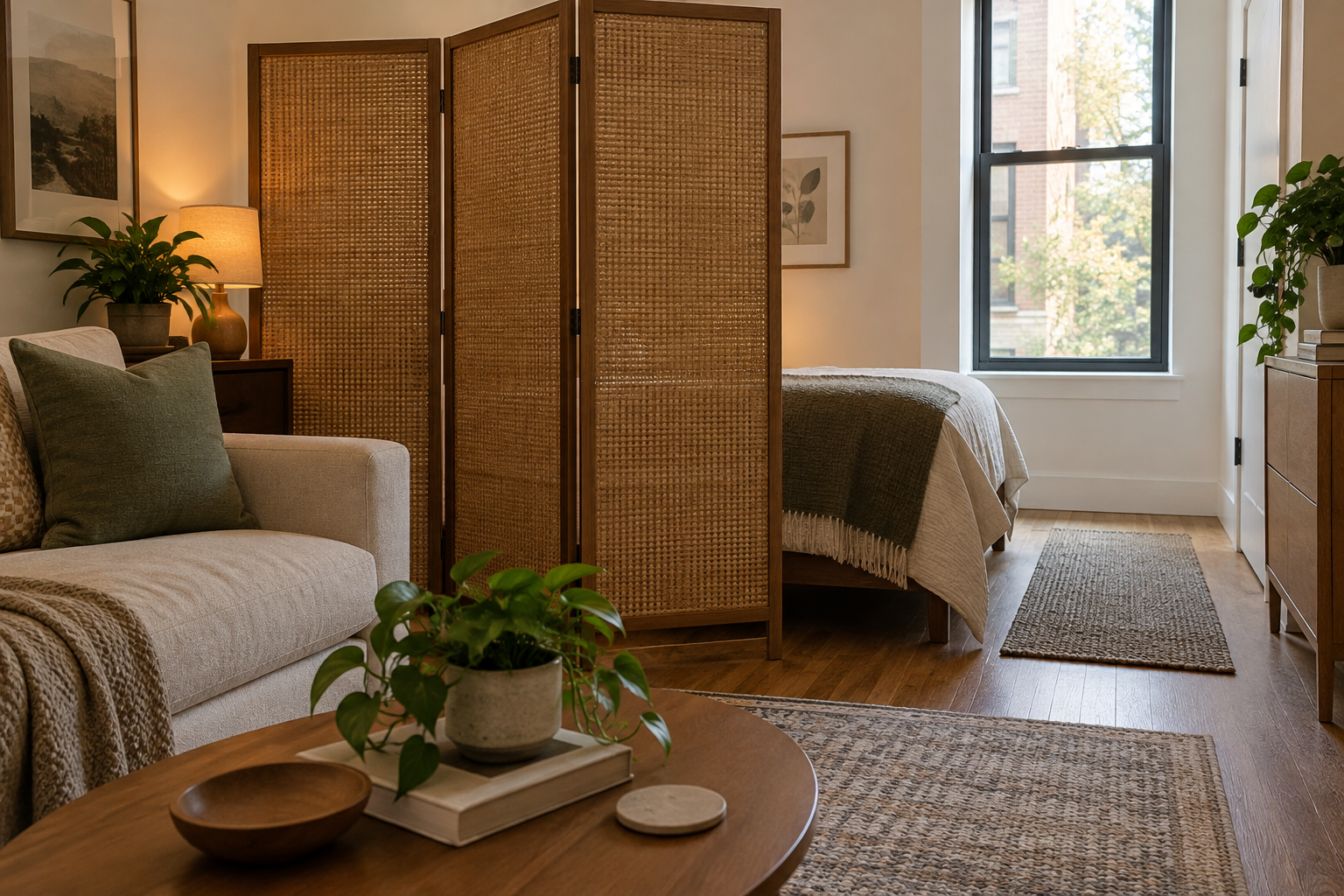
Opening a screen nearly flat can make it unstable, while extending it too far can create a hallway-sized bottleneck. Follow the manufacturer’s stance guidance and account for feet or hinges projecting into the route. This is less suitable around climbing children, energetic pets, or households needing a consistently wide, obstacle-free path through the room.
5. Filter the View With an Open Bookcase
An open-backed bookcase can combine storage with selective screening. Position it perpendicular to a wall beside the bed, then place baskets and books around the shelf levels that interrupt the view of the mattress and pillows. Leave some upper compartments open so daylight travels through. A shallow unit may provide enough separation without taking the footprint of a deep cabinet.
Do not treat an ordinary bookcase as a freestanding partition unless its manufacturer permits that use and the required anchoring is possible. Loading every shelf also turns a light-filtering boundary into a bulky visual block. If your lease prevents necessary securing, or the unit’s back is unfinished and exposed, choose a purpose-built divider instead of improvising.
6. Choose Translucent Panels When Daylight Is Shared
For a cleaner, more architectural boundary, consider a purpose-built freestanding divider with translucent rigid panels. A frosted or textured surface can obscure bedding while transmitting more light than an opaque screen. In a studio whose only window sits beside the bed, position the divider between the mattress and seating area, keeping its supporting feet out of the main walking route.
Translucent does not mean invisible: silhouettes may become clear when a lamp is on behind the panel. Check a material sample under daytime and nighttime lighting before committing. Avoid loose glass sheets or improvised supports, and remember that wide stabilizing bases consume floor space. This option is unsuitable if those bases interfere with your household’s circulation or mobility equipment.
7. Lower a Roller Shade Only When Privacy Is Needed
An interior roller shade can screen one straight sightline without leaving fabric gathered beside the bed. Mount a suitable system above the bed’s exposed side using approved hardware, then lower it for guests and raise it for daylight. For example, a shade spanning the view from the dining table can hide the pillow area while leaving the foot-end route open.
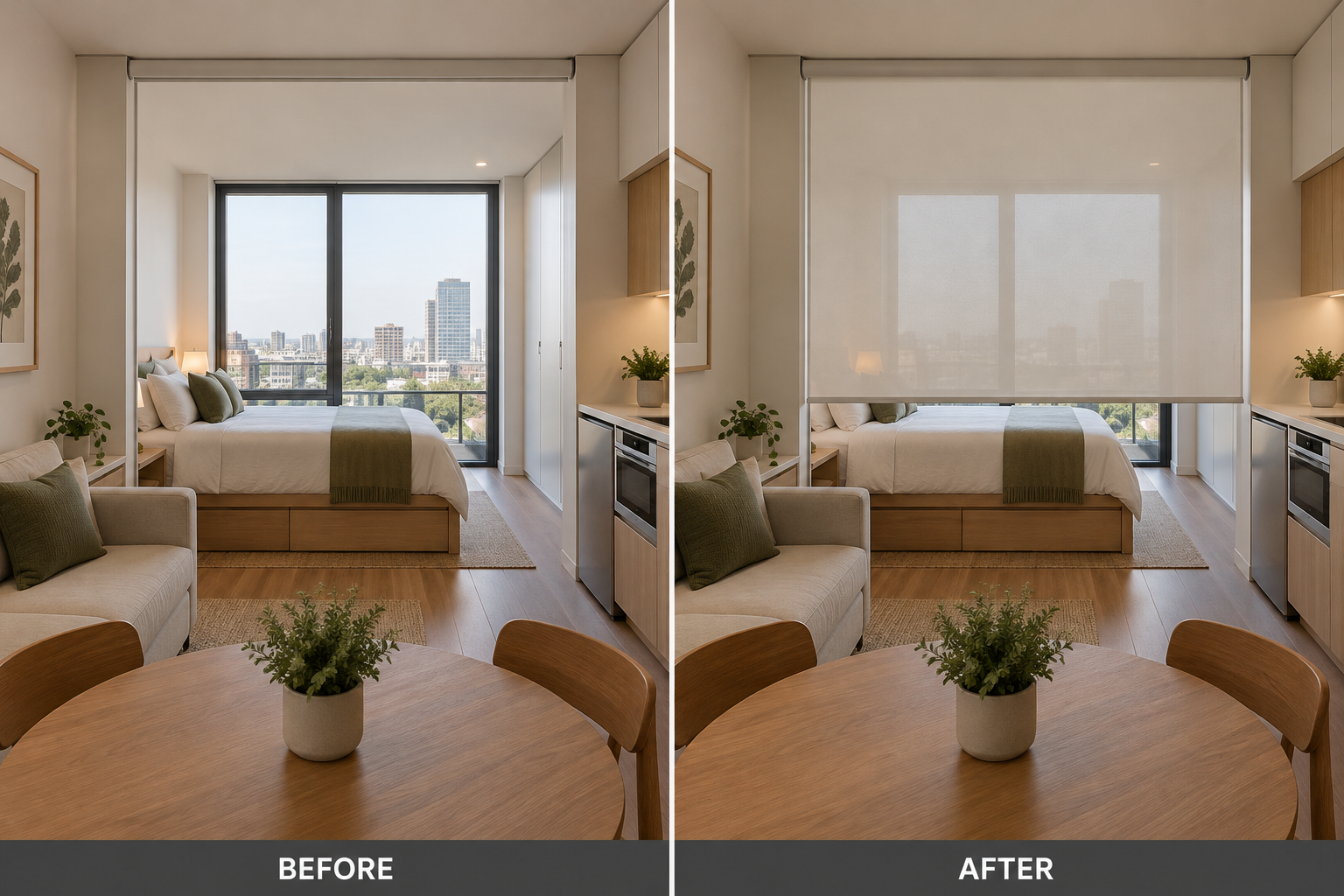
Do not assume a window shade is approved for every ceiling application or unsupported width. Confirm mounting requirements and rental permissions, and favor cordless operation, particularly around children. A lowered shade can sway and offers no sound separation. Avoid placing it across the only route out, where someone must lift or duck under it to leave.
8. Create a Leafy Filter at Seated Eye Level
Plants can soften a persistent bed view when complete concealment is unnecessary. Group a few upright, leafy plants in stable floor pots between the sofa’s sightline and the pillow end, using foliage rather than a continuous row of containers. In a sunny studio, overlapping leaves can make bedding less visually prominent while preserving an airy connection between the two zones.
The common mistake is buying plants tall enough to screen the bed without checking available light or their mature spread. Foliage provides filtered views, not dependable privacy, and watering adds maintenance near bedding. Use drip protection, select species appropriate for pets and children, and skip this approach if the plants would crowd circulation or need frequent relocation to survive.
9. Add a Bed-Attached Privacy Wing
When the main problem is seeing pillows from one side, a compatible bed-frame-mounted headboard with a side return can provide targeted screening. Look for a manufactured design that wraps slightly around the head of the mattress rather than building a full enclosure. An upholstered wing facing the living area can hide the most recognizable sleeping details without screening the window.
Do not lean an oversized decorative panel against the bed and call it a headboard. Confirm attachment compatibility and stability, and check whether a projecting wing makes getting in and out difficult. This solution only addresses the head-end sightline; it will not hide the mattress from across the room and may be unsuitable for beds requiring caregiver access.
10. Make an Exposed Bed Read Like Daytime Seating
If a physical divider would obstruct the room, reduce the bed’s visual identity instead. For a twin or daybed positioned along a wall, use a fitted daytime cover and supportive back cushions, then store sleeping pillows and the duvet in existing underbed storage. From the living area, the same footprint reads more like a lounge, giving the two daily functions a clearer transition.
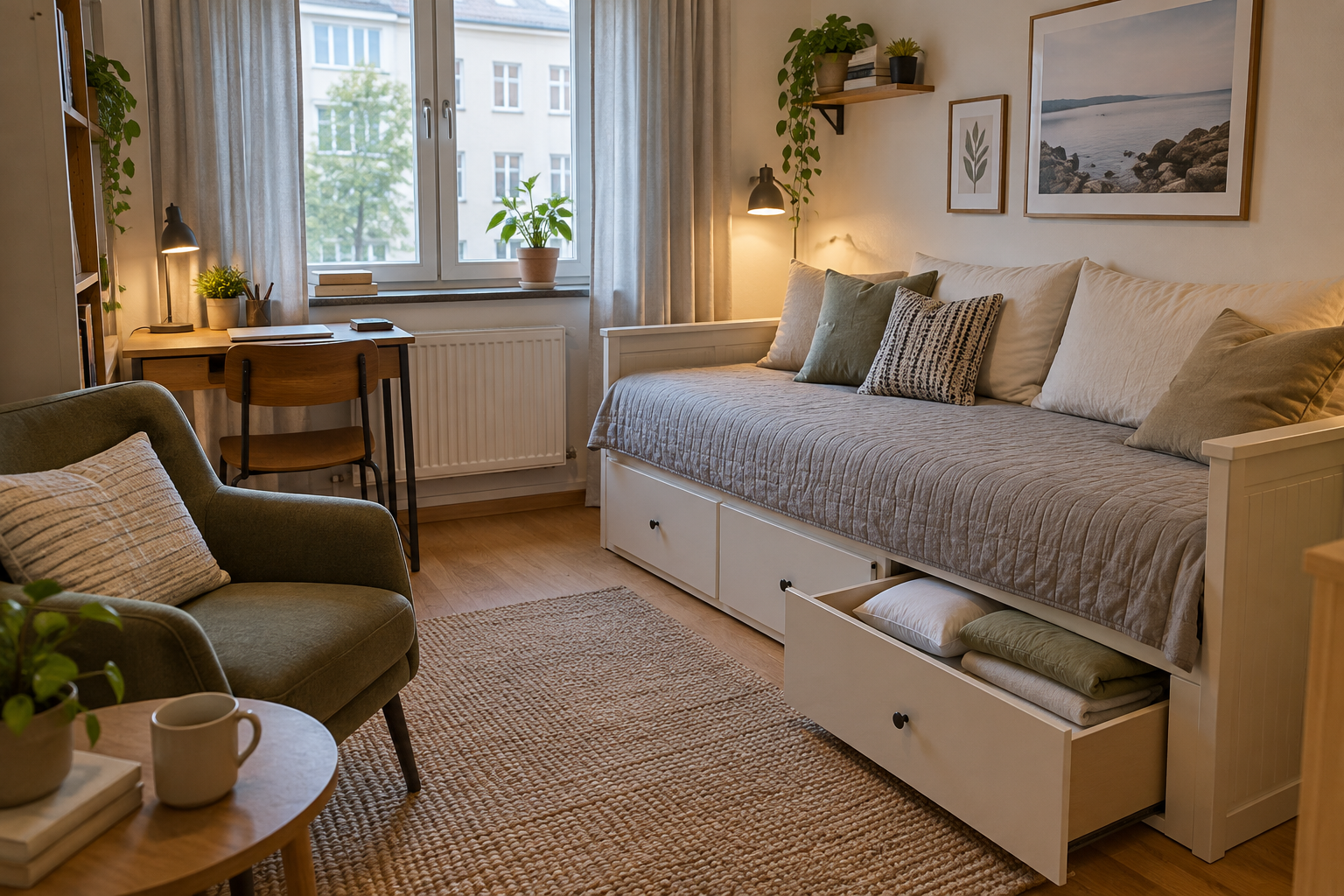
This is visual camouflage, not privacy for sleeping or changing. Avoid piling on decorative cushions that have nowhere to go at night, and be realistic about the daily reset. A deep full or queen mattress rarely functions like comfortable seating without substantial back support, so this approach is strongest for an existing daybed or narrow bed rather than every studio layout.
Choose the smallest intervention that fixes your most bothersome view. Test it from the entrance, your favorite seat, and the bed itself, then check it again after dark. A successful studio boundary does not need to resemble a permanent wall: it should give sleeping and living distinct identities while keeping daylight, daily routines, and the way out comfortably available.
Leave a Reply