A small bedroom can hold a bed and still fail at the everyday basics: opening the closet, reaching a nightstand, or walking out without turning sideways. Before replacing furniture, measure the room, mattress, bed frame, and every door swing, including closet handles. The dimensions below are approximate planning guidelines, not building-code or accessibility standards. Your household may need more space for mobility aids, caregiving, or nighttime movement. Start with the smallest adjustment that restores both closet access and a dependable path to the bedroom exit.
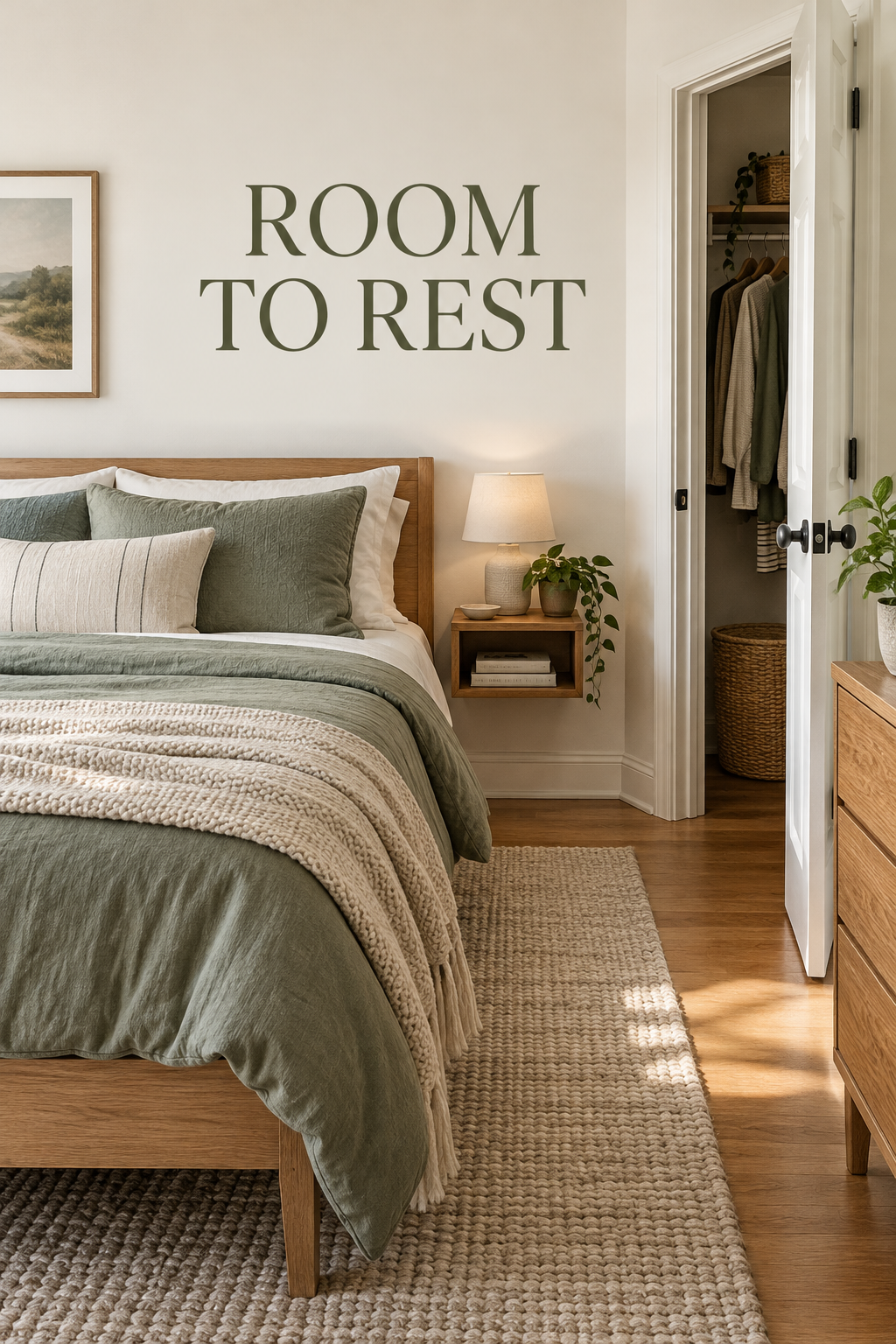
1. Recover the Gap Behind the Headboard
Check whether unused space behind the bed is stealing the inches your closet needs. In an approximately 10-by-11-foot bedroom, moving a freestanding headboard four inches closer to a plain wall can recover four inches at the foot. That may let a closet door finish its swing instead of striking the mattress. Check the frame supports and baseboard before moving anything.
Do not force the bed against an outlet, crush a cord, or crowd a heater to gain clearance. Bulky headboard legs may prevent the mattress from moving as far as expected. This fix suits a small shortfall, not a door that overlaps the bed by a foot. Preserve any clearance required by heating equipment and keep window operation unobstructed.
2. Rotate the Bed onto a Different Wall
A quarter-turn can move the mattress out of a closet door’s arc without changing the furniture. Sketch both orientations first. In an approximately 10-by-12-foot room with the closet near one corner, shifting a queen bed’s headboard to the adjacent uninterrupted wall may put its narrower side, rather than its foot, beside the closet approach. Test the bedroom entry at the same time.
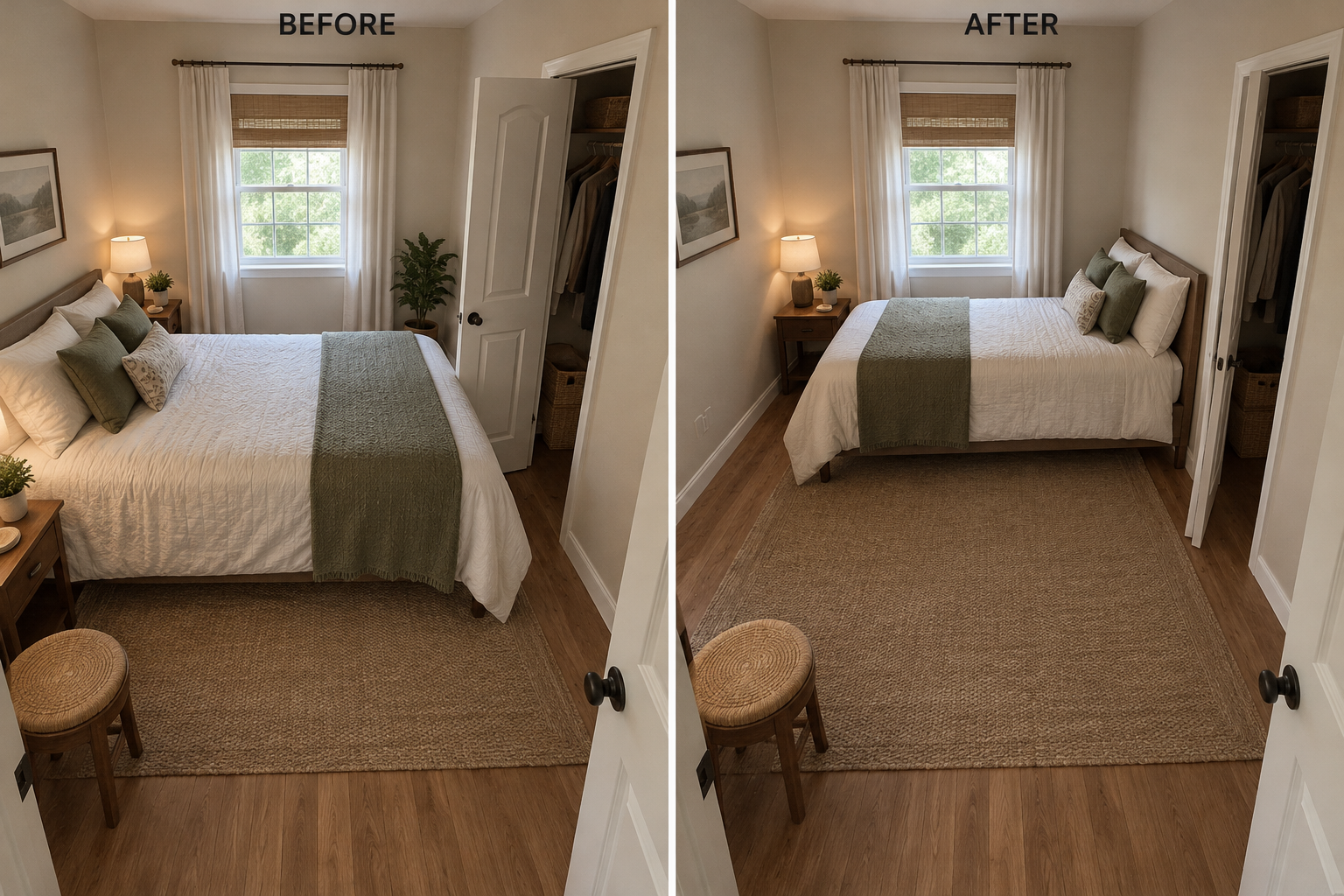
Do not assume the longer wall automatically works better. Rotation can solve the closet collision while leaving one sleeper trapped behind the bed or putting a pillow against a radiator. Tape the proposed footprint on the floor and walk around it. Reject the arrangement if opening either door requires moving bedding or squeezing through an unreliable exit path.
3. Offset the Bed Instead of Centering It
Symmetry is optional; closet access is not. If the closet sits beside the bed, shift the frame several inches away from it while retaining usable access on both sides. For example, redistributing two roughly 28-inch bedside gaps into about 24 inches and 32 inches may give the closet side enough working room. Confirm the actual door arc rather than relying on those numbers.
The mistake is treating the narrower side as leftover space nobody will use. A gap that works for one person may be unsuitable for a partner, someone with limited balance, or a caregiver. Try the route at bedtime before committing. Keep the closet-side aisle free of laundry baskets so the recovered width remains available when the door opens.
4. Choose a Frame That Stays Close to the Mattress
Measure the outside of the bed, not just the mattress. A queen mattress is approximately 60 by 80 inches, but a padded frame or sleigh footboard can extend well beyond it. Replacing an oversized surround with a straightforward platform may recover several inches exactly where a closet door catches. Compare complete assembled dimensions, including projecting legs, before ordering.
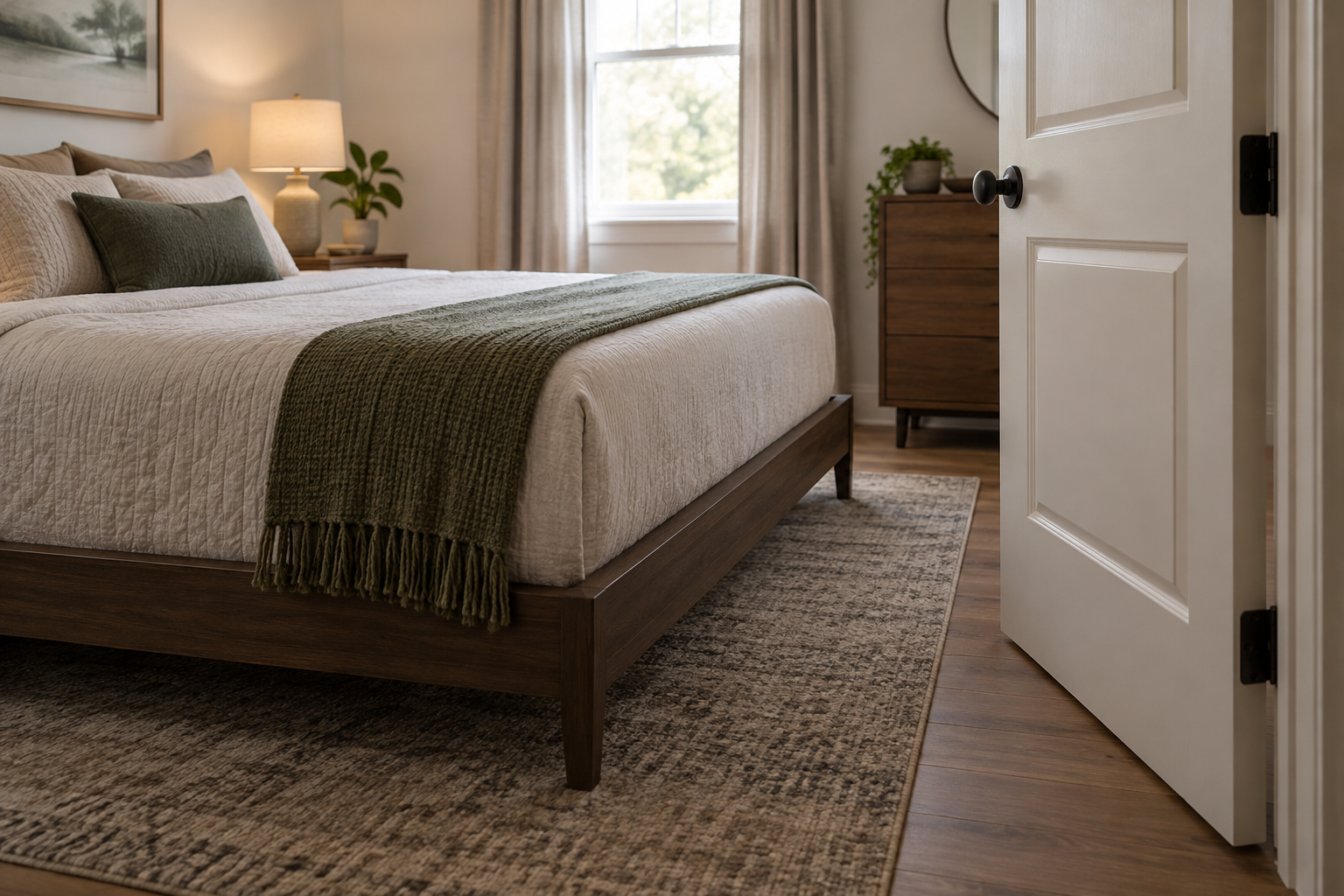
A frame labeled compact can still have toe-catching legs or a thick headboard. Avoid solving the door collision with a replacement that creates a new nighttime obstacle. Also check mattress support requirements and bed height. Removing a footboard from an existing frame is appropriate only when its construction permits it without weakening the bed; consult the assembly instructions.
5. Reduce Mattress Size Where It Actually Helps
When the room is fundamentally overfilled, a smaller mattress can restore meaningful clearance. Moving from a queen to a full typically saves about six inches in width and five in length. That can help a closet beside the bed or beyond its foot. Mark the smaller footprint, including its frame, and test the closet with a person standing in front of it.
Downsizing is not automatically the economical or comfortable answer: it may require new bedding and a new frame, and two adults may find a full too restrictive. Taller sleepers should consider the lost length. If only width is the problem, compare dimensions carefully; a different mattress format may preserve length, but its frame still needs to fit.
6. Replace the Closet Door's Outward Swing
If the bed already has sensible access, changing the closet door may be more effective than moving it. Bypass sliding panels remove the outward swing, while bifold panels reduce—but do not eliminate—the projection. For a roughly five-foot-wide reach-in closet facing the bed, compare both systems using the opening’s actual width, height, and available mounting surfaces.
Sliding doors expose only part of the closet at once, and bifold handles may still hit the bed. Check whether interior drawers can open behind the proposed panels. Renters need written permission before changing doors or tracks; homeowners should verify suitable attachment points. Neither system compensates for an aisle too narrow to stand in and handle clothing comfortably.
7. Replace the Nightstand That Blocks the Door
Sometimes the bed is not the actual obstruction: the nightstand is. If a deep bedside cabinet sits inside the closet swing, replace it with a shallower wall shelf outside that arc. A shelf around eight inches deep can hold a phone and glasses without occupying the same floor area as an 18-inch-deep cabinet. Confirm clearance with the closet fully open.
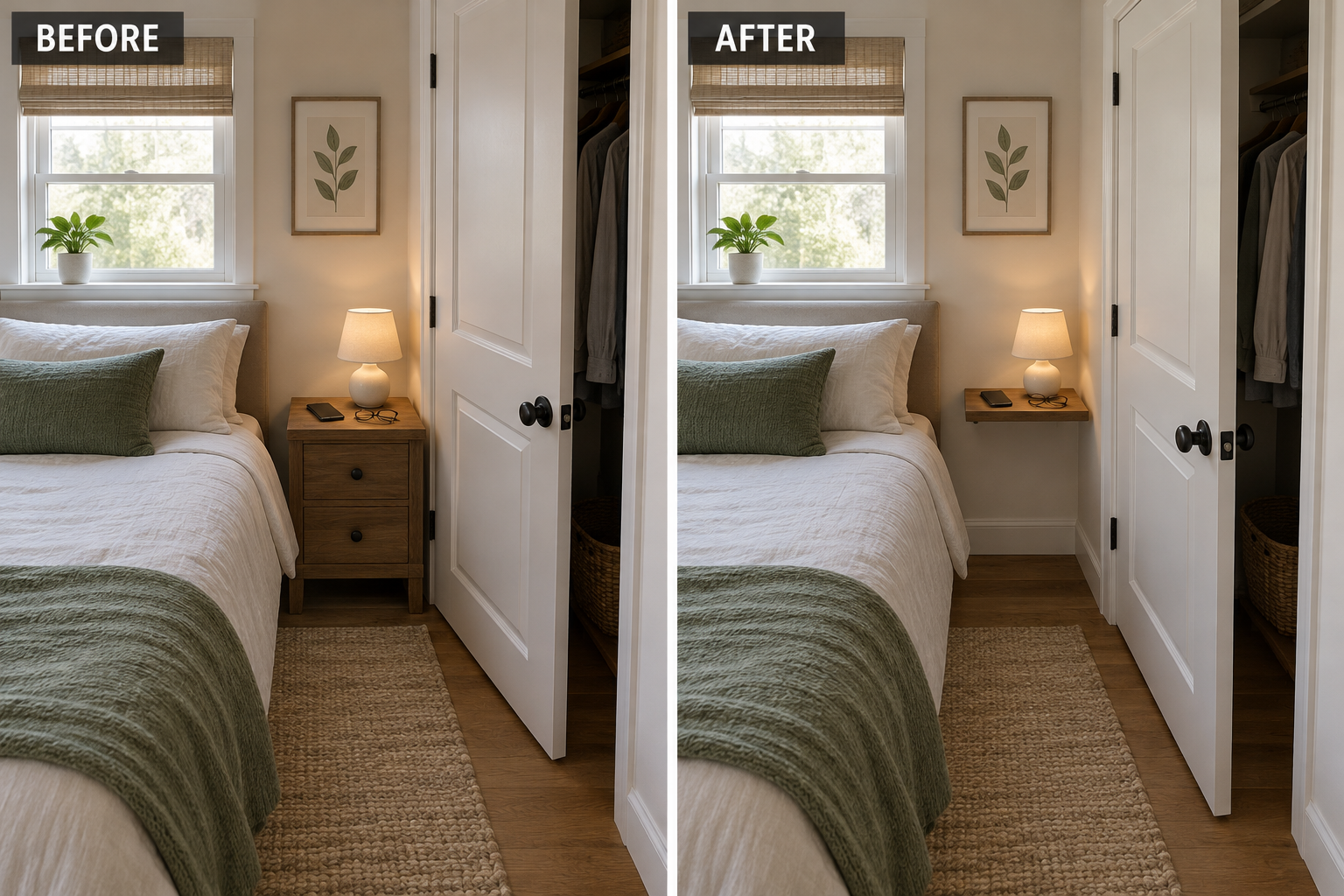
Do not install a shelf where the door handle will strike its edge, or assume a small shelf can safely support anything. Follow mounting and load requirements, and obtain rental permission where needed. This tradeoff removes enclosed bedside storage. If medications, medical equipment, or other essentials require a larger stable surface, relocate the cabinet rather than shrinking it indiscriminately.
8. Resolve Competing Bedroom and Closet Doors
Two doors can make an otherwise workable bed position feel impossible. If the bedroom entry opens across the closet approach, ask whether a professionally assessed change in handing or swing would separate their paths. Keep the bed in place while testing the proposed movement on paper. A suitable change can preserve closet access without sacrificing either sleeper’s side of the bed.
This is not a casual hinge swap. A revised entry swing can obstruct a hallway, collide with another door, or affect required exit arrangements. Get landlord approval and qualified advice about local requirements before altering it. If a safe change is unavailable, choose another layout; leaving the bedroom door partly closed is not a dependable clearance solution.
9. Use a Foldaway Bed Only with a Safe Daily Routine
In a bedroom that doubles as a daytime workspace, a properly installed wall bed can make the closet accessible when the bed is stored. Measure both positions, including the cabinet depth and operating area. This works best when daytime closet access is sufficient and the lowered bed still leaves a clear route to the bedroom exit throughout the night.
Do not choose this solution if lowering the bed blocks the only safe route out or essential nighttime supplies. Installation requires appropriate structural attachment and strict adherence to the manufacturer’s instructions, making it unsuitable for many rentals. The mechanism, lifting effort, and daily reset also matter. A foldaway bed is not useful if household members cannot operate it reliably.
10. Move the Dresser out of the Closet Approach
Look beyond the bed for furniture narrowing the closet’s landing area. A dresser opposite the mattress can force you into the door swing just to reach clothing. Move it to an unused wall outside that approach, or relocate some folded storage to another room. Keep the bed fixed while testing this change so you can judge the clearance gained from one move.
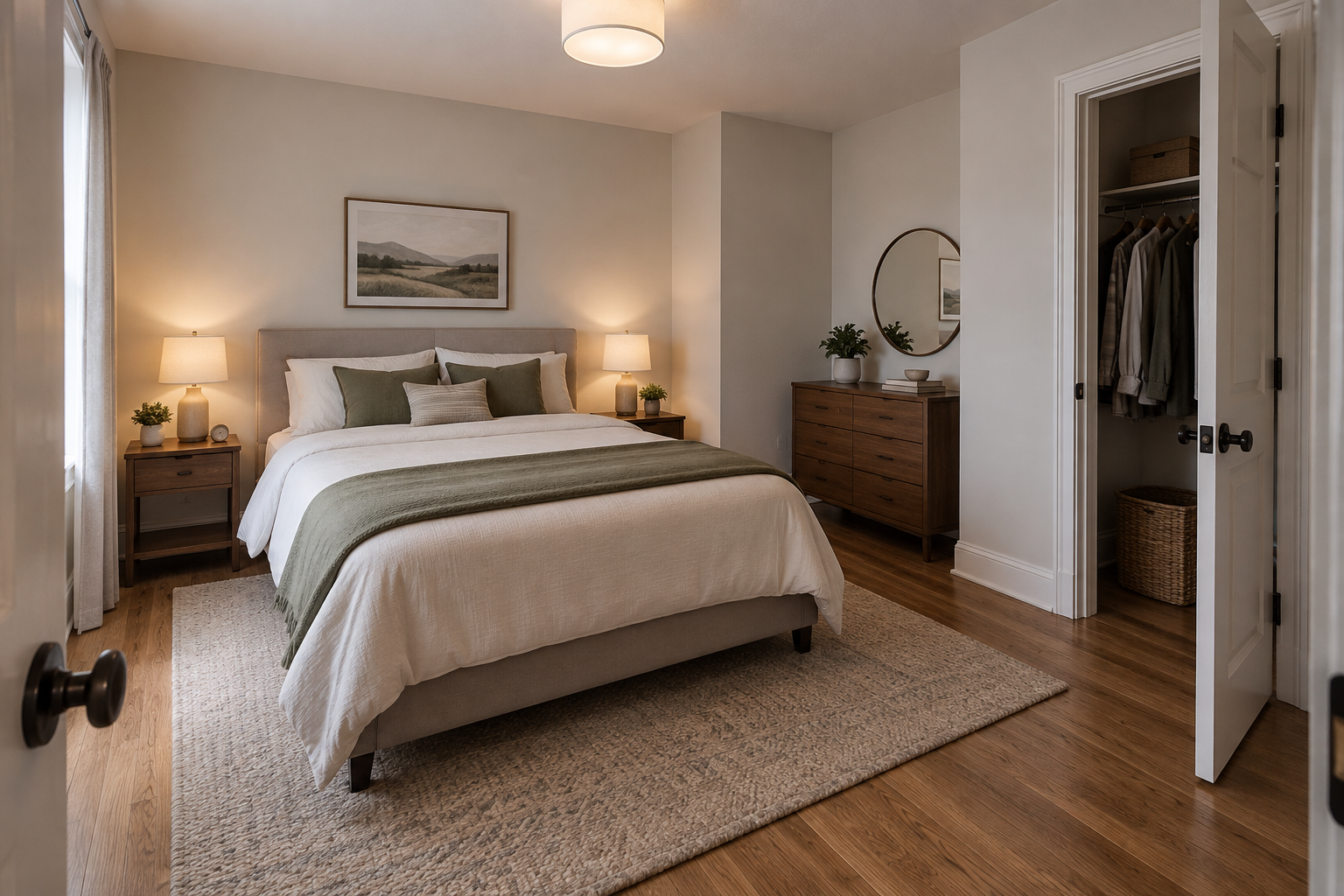
Do not move the dresser into the exit path or place it where open drawers trap someone beside the bed. Check drawer extension as well as cabinet depth, and anchor furniture according to its instructions with appropriate rental approval. Underbed drawers are not an automatic substitute: they also need opening space and can recreate the same conflict at floor level.
The best arrangement lets you open the closet, reach everyday belongings, and leave the room without moving furniture first. Measure the complete bed, test every door and drawer, and walk the proposed layout before buying anything. A few recovered inches may be enough; when they are not, prioritize comfortable sleeping and reliable circulation over symmetry or extra storage.
Leave a Reply