When the living room is also the everyday playroom, the challenge is not hiding every sign of childhood. It is making room for play while keeping a comfortable seat, a clear walkway, and a realistic way to switch activities. The most useful small living room ideas support both uses without requiring two sets of furniture. Start with what your child actually plays with, where an adult can supervise, and what you can reasonably put away before dinner.
1. Give the Supervising Seat a Clear View
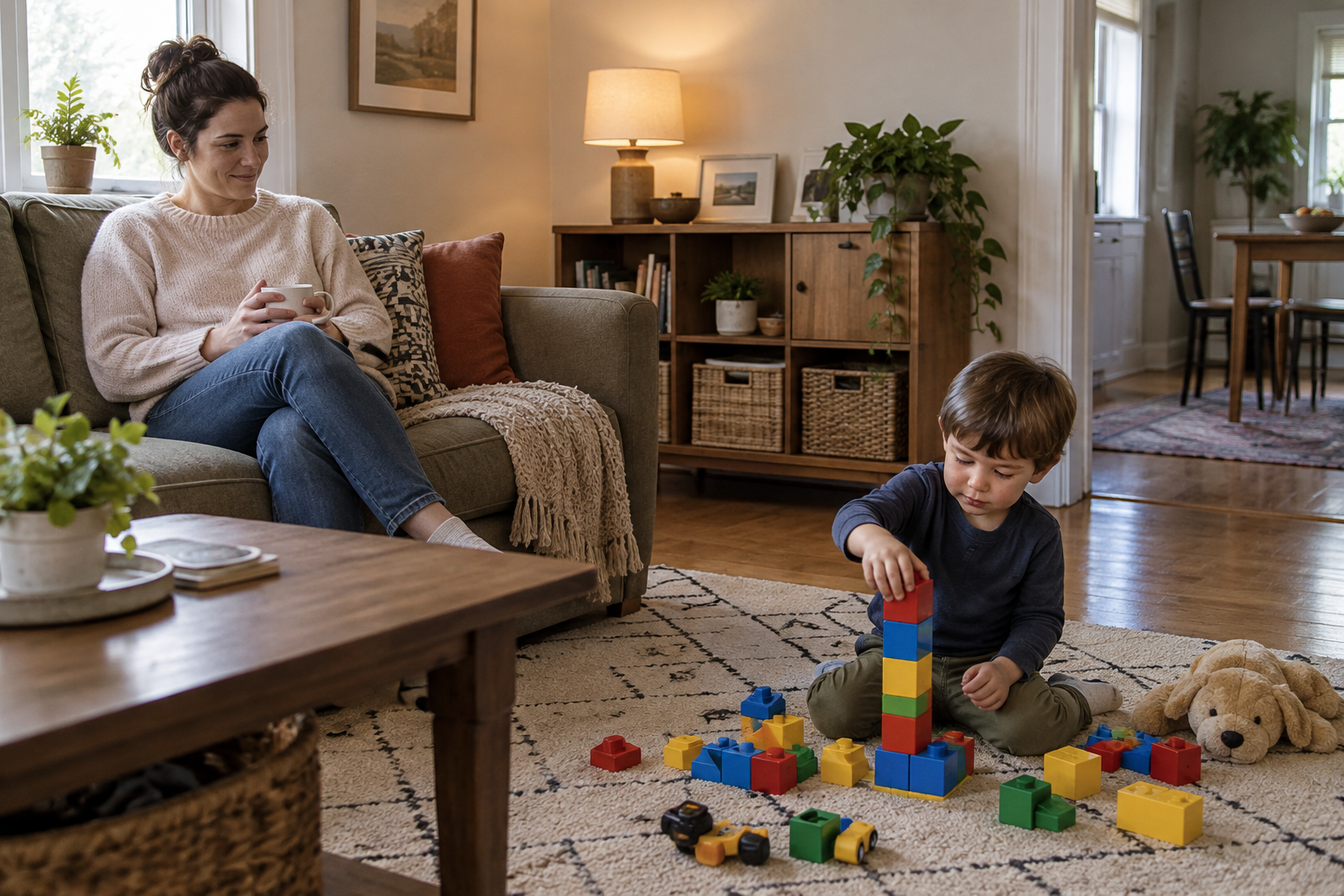
Choose the supervising seat before choosing the play corner. Sit where you normally read or fold laundry, then check whether you can see the entire proposed play area without leaning around furniture. For example, place a toddler’s block mat beside the sofa’s open end rather than behind its back. Keep the route between your seat and the child free of tables, cords, and baskets.
A common mistake is treating an attractive nook as automatically suitable for supervised play. A corner behind a tall chair may contain toys neatly but conceal what a young child is doing. Open sightlines also mean adults will see the clutter. If your room has deep alcoves or an L-shaped layout, a smaller visible play spot may work better than the largest available corner.
2. Move the Play Footprint Out of the Traffic Lane
Use a small washable mat to define where floor play happens, positioning it outside the main walking route. An approximately 3-by-4-foot mat can accommodate a modest block setup beside a sofa in some rooms. That is a planning guideline, not a required size; measure your space and test the location with a towel before buying. The boundary should guide play without becoming an obstacle.
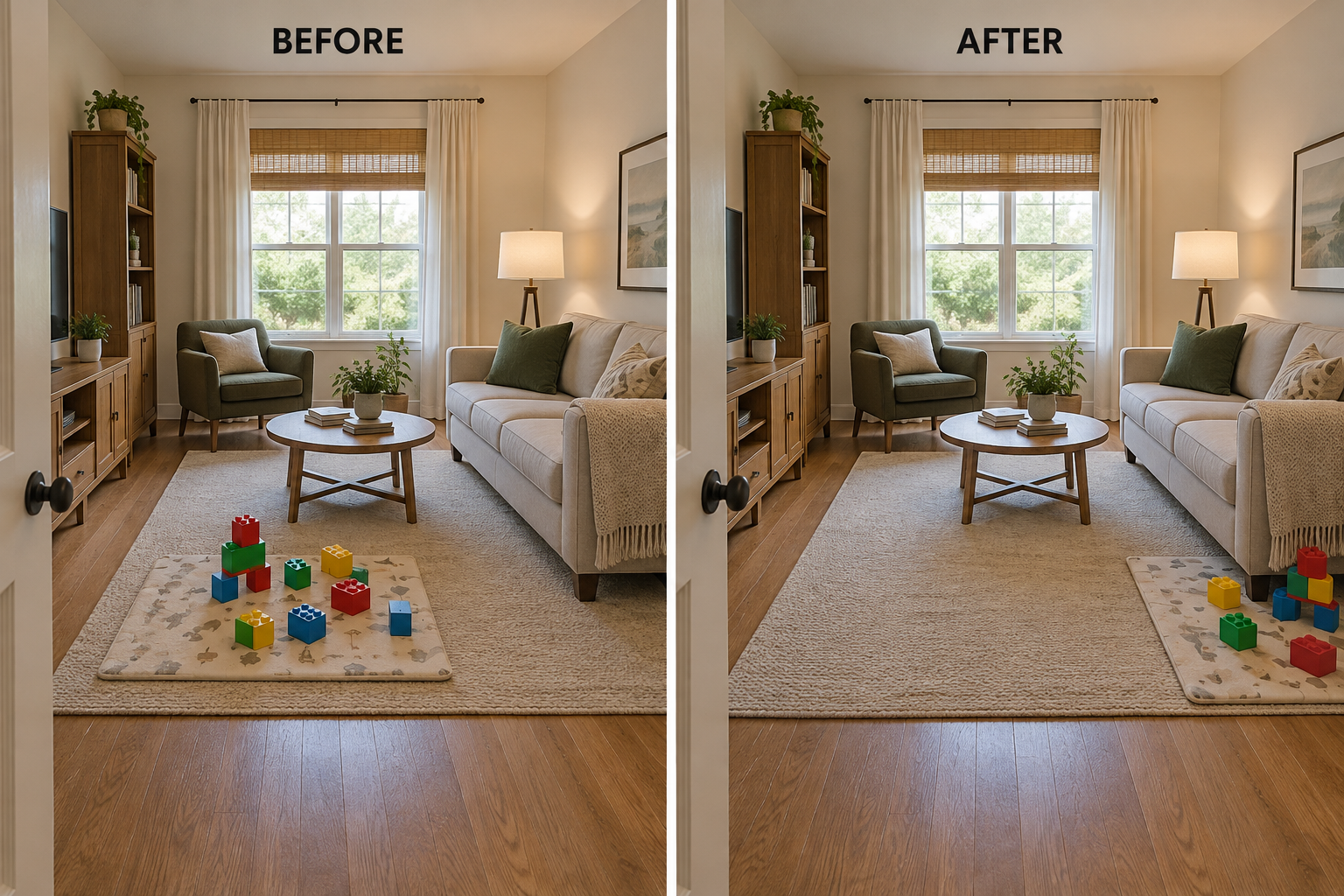
Do not assume a larger rug creates a better playroom. An oversized play footprint can swallow the only route to the sofa, while thick edges can catch feet or mobility aids. A mat also cannot guarantee that toys stay inside its border. If your room barely accommodates circulation, use a smaller activity surface that comes out only while someone is actively playing.
3. Rotate Toys by Activity, Not by Calendar
Keep a limited selection available and store the rest somewhere children cannot access independently. Choose different kinds of play: one building set, a few books, and a pretend-play kit, for example. Swap an activity when interest fades rather than maintaining a rigid weekly schedule. A single backup tote in an adult-access closet makes rotation possible without turning the living room into a storage depot.
Rotating every favorite out of sight can create frustration rather than renewed interest. Keep a dependable comfort toy available, and let older children help decide what rests. Rotation reduces visible volume but requires another storage location and occasional attention. If no backup space exists, reduce duplicate categories instead; buying extra bins will not solve a room that already holds more toys than it can support.
4. Make Everyday Storage Reachable and Secure
Use a stable storage unit with manufacturer-specified anchoring, and place lightweight everyday toys in easy-to-reach bins. Keep heavier items low and adult-only materials secured separately. For example, a short cabinet can hold soft animals and chunky vehicles in open containers. Follow installation instructions for your wall type; renters should discuss approved anchoring methods with their landlord before purchasing furniture that requires attachment.
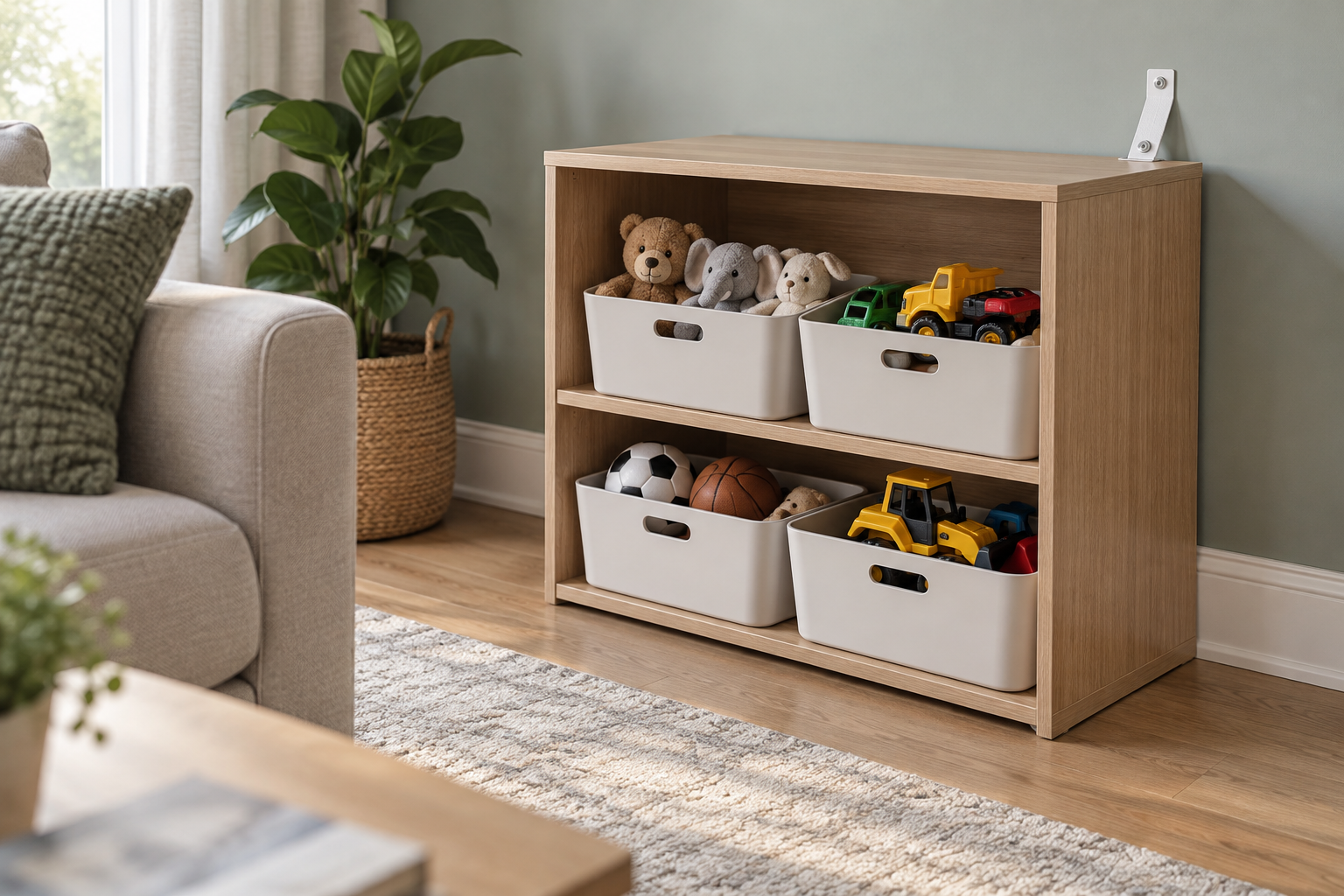
The mistake is assuming that low furniture cannot tip or that a heavy lid is harmless because it hides clutter. Children may climb shelves, and lids can trap fingers. Open bins offer easier access but leave contents visible. If you cannot install required restraints or provide safe lid operation, choose a different storage product rather than leaving unsuitable furniture unsecured in a play area.
5. Protect One Comfortable Adult Seat
Reserve the sofa or your main armchair for sitting rather than routine toy storage. Give its cushions a permanent home and keep one reachable surface available for a book or remote. For example, let a small basket hold the day’s stuffed animals instead of piling them on the armchair. This preserves a place to supervise comfortably and a usable seat when another adult visits.
Filling every spare inch with child-sized seating can leave adults perched on the floor without support. Floor cushions are flexible, but they still need storage and may not suit people with limited mobility. A dedicated adult seat uses space that could otherwise hold toys. In an exceptionally tight room, protect part of the existing sofa rather than adding another chair to make this work.
6. Give the Coffee Table a Planned Parking Place
If floor play needs the center of the room, choose a table arrangement you can change safely without shifting everything else. A lightweight side table may replace a bulky coffee table, or an existing table may slide into an unused position during play. Test that parking place first: it must not block a door, vent, storage cabinet, or the adult’s route to the child.
Do not buy movable furniture without deciding where it goes when moved. A table pushed into the hallway simply transfers the obstruction. Lighter pieces are easier to shift but can be less stable, and wheels need reliable locking mechanisms. If lifting is difficult or the table has no safe destination, keep it stationary and plan seated activities rather than a large central floor zone.
7. Pack Toys in Ready-to-Play Kits
Organize the available toys into activity kits rather than scattering related pieces among several bins. Put the pretend food with its plates, for example, and keep the train pieces together. Use your existing containers and leave enough room for an imperfect return. At reset time, an adult can hold the bin while a child gathers one category, making cleanup a concrete task instead of an open-ended instruction.
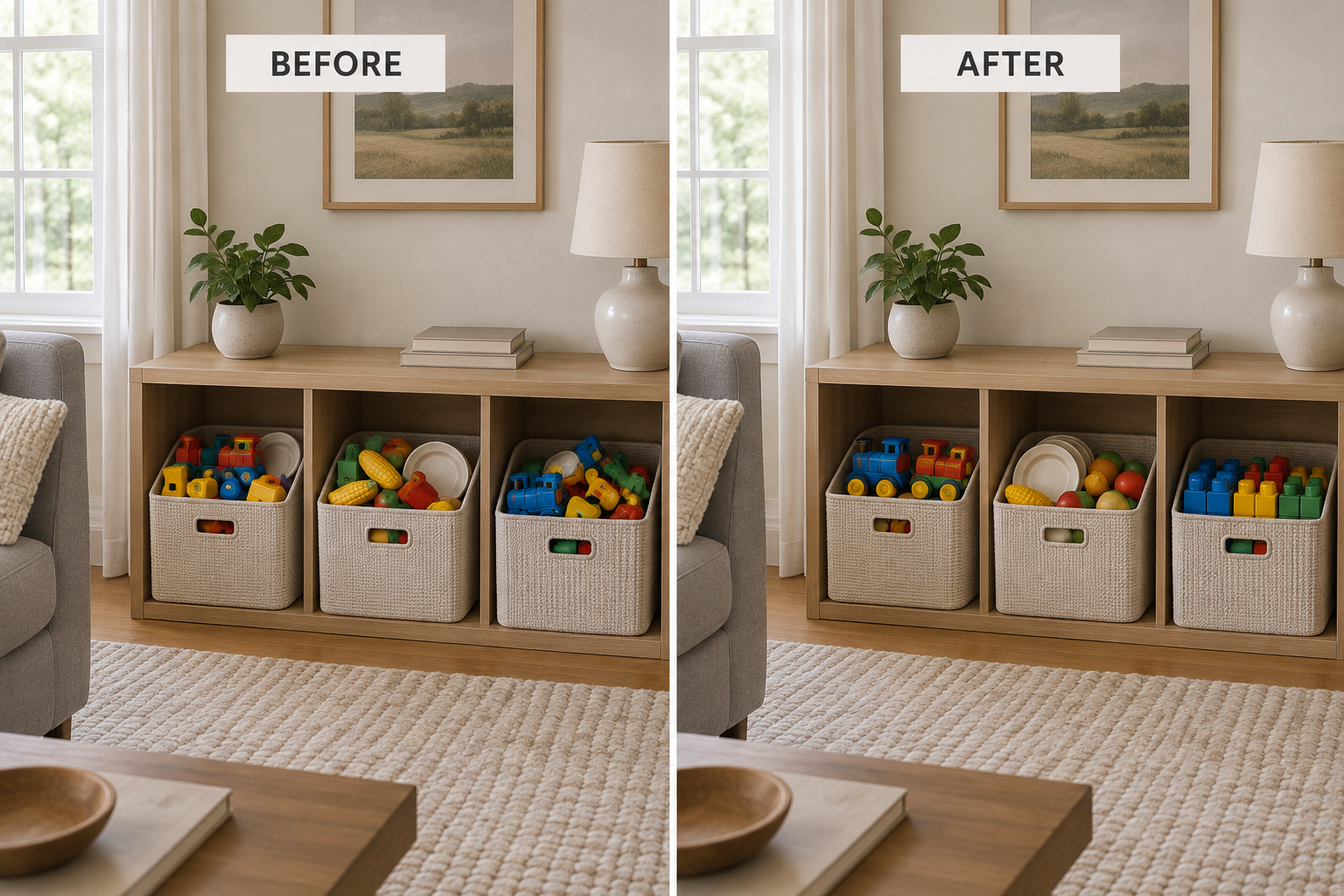
Overly detailed sorting can make cleanup harder than play. A preschooler may manage a vehicle bin but not separate compartments for every wheel and accessory. Broader kits sacrifice perfect organization in exchange for a quicker reset. If a child mainly combines materials in open-ended play, keep those compatible items together rather than imposing a system that requires an adult to rebuild it every evening.
8. Choose Quieter Versions of Floor Play
In apartments or shared households, consider the sound of play as well as its footprint. Offer fabric blocks, soft balls for rolling, or felt pretend food during quieter hours. For example, replace a hard-plastic dumping game with a basket of washable fabric shapes. Keep active play supervised and appropriate to the room; a soft object still needs a safe direction and clear surroundings.
Soft toys do not soundproof a room, and encouraging indoor throwing can create a different problem around lamps or screens. Quieter materials may also lack the construction possibilities a child enjoys in harder blocks. Use them as one option, not a universal replacement. If the room is too narrow for rolling games, choose seated pretend play and reserve energetic movement for a more suitable location.
9. Contain Creative Play Before It Starts
Make drawing or modeling sessions a contained activity rather than leaving supplies permanently spread across shared furniture. Bring out a shallow tray with age-appropriate washable materials and protect the surface underneath. For example, offer paper and chunky crayons at a child’s comfortable working height, then return the complete tray to adult-controlled storage afterward. Check product guidance before using any material near upholstery or finished wood.
A tray is a boundary, not a spill guarantee, and washable supplies can still mark some finishes. Too many choices also increase setup and cleanup. Limiting materials keeps the activity manageable but may interrupt elaborate projects. If the living room has delicate textiles, no stable work surface, or no way to supervise closely, move wet or staining activities to a more forgiving part of the home.
10. End With a Clear-Floor Handoff
Define a short closing sequence that restores the room’s next use: return loose toys, fold the play mat if it is designed to fold, and check the walking route. An approximately 36-inch-wide clear path is a useful planning starting point where feasible, not a universal accessibility standard; measure your room and account for household needs. For example, store the folded mat on a designated low shelf before settling in for the evening.
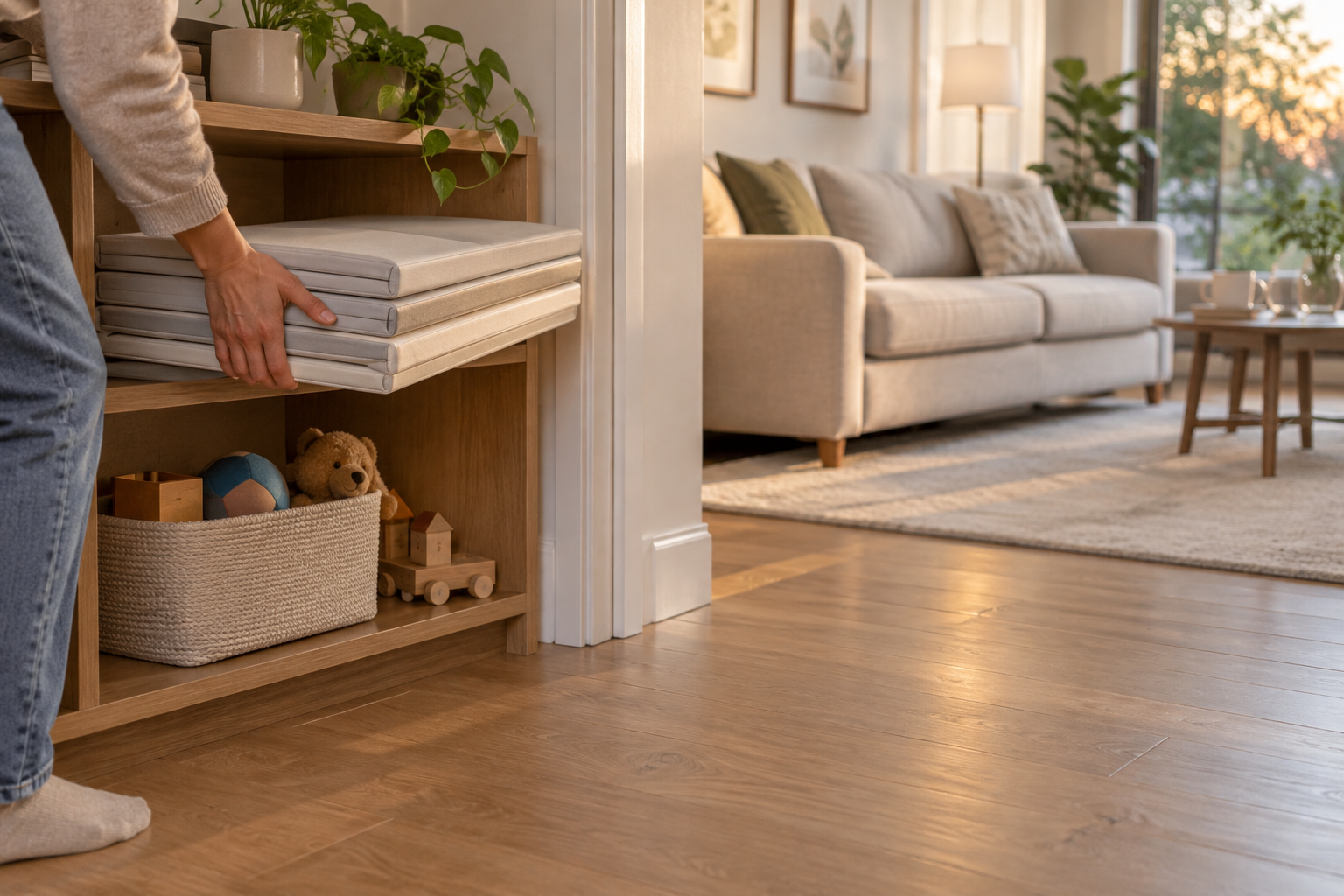
Demanding a spotless reset after every small activity can make the shared room exhausting to use. Prioritize trip hazards and access, then decide which unfinished projects can remain on a contained surface. Daily packing also costs time and may frustrate a child building something complex. If an ongoing project has no safe overnight location, photograph it together before clearing it rather than leaving pieces across the main route.
A shared living room works best when its rules are simple enough to repeat: play where an adult can see, keep a manageable selection within reach, and restore safe access when play ends. You do not need to erase childhood from the room. You need a setup that welcomes it during the day and still leaves everyone somewhere comfortable to sit.
Leave a Reply