When the sofa, chair, and coffee table seem to occupy separate islands, the rug may be drawing the wrong boundaries. Its footprint tells your eye which pieces belong together—and can accidentally exclude half the seating. Among small living room ideas, correcting that boundary is often more useful than adding another accessory. Start with what you own, then check fit, clearance, and upkeep. All dimensions below are approximate planning guidelines; measure your room, furniture, and door swings before buying.
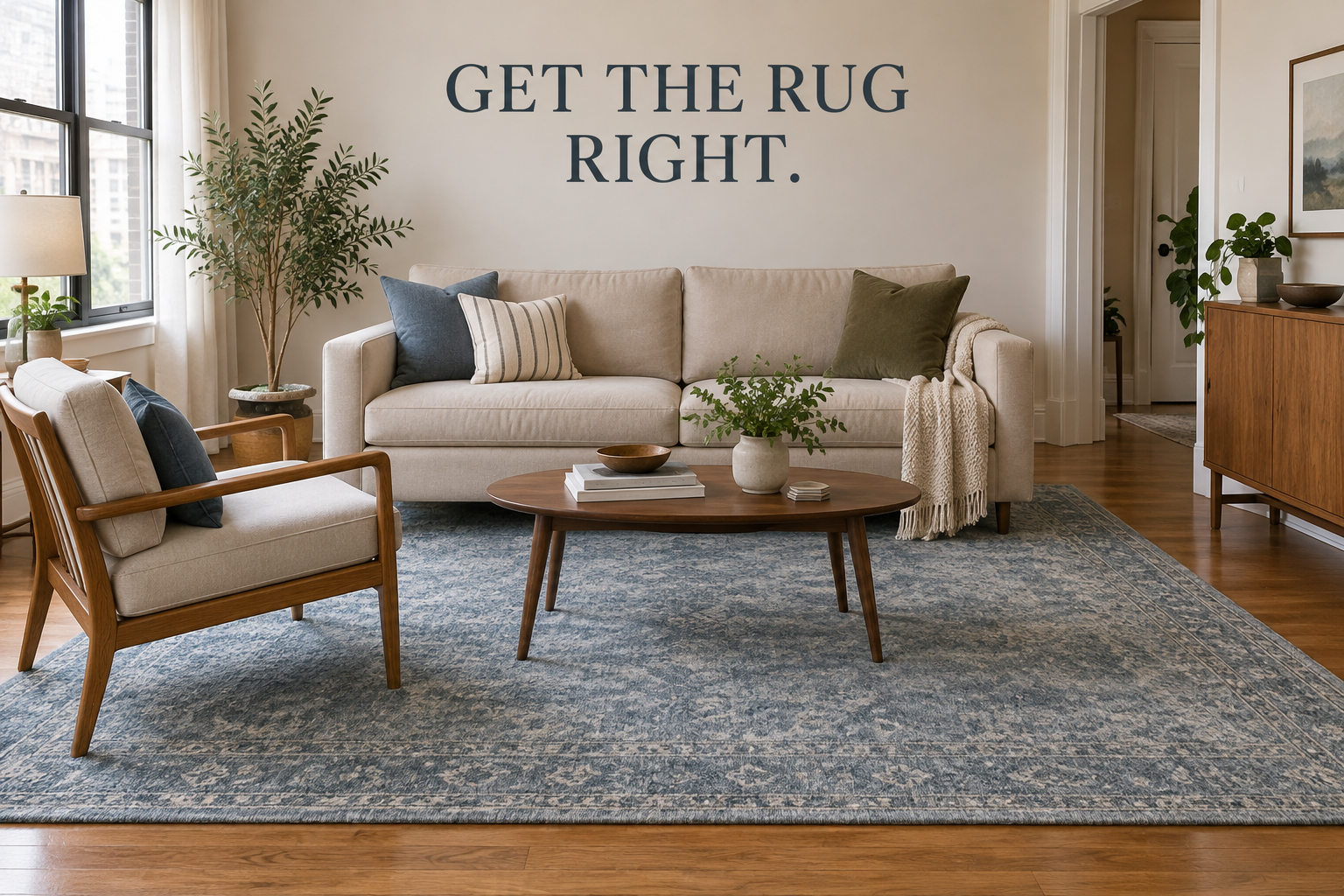
1. Map the Seating Footprint Before Choosing a Size
Outline the proposed rug with painter’s tape before browsing sizes. Mark the sofa, chair, and table positions first, then establish a rectangle that connects them. In a roughly 10-by-12-foot living room, compare taped 6-by-9-foot and 8-by-10-foot footprints rather than assuming the smaller rug is safer. Walk around both layouts and photograph them from the doorway; the better boundary should read as one seating area.
A common mistake is measuring only the empty space between furniture legs. That produces a coffee-table mat instead of a seating boundary. A larger footprint may improve connection, but it also covers more flooring and costs more to replace. This approach needs adjustment in irregular rooms: tape around fixed obstacles and usable seating, not an imaginary rectangle that extends through a hearth or cabinet.
2. Give the Main Seats Consistent Front-Leg Contact
Place the front legs of the sofa and primary chair on the rug so they share a visible base. Start with roughly 6 to 10 inches of rug beneath the sofa’s front edge, then check every foot. For example, replacing a centered 5-by-7-foot rug with a suitably positioned 8-by-10-foot rug can connect the same furniture without moving it closer together or adding another piece.
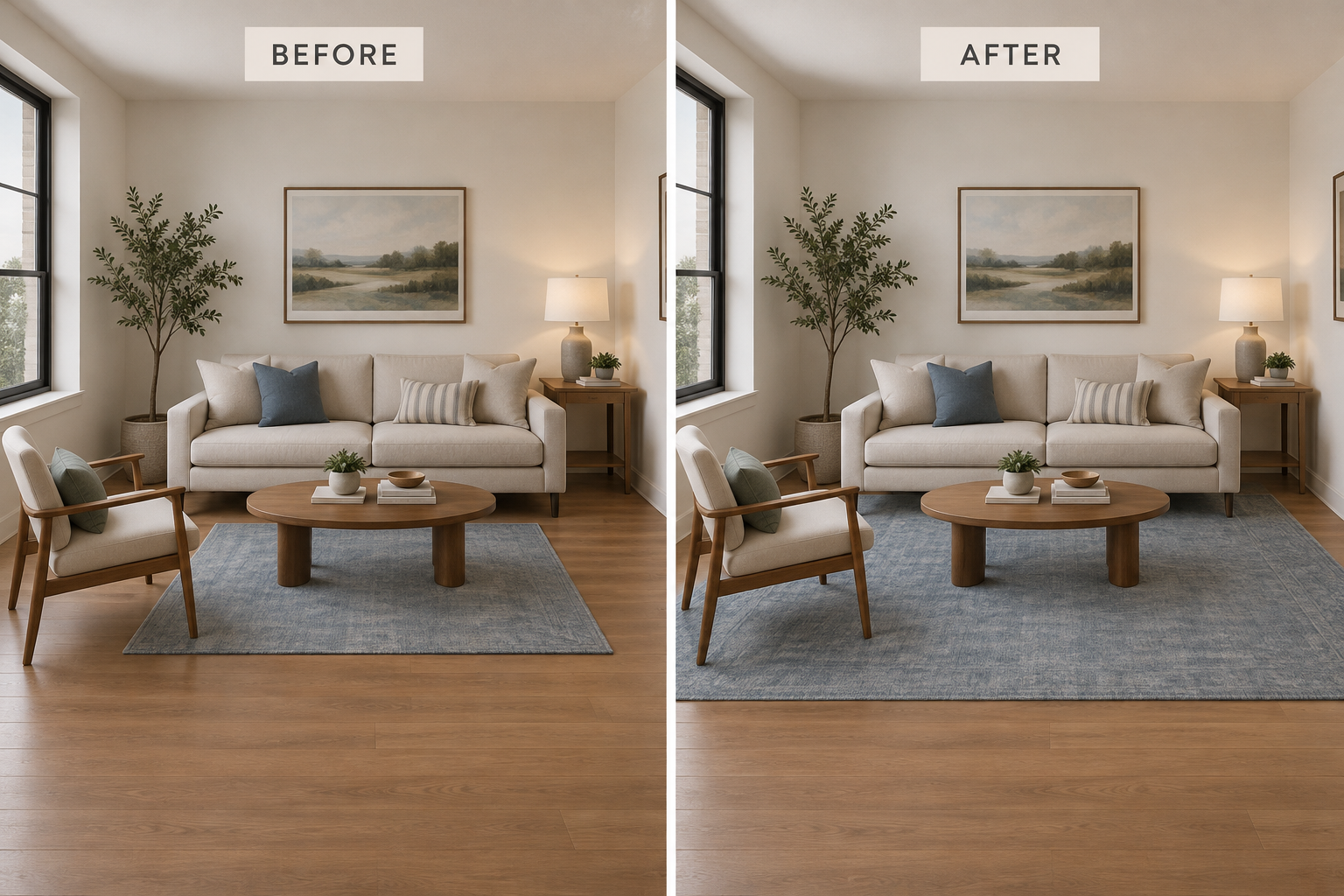
Avoid catching one sofa foot while leaving the other off, or letting a chair straddle a thick edge. Uneven contact can look accidental and make furniture wobble. Front-leg placement preserves more exposed floor than putting every leg on the rug, but it is not universal. A recliner’s moving base or an unusually deep chair may need full support and additional operating clearance.
3. Turn the Rug to Follow the Seating Arrangement
Orient the rug’s longer side with the main seating span, not automatically with the room’s longest wall. Beneath a compact sectional, try running that edge along the sofa back so the rug reaches beyond the chaise’s inner corner. A 6-by-9-foot rug rotated ninety degrees may connect a sofa and opposite chair better than the same rug aimed toward the television.
The mistake is letting the television wall dictate the rug’s axis when people sit across a different direction. Rotating can improve seating contact without buying anything, but it may expose awkward corners or push an edge into circulation. It may not suit a narrow room where the alternate orientation blocks a doorway; preserve the functional route rather than forcing a symmetrical arrangement.
4. Test Door Swings With the Rug and Pad Together
Check the entire door arc, including closet and balcony doors, before settling on placement. Measure the clearance under the moving door and compare it with the combined rug-and-pad thickness. Where clearance is tight, a low-profile flatweave may work better than a plush pile. For example, pull the rug boundary back from an inward-opening entry door while keeping its opposite edge beneath the sofa’s front feet.
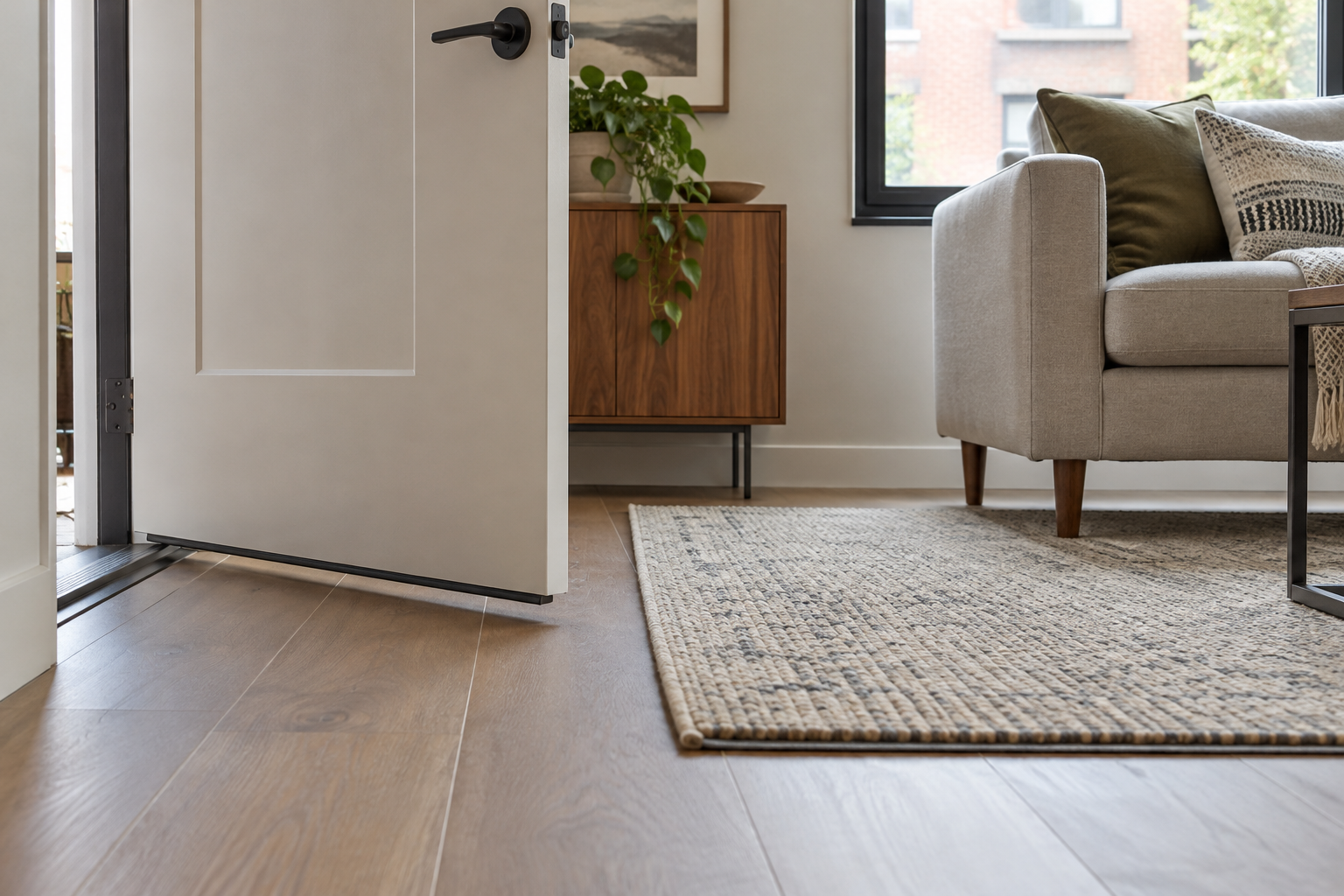
Do not assume a door that clears the rug alone will clear an added pad. Dragging can bunch the edge and interfere with opening. A thinner assembly sacrifices cushioning, while moving the rug inward can reduce seating contact. If neither option maintains easy access, that footprint may not suit the room. Renters should not trim a door or alter hardware without the required permission.
5. Keep Rug Edges Out of the Main Walking Lane
Trace the route from the entry to the sofa, kitchen, or balcony. Where possible, keep that route entirely on one surface rather than making it follow a rug edge. Around 30 to 36 inches can be a useful initial planning allowance for a walking lane, though household access needs vary. In a pass-through room, shift the rug toward the seating instead of centering it between walls.
A frequent mistake is preserving equal floor borders while forcing everyone to step along a raised edge. Off-centering may look less formal, but it usually makes the seating zone more legible. This fix may not suit rooms where mobility equipment needs a wider, smoother route. In that case, prioritize individual clearance requirements and consider whether a rug belongs in the passage at all.
6. Use a Round Rug Only When the Seating Supports It
A round rug can connect a compact conversational grouping without sending rectangular corners into adjacent routes. Test a roughly 7- or 8-foot diameter beneath a loveseat and two small chairs, positioning their front feet within the circle. A round coffee table reinforces the footprint, but the important test is whether the seats touch the rug—not whether the table sits neatly at its center.
Choosing a small circle simply because the room is small often leaves every seat outside it. A larger diameter improves contact but may consume more usable width than expected. Round rugs also leave curved gaps beside straight furniture. They may not suit a long sofa-and-chaise arrangement, where a rectangular footprint generally reaches the seating more efficiently and leaves fewer unsupported corners.
7. Scale the Pattern to the Visible Rug Area
Judge a pattern by what remains visible after furniture covers it. A broad border can disappear beneath a sofa, while an oversized central medallion may be mostly hidden by the table. For a compact seating group, try a moderate, repeating motif that reads across exposed strips. Compare it with a large medallion at the same rug size so pattern—not footprint—is the variable you evaluate.
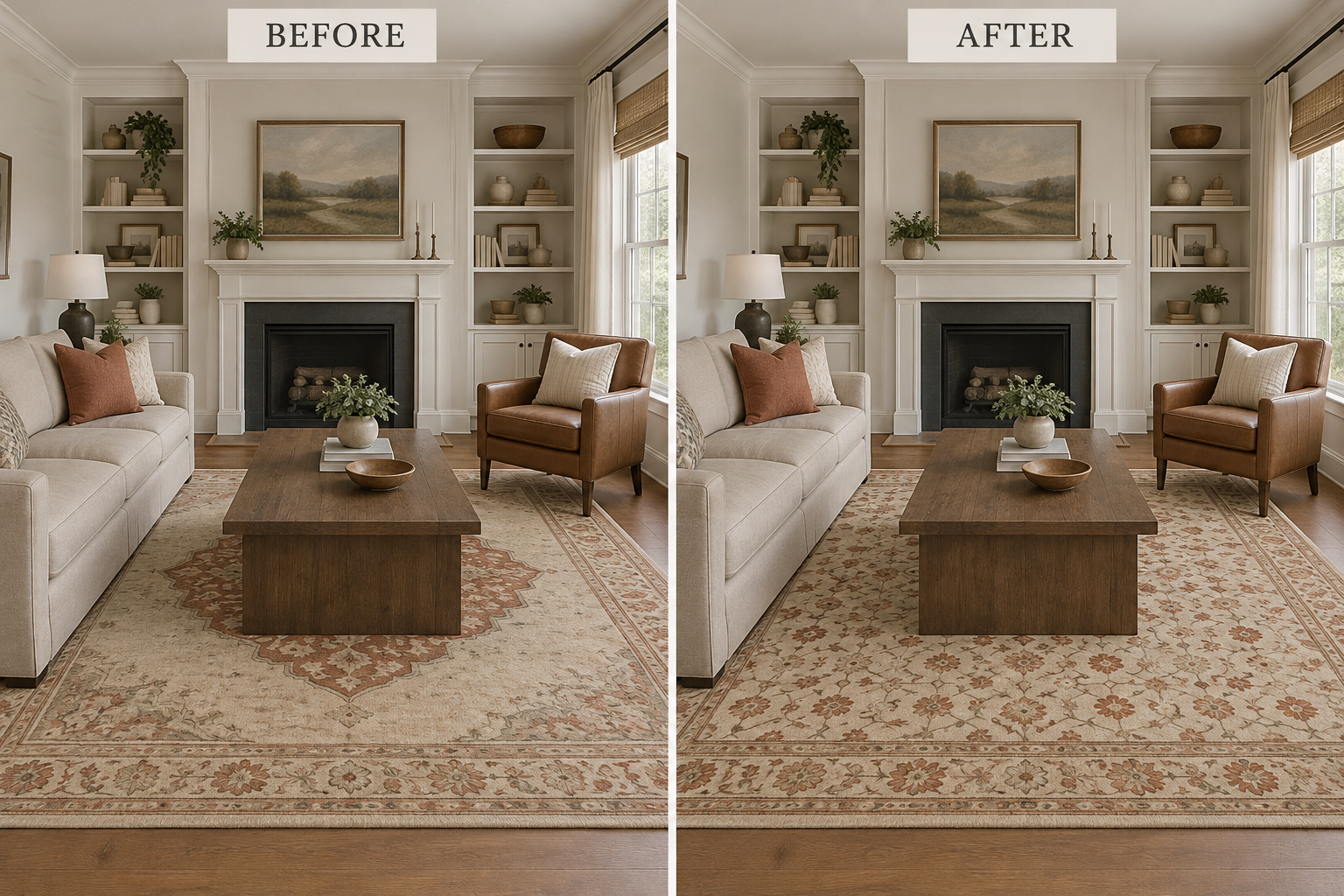
Avoid treating tiny patterns as an automatic small-room solution. Dense, high-contrast detail can compete with upholstery and make narrow exposed sections look busy. A quieter repeat offers continuity and can disguise everyday crumbs, but it will not provide a bold focal point. If the room already has patterned seating or strong floor grain, a nearly solid rug may suit it better.
8. Choose Contrast That Clarifies the Seating Boundary
Use the rug’s color value to make the grouping readable against the floor. On medium-brown wood, a light oatmeal rug can establish a clear seating zone while echoing a cream chair. If the rug nearly matches the floor, look for subtle tonal variation or texture so its boundary remains visible. Bring samples home and check them beside both flooring and upholstery in daylight.
The mistake is choosing a rug solely to match the sofa, then discovering that both merge into the floor. Strong contrast clarifies edges, but it also draws attention to an undersized or crooked footprint. Pale rugs may reveal traffic soil, while very dark ones can show lint. A low-contrast choice may be preferable when the goal is a quieter, less visibly divided room.
9. Match the Footprint to Your Cleaning Routine
Before committing to a larger rug, decide how you will vacuum its surface, reach beneath the seating, and handle spills. A low-pile rug usually makes crumbs easier to retrieve than a deep shag. If machine washing matters, check the rug’s care instructions and your washer’s capacity for that exact size. A washable label alone does not mean an 8-by-10-foot rug fits your laundry setup.
Buying a smaller rug only because it is easier to wash can recreate the disconnected seating problem. Conversely, a large rug trapped beneath heavy furniture may be unrealistic for frequent removal. Weigh a connected footprint against laundering effort, drying space, and any professional care requirements. If lifting is difficult, an easily vacuumed rug with a practical spot-cleaning routine may suit the household better.
10. Fit the Pad So the Rug Holds Its Shape
Finish the placement with a floor-compatible pad trimmed slightly smaller than the rug, following its manufacturer’s guidance. An inset of roughly 1 inch on each side is a common starting point, allowing edges to settle without exposing the pad. For example, fit a thin pad beneath a flatweave so the seating boundary stays straight rather than migrating away from the chair whenever someone walks across it.
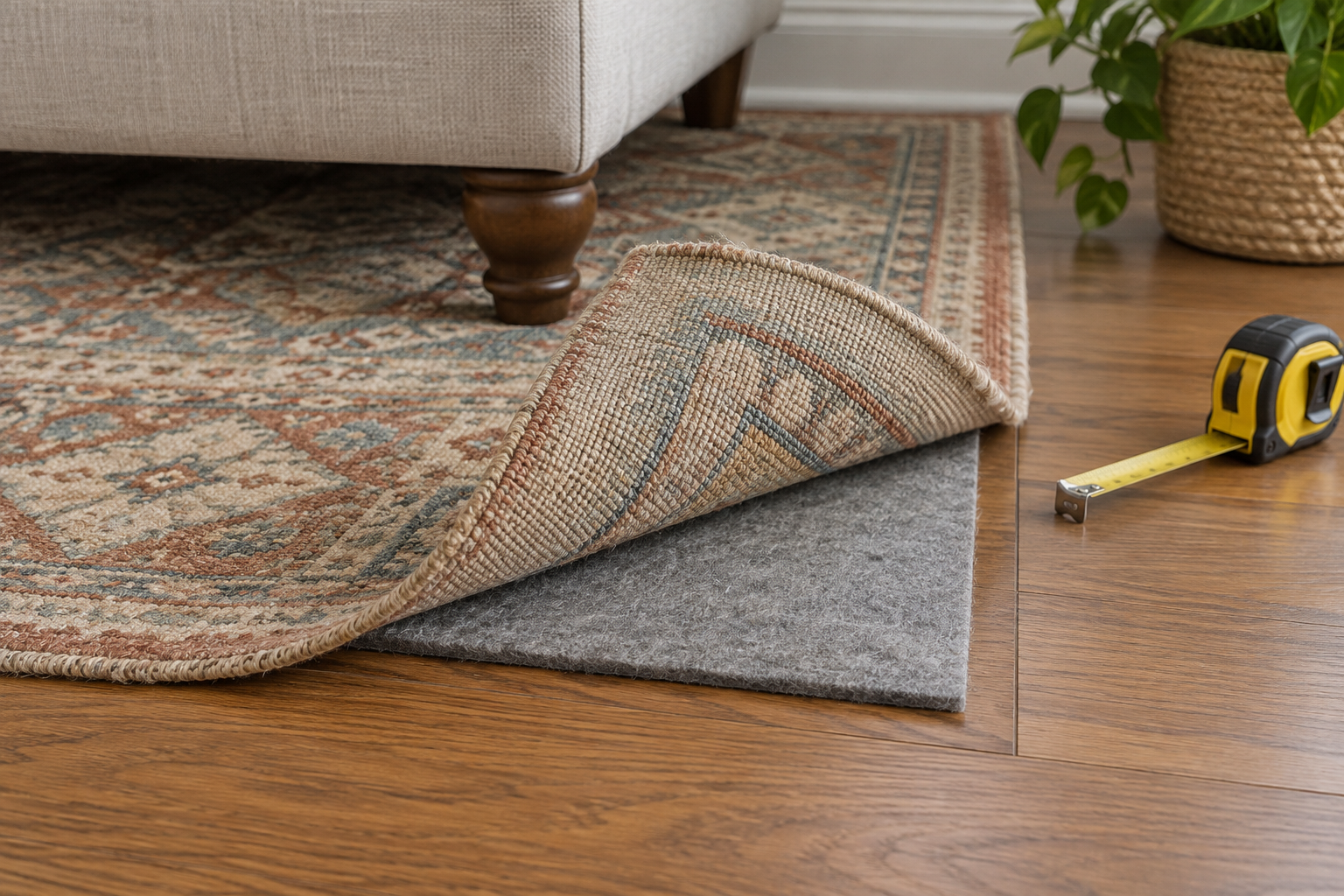
Do not let the pad protrude or assume more cushioning is always better. Excess thickness can create a ridge, affect furniture stability, and complicate door clearance. Pads also need occasional lifting so grit does not remain underneath. A cushioned version may not suit a tight threshold or a delicate floor finish; confirm compatibility with the flooring and rug care instructions before installing it.
The right rug does not need to fill the room; it needs to connect the seating without disrupting daily movement. Test the footprint first, confirm furniture contact, and open every nearby door. Then choose the pattern, material, and pad that you can realistically maintain. A coherent boundary underfoot gives the pieces you already own a clearer relationship.
Leave a Reply