The bathroom door barely clears the toilet, so the litter box has to share the room where you sleep, cook, and eat. That makes placement a daily-use decision, not a hiding exercise. The best available spot must work for your cat, stay separate from food preparation, and be easy to clean. These ten checks help you compare imperfect options without buying furniture first.
1. Start with your cat’s body, not an empty corner
Choose a workable box before choosing its permanent location. Measure your cat approximately from nose to tail base, then compare usable interior dimensions rather than the package’s outside measurements. As a planning starting point, look for a box roughly one and a half times that body length, with room to turn and dig. A large cat may rule out the narrow gap beside your dresser.
Watch how your cat steps into the current box. A kitten, older cat, or cat with limited mobility may need a low entrance rather than a tall-sided or top-entry design. High sides elsewhere can help contain litter, but they do not compensate for difficult access. If stepping over the rim seems uncomfortable, ask your veterinarian about an appropriate setup rather than adding an improvised, unstable step.
2. Test the whole footprint, including the approach
Tape the proposed box’s outside dimensions onto the floor, then add the space your cat needs to approach, enter, and turn away. For an initial mock-up, leave approximately 18–24 inches of clear floor in front of the entrance, adjusting for your cat and box. This is a planning allowance, not a code requirement. Measure furniture, door swings, and walking routes before committing.
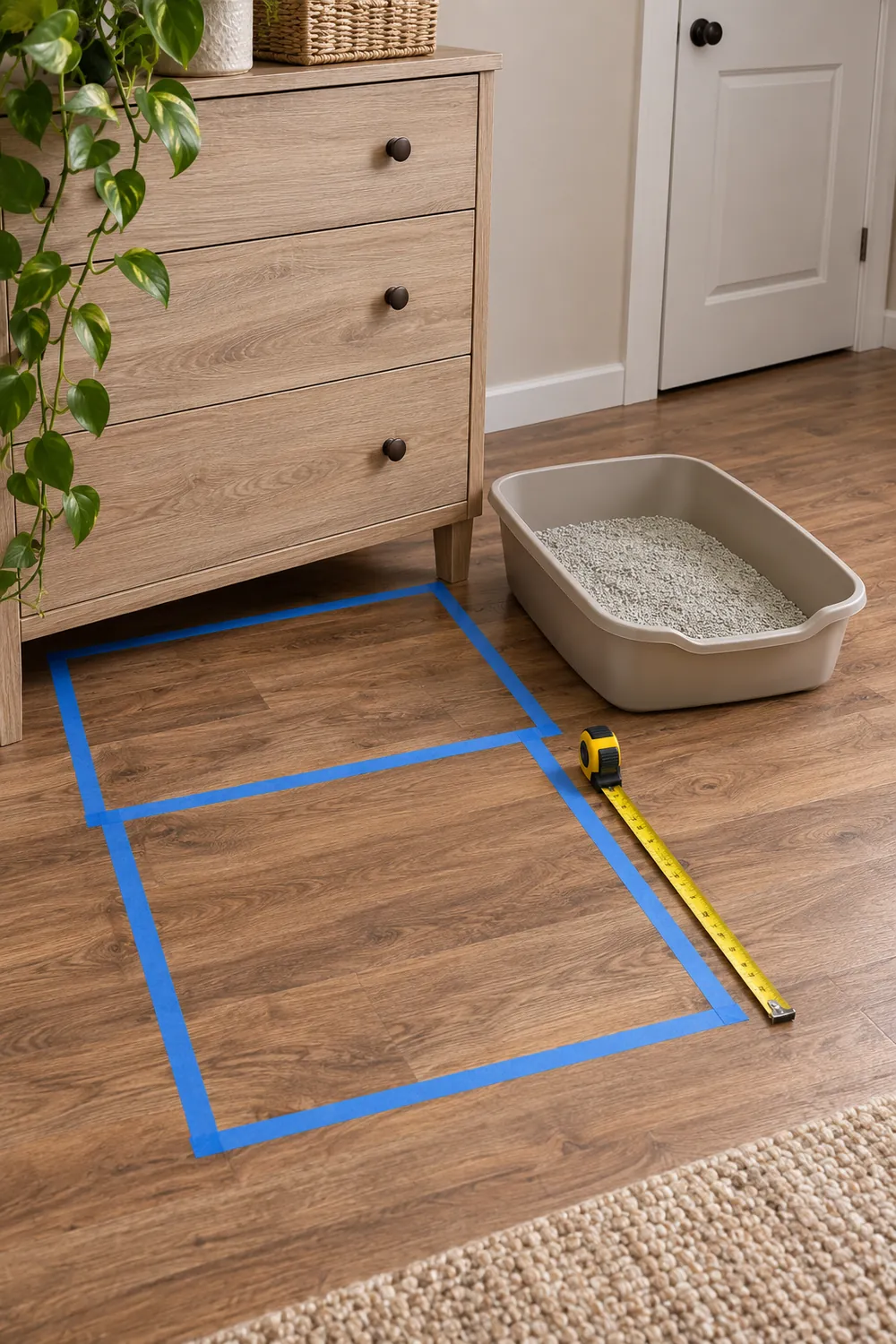
Live with the outline through an ordinary evening. Pull out your desk chair, open drawers, and walk from bed to kitchen carrying laundry. A spot that works only when the chair is tucked in is not reliably accessible. Beside a nightstand might be feasible; between the nightstand and a bed frame with no turning space probably is not.
3. Map quieter locations away from food handling
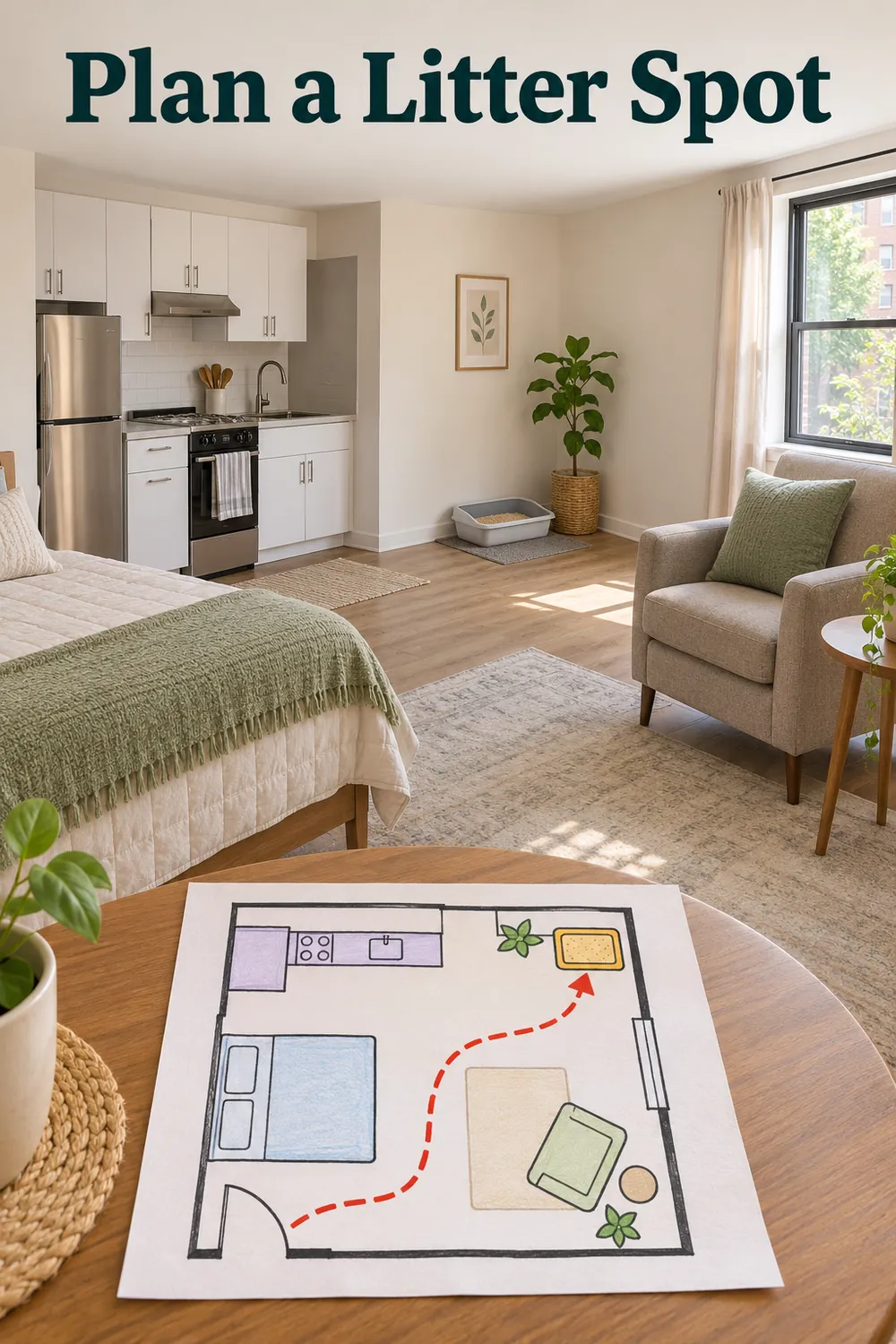
On a quick room sketch, mark food-preparation counters, dining surfaces, pet bowls, heaters, doors, and busy routes. Then identify quieter floor areas outside those zones. A living-area corner beside a bookcase may be a better candidate than the convenient space beneath a kitchen cart. Keep the box away from food storage and preparation rather than trying to make an adjacent spot acceptable with a screen.
Check each candidate when the apartment is active, not just when it is quiet. A corner beside a speaker, a rattling refrigerator, or your frequently rolling work chair may be unsettling. Preserve heater and appliance clearances according to manufacturer instructions. In a very tight studio, some proximity to the bed may be unavoidable; prioritize dependable cat access and cleanability over making the box disappear.
4. Compare open access with genuinely ventilated concealment
An open box makes it easier to inspect litter and notice when cleaning is needed. If you want concealment, compare that baseline with an enclosure that has generous, unobstructed ventilation openings and enough interior space for the entire box and your cat’s movements. A closed storage cabinet with one small entrance is not equivalent. Do not assume a concealed box will contain odors without affecting the cat’s experience inside.
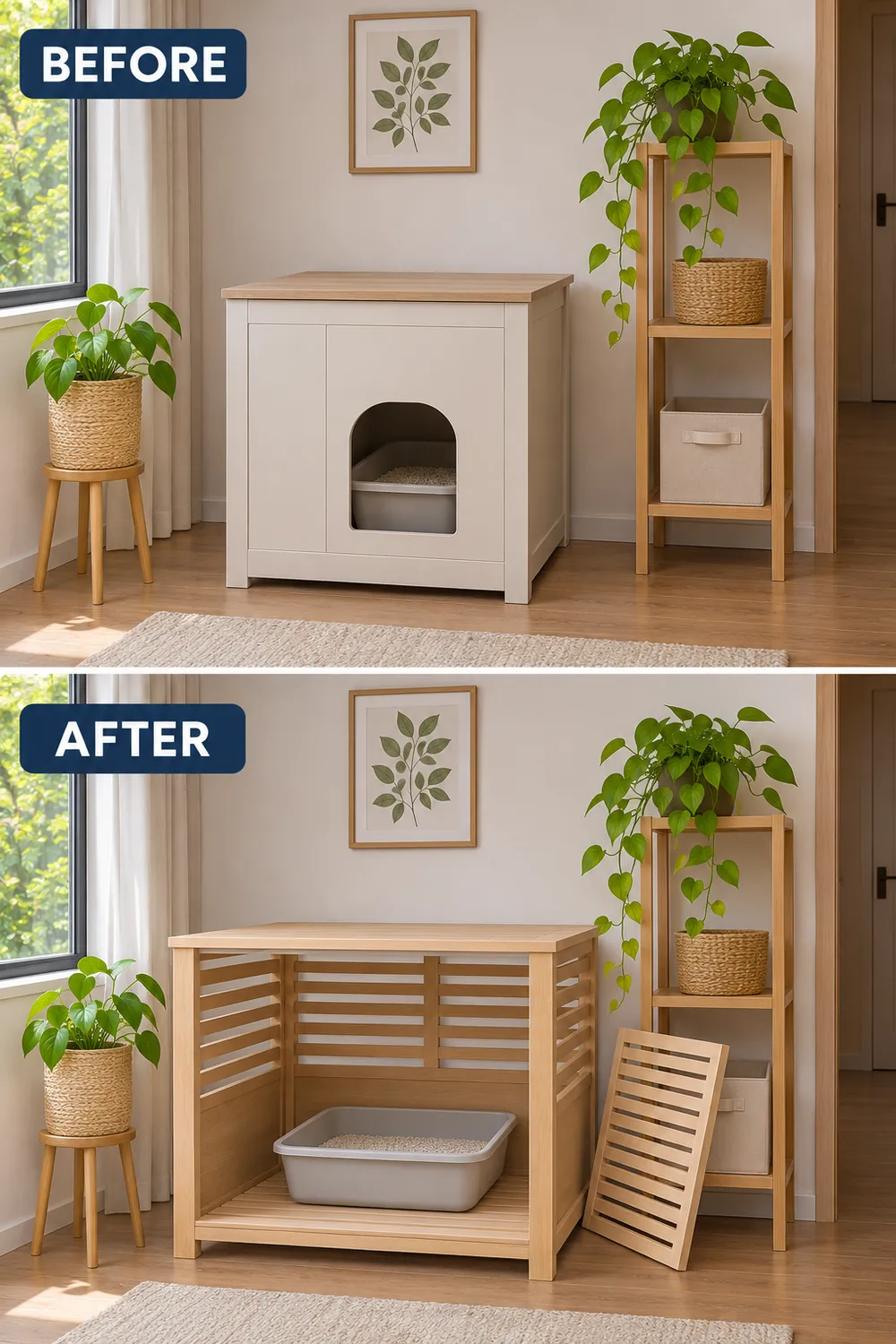
Test your cat’s acceptance before treating an enclosure as permanent furniture. Keep vents clear of walls and stored belongings, and choose access that lets you lift out the tray without tipping it. An enclosure also takes more floor space than the tray alone. If your cat hesitates or the interior is difficult to clean, an open box is the more practical compromise.
5. Keep the exit visible and unobstructed
A box can fit neatly and still feel like a dead end. Avoid trapping its entrance behind a swinging door, a hanging blanket, or a chair that someone regularly moves. Position it so your cat can leave directly into clear floor space. In a home with another pet, consider whether that animal could stand in the only approach and block access.
Beside a sofa, face the entrance toward the open room rather than into a tight gap behind the arm. Keep bags, shoes, and charging cables out of that route. A freestanding screen may reduce visibility from the bed, but skip it if it creates a narrow tunnel or unstable obstacle. Neither the box nor its screen should obstruct your apartment’s exits.
6. Plan for enough boxes, not just one convenient spot
Use one box per cat plus one additional box as a starting planning guideline, then discuss space constraints and individual needs with your veterinarian. Even a one-cat studio may benefit from a second option. Two cats sharing one hidden tray can create access problems that extra scooping alone will not resolve, especially if one cat guards the approach.
Map separate locations rather than automatically lining boxes up together. One beside the dresser and another across the living area can provide more choice than two trays inside the same cabinet. The tradeoff is real: additional boxes consume usable floor space. If the guideline seems impossible in your layout, seek veterinary advice about priorities rather than simply choosing smaller, inadequate boxes.
7. Catch tracking without creating another obstacle
Place a flat, washable tracking mat where your cat naturally steps out, not merely underneath the tray. Start with enough coverage for a few ordinary steps, then adjust after watching the route. Keep the box entrance fully exposed. A mat that curls upward, slides, or feels unpleasant underfoot can turn an otherwise accessible location into one your cat avoids.
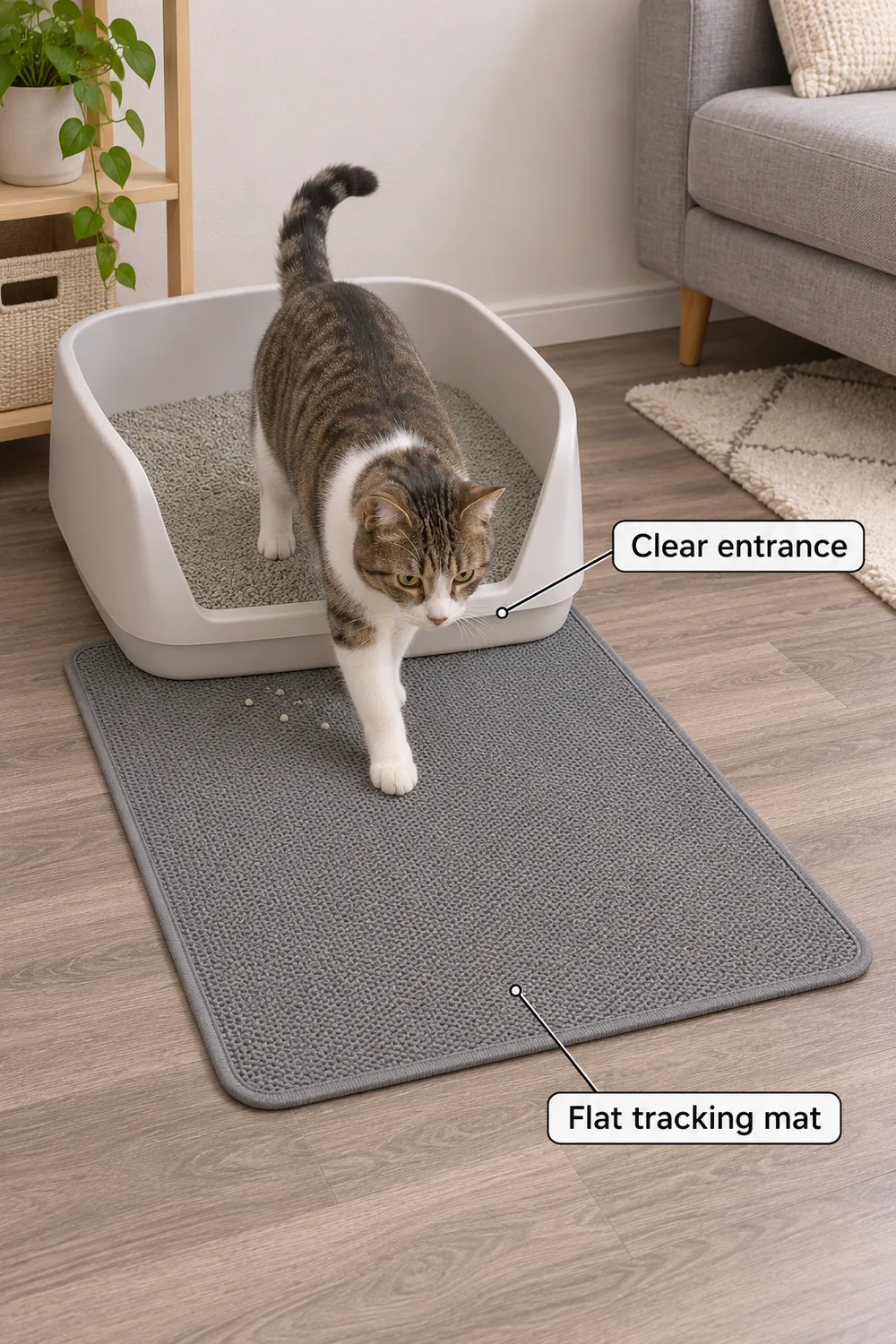
Check that the mat does not overlap a door swing or become a trip point beside the bed. If your cat jumps over a coarse mat, try a softer, flatter surface rather than surrounding the box with more barriers. Shake collected litter into the trash and clean the mat as its instructions allow; a mat full of debris simply relocates the mess.
8. Introduce a new location without removing the familiar option
When possible, set up a second box at the proposed location while leaving the familiar box available. Keep the litter type consistent so location is the main change. If you must move one box, make small shifts over several days and watch the response rather than assuming a particular pace will suit every cat. Avoid combining the move with a new enclosure and new litter.
Notice hesitation, repeated trips toward the old spot, or elimination elsewhere. Restore an accessible familiar option and reconsider noise, entry, or conflict with another pet; do not punish avoidance. Sudden elimination changes warrant veterinary attention, even when they happen during a furniture rearrangement. Do not assume a new accident is merely a preference about where the box belongs.
9. Make waste removal and washing part of the placement decision
Choose a spot you can reach for scooping at least daily, removing waste promptly when you notice it. Bag it securely and take it to the appropriate household trash; do not flush litter or waste. A lidded receptacle can bridge the interval before disposal, but should not become long-term storage. This is sanitation, not a substitute for managing cooking odors or dividing the sleeping area.
Plan where you will empty and wash the tray without using food-preparation surfaces. Follow the box and litter manufacturers’ cleaning directions, rinse as directed, and dry before refilling. Never mix cleaning products or use fragrance to cover inadequate cleaning. If your trash arrangement is awkward, these ideas for organizing waste without a bin cabinet can help establish a separate, manageable disposal route.
10. Keep a hygienic scooping kit within immediate reach
Give the box its own small maintenance station: a scoop in a washable holder, waste bags, and a dedicated litter brush and dustpan. Place it beside the box on a wipeable tray, away from food, dishes, and bedding. Store cleaning chemicals securely elsewhere if children or pets could reach them. The aim is to make a quick cleanup possible without crossing the apartment for supplies.
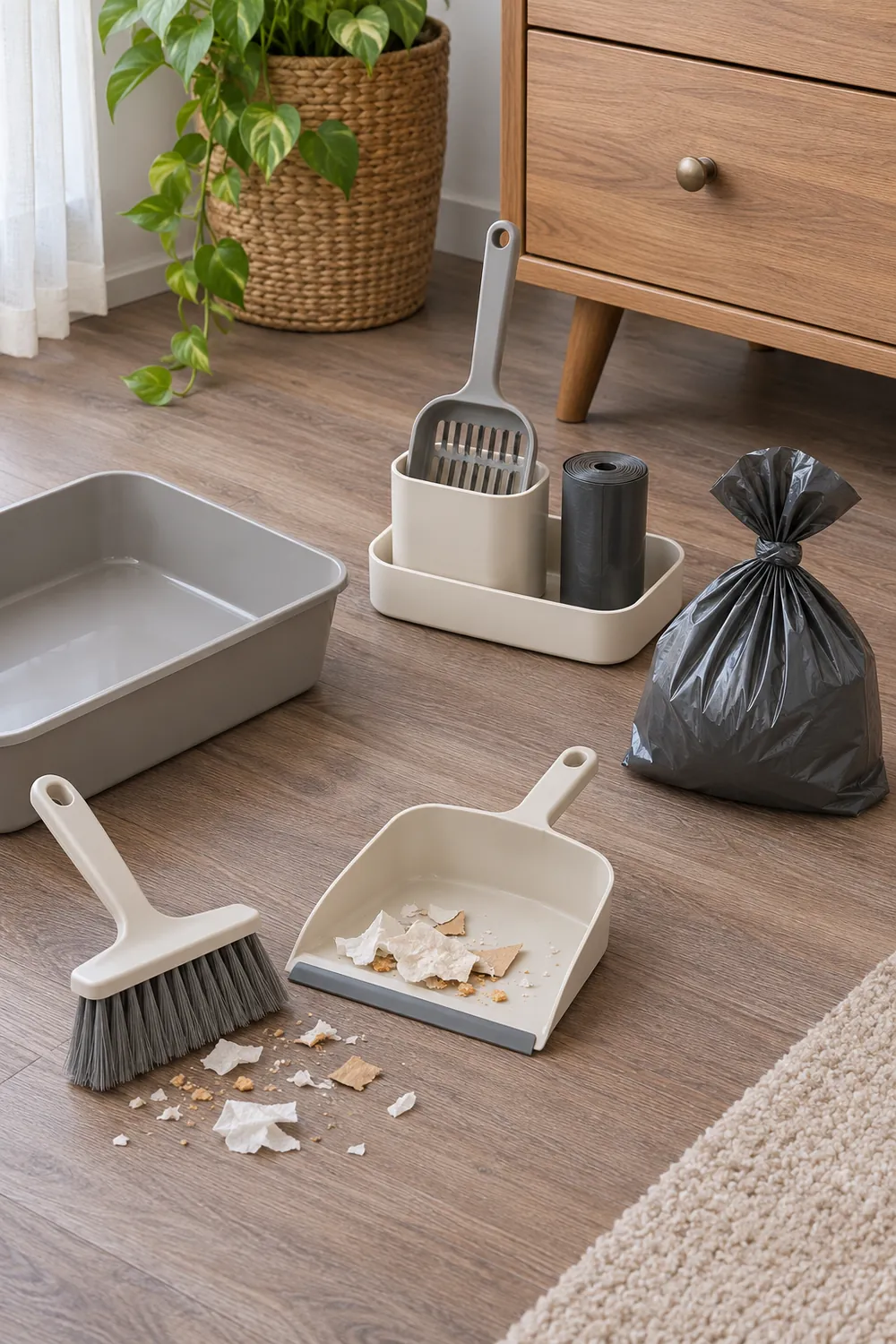
Keep dirty tools contained, wash the holder and tray regularly, and wash your hands after handling litter or waste. A kitchen drawer is not a suitable overflow spot. If storage is tight, adapt a dedicated caddy from these small-home cleaning-tool storage ideas, keeping litter equipment separate from tools used on food surfaces. Easy access should not mean loose, contaminated tools on the floor.
Start with the box your cat can comfortably use, then tape out two possible locations and their approaches. Test both against your daily routines before buying an enclosure. The better choice is the one your cat can reliably reach and you can consistently keep clean—even if it remains visible.
Leave a Reply