Eating dinner over the sink gets old, but a full-time dining set can overwhelm a studio. The better solution is a dependable surface that appears when you need it, paired with seating that has somewhere to go afterward. Start with your actual routine: breakfast alone, nightly dinners for two or occasional guests. Then measure both the stored and open arrangement, including chair movement and the route to your door. Any dimensions below are approximate planning guidelines, not code or accessibility standards; your furniture, lease and household needs come first.
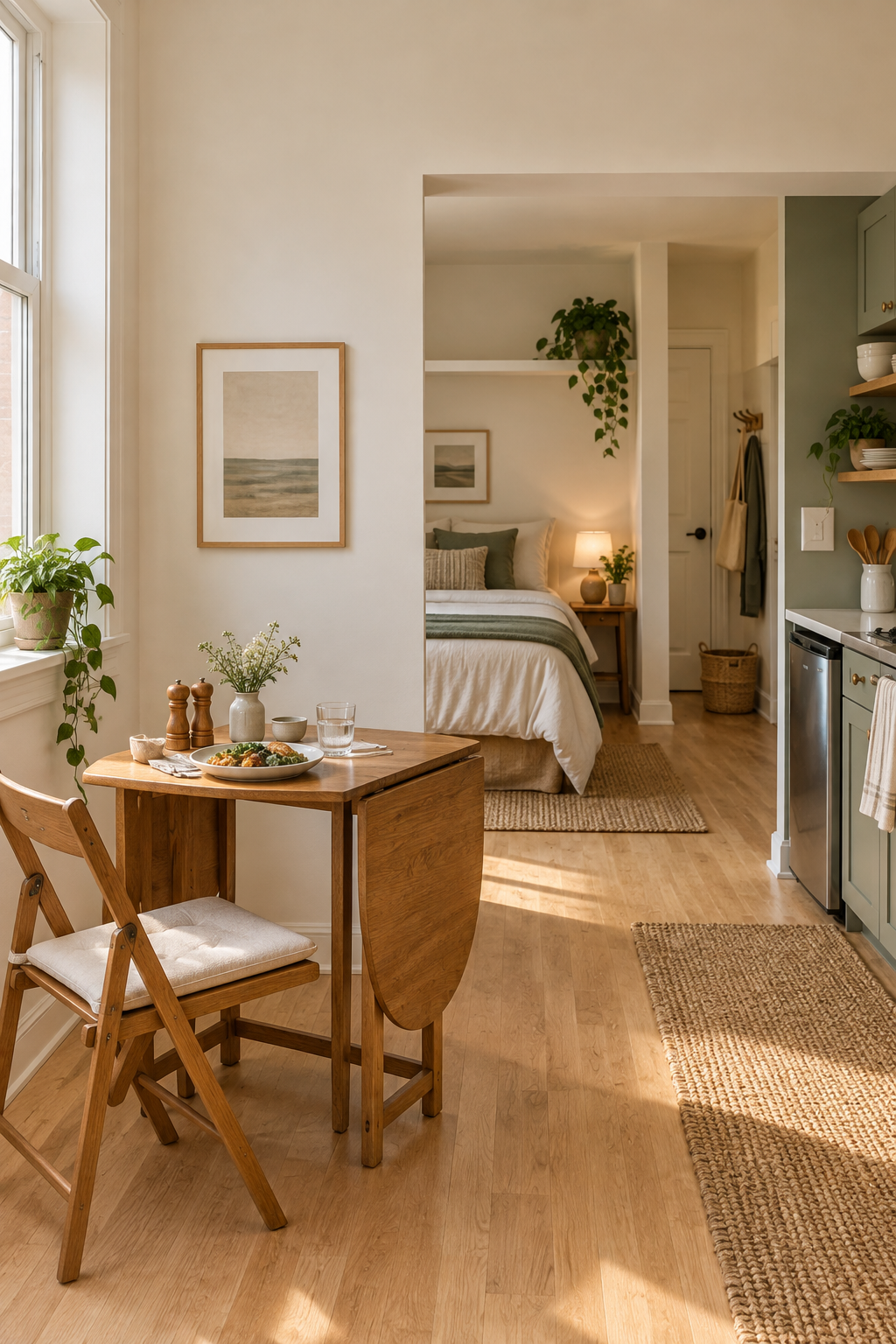
1. Open Just One Leaf of a Gateleg Table
A gateleg table can stay narrow against a wall between meals, then open only as far as dinner requires. For one person, raise a single leaf and swing its support fully into position. Choose a model with verified storage for folding chairs, or keep a slim chair beside a dresser where it can serve as a dressing seat.
The common mistake is measuring the folded cabinet rather than the open tabletop and its legs. Gate supports can crowd knees, especially when two people share one side. Test where your feet actually land before buying. This setup is less suitable if opening a leaf blocks the bathroom route or requires moving your bed every evening.
2. Fold Dinner Down from the Wall
A wall-mounted drop-leaf table keeps the floor available until mealtime. Position a manufacturer-rated dining model where its open leaf accommodates your plates without crossing a doorway. In a narrow studio, two folding chairs can rest against the adjacent wall when closed, then face each other across the deployed surface for a simple weeknight dinner.
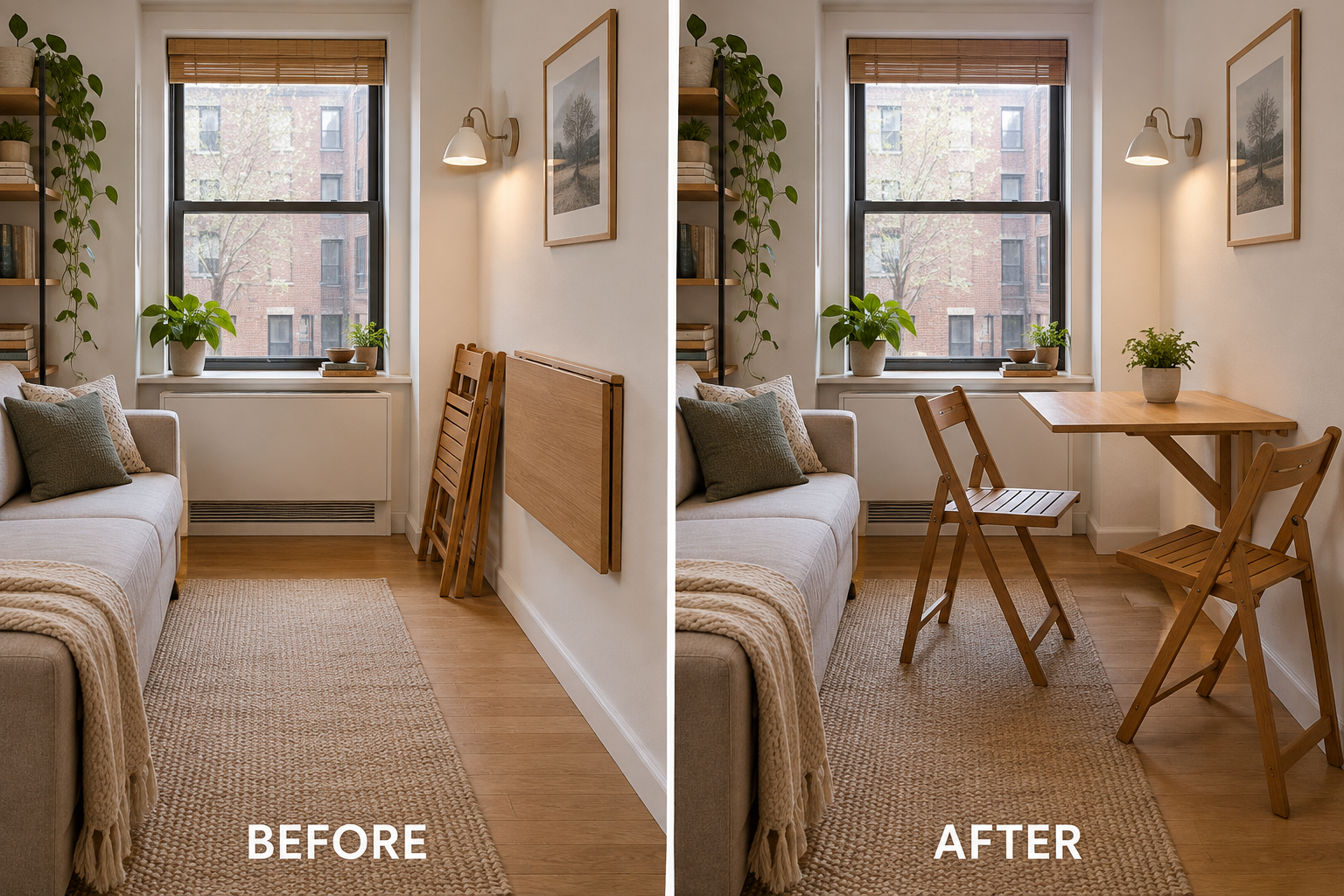
Do not assume drywall alone can support dinner and an accidental lean. Installation must follow the product's fastening requirements, and renters need permission before drilling or altering walls. Check that the latch holds securely when folded. Skip this approach when suitable mounting is unavailable, or when children might pull down an unsecured leaf during play.
3. Roll a Locking Dining Cart into Place
A rolling table designed for dining can park beside the kitchenette and move into an open area for meals. Look for a rigid frame, locking casters and a top that tolerates everyday spills. A compact model with stools stored beneath it keeps the whole setup together; roll it out, engage every specified lock and pull out a seat.
A lightweight serving trolley is not automatically a safe dining table. Small wheels, a top-heavy frame or loose folding wings can make cutting food unpleasantly wobbly. Consider flooring transitions and rugs along its travel path, too. This option becomes frustrating if you must unload appliances before moving it, or if its parking spot obstructs a heat source.
4. Bring a Lift-Top Coffee Table to the Sofa
If your studio already has a sofa, a lift-top coffee table can make that seat work for dinner without adding chairs. Choose a dining-capable mechanism that locks or holds firmly in its raised position. Check the raised height against your seated elbows and test the reach; your plate should come toward you rather than making you perch forward.
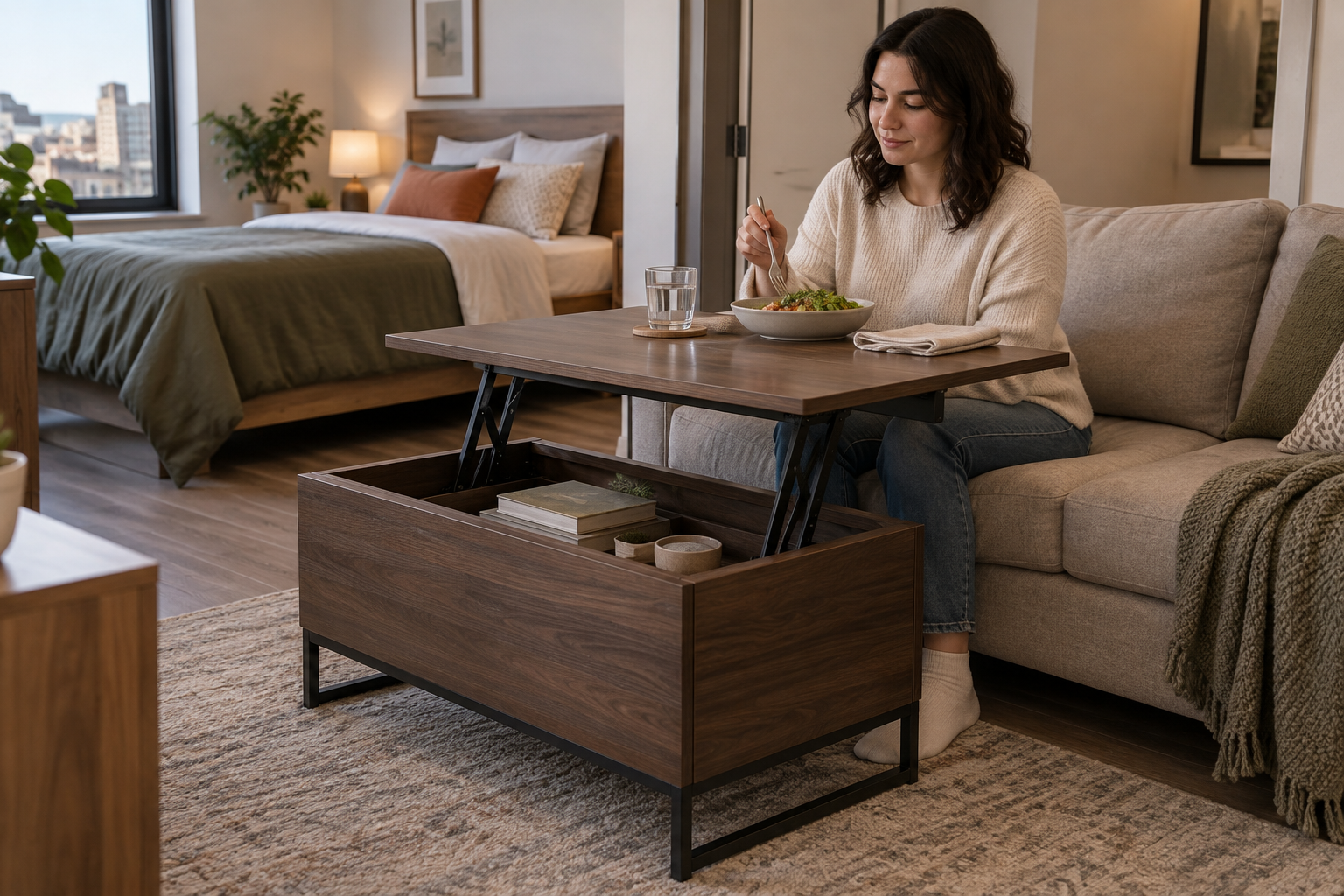
Buying by storage capacity alone can leave you with a bouncy surface or a top that rises too high. Respect the mechanism's load limit and keep fingers away from moving joints. Soft, deep sofas are also poor dining seats for some bodies. If sitting upright is difficult or transfers require a different arrangement, choose a conventional-height surface instead.
5. Let an Entry Console Expand for Company
An expanding console earns its everyday footprint as a landing place, then becomes a dining table when someone visits. Favor a model whose extension leaves store inside its own frame. Keep two folding chairs in a nearby closet, and plan a specific destination for the keys and mail so converting the console does not begin with a major clearing project.
Some consoles extend much farther than their closed size suggests and need several supports or loose leaves. Read the full setup sequence before committing. A useful planning allowance is roughly 30 inches behind an occupied chair, with more wherever people must pass; measure your own arrangement. This is an occasional-hosting solution if daily conversion feels like furniture assembly.
6. Slide a Dining-Rated C-Table Beside Your Seat
For solo meals, a sturdy C-shaped table can slide under the edge of a sofa or chair and bring a small surface close. Select one explicitly intended to support meals, not just a phone. Try your usual plate, glass and utensils on its top, then park it beside the sofa as an end table after dinner.
The offset base makes stability especially important. Avoid leaning your body weight on the edge, and reject a model that rocks during ordinary utensil use. Sofa legs and low frames may prevent the base from sliding underneath at all. This is not a good shared table, and pets or children moving through a tight gap can make it impractical.
7. Give a Folding Bistro Set a Dedicated Parking Slot
A freestanding folding bistro set avoids permanent installation, but it needs a real storage address. Measure a slot beside a wardrobe for the folded table and chairs, keeping them stable and away from door swings. At dinner, unfold the same pieces in the studio's open area and engage their locking braces before setting out food.
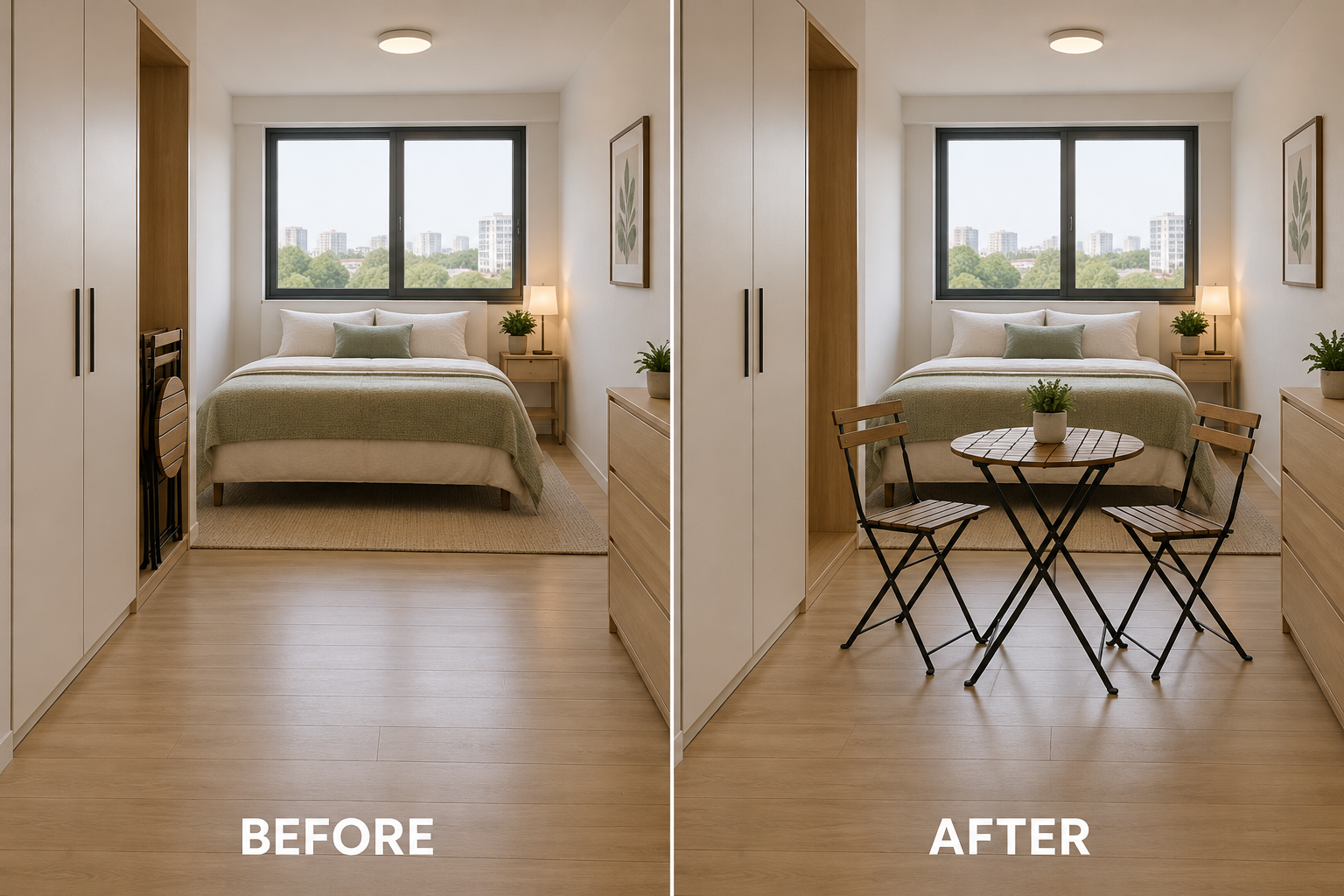
Do not buy an outdoor-style set without checking its indoor comfort and stability. Narrow slatted tops can catch utensils, while thin folding chairs may discourage lingering over dinner. Open the chairs fully and check their locks each time. If carrying several pieces is tiring, or the storage slot requires lifting them above shoulder height, choose a simpler setup.
8. Turn an Existing Counter into a Temporary Dinner Spot
An existing counter overhang can become a dining station without adding another tabletop. Match a fold-flat stool to the counter height and verify that the overhang leaves comfortable knee room. After food preparation, clear and clean that section, bring out the stool and eat. Store the folded seat in a pantry-side gap once dishes are put away.
A standard cabinet face without an overhang usually leaves nowhere for your knees; adding a taller stool does not fix that. Keep seating away from hot cooking zones, appliance doors and required manufacturer clearances. This arrangement also competes with meal preparation. It works poorly when one person cooks while another eats, or when elevated seating does not suit the household.
9. Separate Nesting Tables for Two Individual Place Settings
A pair of sturdy nesting tables can serve as everyday side tables, then separate into individual meal surfaces. Choose tops large enough for your actual dinnerware and heights that work with the seats you own. For two people sharing a compact sofa, place one table in front of each seat, then nest them together beside the arm afterward.
Decorative nesting sets often sacrifice usable surface area on the smaller table. Check both pieces rather than assuming they offer equal meals. Separate tops also make shared serving dishes awkward, so plate food in the kitchen first. Avoid balancing a tray across the pair: different heights or shifting bases can turn two stable tables into one unstable surface.
10. Assemble a Knockdown Table for Longer Meals
For occasional dinners that deserve a larger surface, consider a purpose-built knockdown table with a removable top and locking supports. Choose a complete compatible system rather than improvising with loose boards. A flat top can store horizontally under the bed if it fits, while folded supports and chairs occupy a low closet shelf. Assemble it before cooking begins.
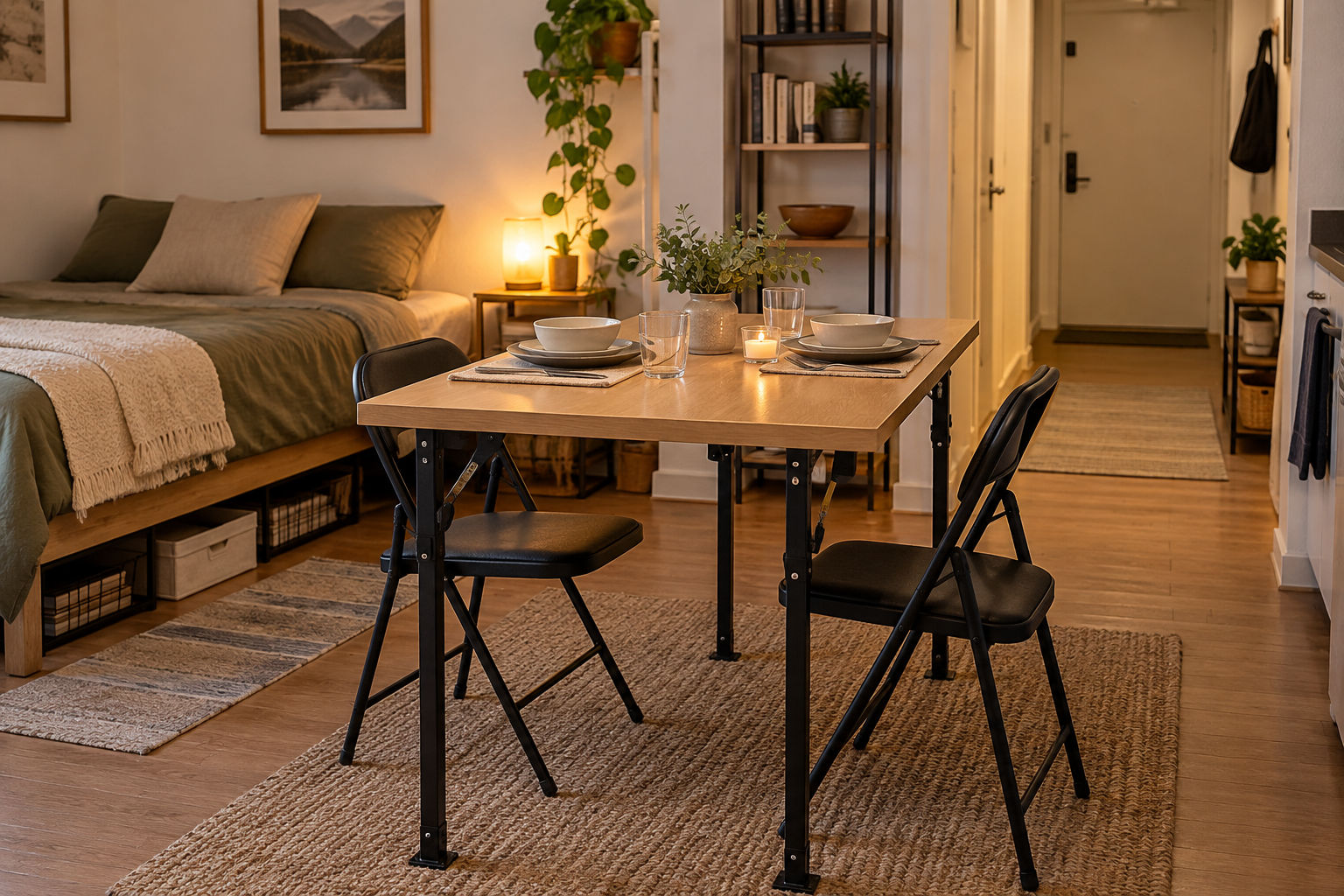
The tradeoff is handling several components, so check their weight, attachment method and storage dimensions before buying. Never leave a loose top resting unsecured on supports, and do not lean heavy panels where they could fall. This approach is unsuitable for frequent meals if assembly becomes a barrier, or when deployed furniture would compromise an essential exit route.
The best studio dining setup is the one you will actually open on an ordinary Tuesday. Before buying, mark its footprint with removable tape and rehearse getting a seat, serving food and clearing dishes. Give every folded piece a stable home, and keep essential routes open in both configurations. A modest surface that supports comfortable daily meals is more useful than a bigger arrangement you rarely unpack.
Leave a Reply