A small kitchen can have enough room to cook without having much permanent counter space. The trick is to protect one useful preparation surface, then give appliances, ingredients, and dirty dishes somewhere else to go. Start with your actual routine: take food out, wash it, chop it, cook it, and clean up. These ten changes support that sequence without assuming you can renovate. Measure your room, equipment, and door swings first; any dimensions you use for planning are not a substitute for code, accessibility, or manufacturer requirements.
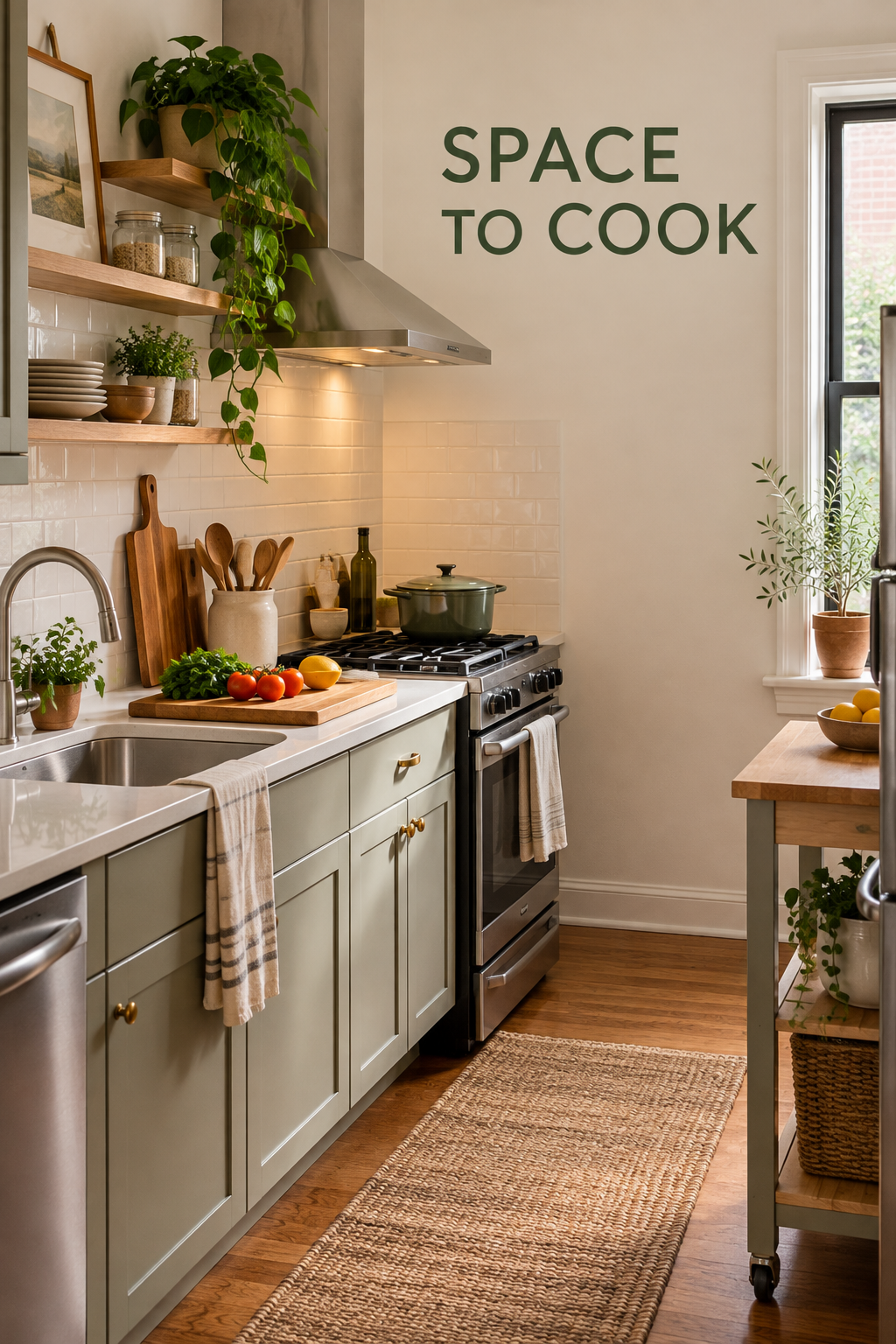
1. Protect One Surface for the Whole Prep Sequence
Choose your best uninterrupted surface and make it the default chopping spot, even if it currently holds the mail. Arrange the next meal around a simple progression: ingredients come out, produce gets washed, food moves to the board, and prepared ingredients travel to the stove. For vegetable pasta, place washed vegetables beside the board and a bowl for chopped pieces on the stove-facing side.
The mistake is treating this surface as both the clean workspace and the dirty-dish landing area. Keep dirty dishes in a separate spot that does not block sink access. Prepare ready-to-eat foods before raw meat, then wash and sanitize the board, tools, and surface as appropriate. If several people cook together, agree on handoff points rather than squeezing everyone around the same board.
2. Store Occasional Appliances Away From the Prep Counter
Reclaim counter space by giving occasional appliances a dry storage home. A blender used on weekends or a mixer used monthly can live on an accessible cabinet shelf instead of beside the sink. Measure the appliance with its attachments, then test the lift before committing. Keep the cleared counter available for daily prep rather than filling it with another decorative or storage item.
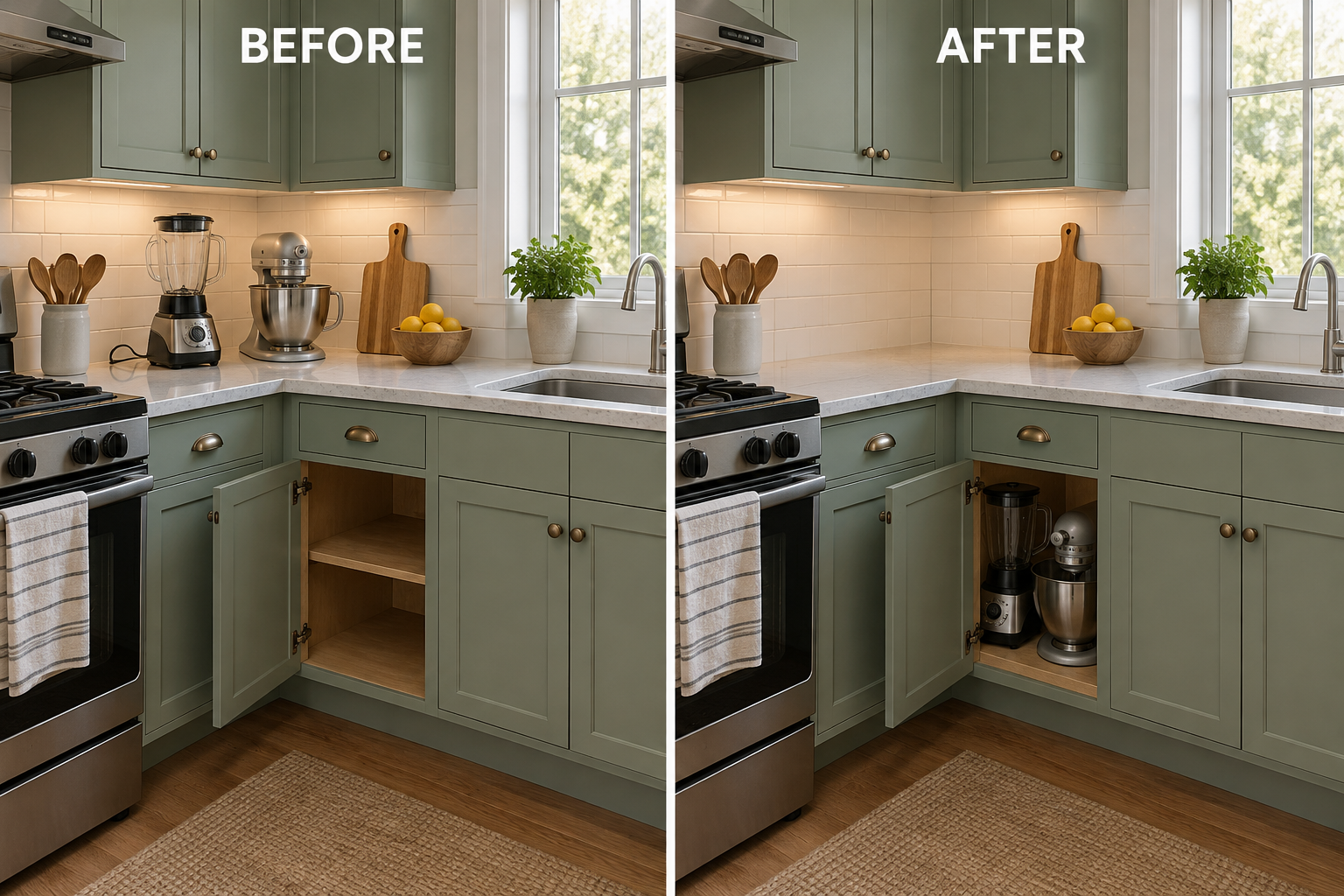
Do not turn a storage cabinet into an operating appliance garage unless the installation and appliance instructions specifically allow it. Unplug appliances and let heated equipment cool before storing; avoid putting a heavy machine overhead or where retrieving it requires an awkward twist. This approach is less useful for equipment used every day, especially when lifting is difficult. Prioritize an easy, repeatable routine over an entirely bare counter.
3. Bridge Part of the Sink With a Fitted Board
A sink-spanning cutting board can create a temporary chopping area without adding furniture. Choose a food-contact-safe board designed to fit your sink securely, with supports that prevent rocking or sliding. In a double-bowl sink, cover only one bowl so the other remains available for handwashing and rinsing. Wash vegetables first, drain them, and then set up the board for chopping.
An oversized loose board balanced on the rim is not an equivalent solution. Check stability before every use, and keep the underside away from dirty dishes or standing water. Remove, wash, and dry the board after prep. Skip this option if it blocks your only practical handwashing access, cannot sit securely, or forces you to reach uncomfortably around the faucet.
4. Add a Locking Cart That Parks Out of the Way
A small kitchen cart works best when it has both a cooking position and a parking position. Pick a stable model with locking casters and a washable, food-safe preparation top, or use a separate cutting board. For taco night, roll it beside the kitchen entrance, lock it, and chop toppings there. Store bowls underneath so the top remains available rather than becoming another shelf.
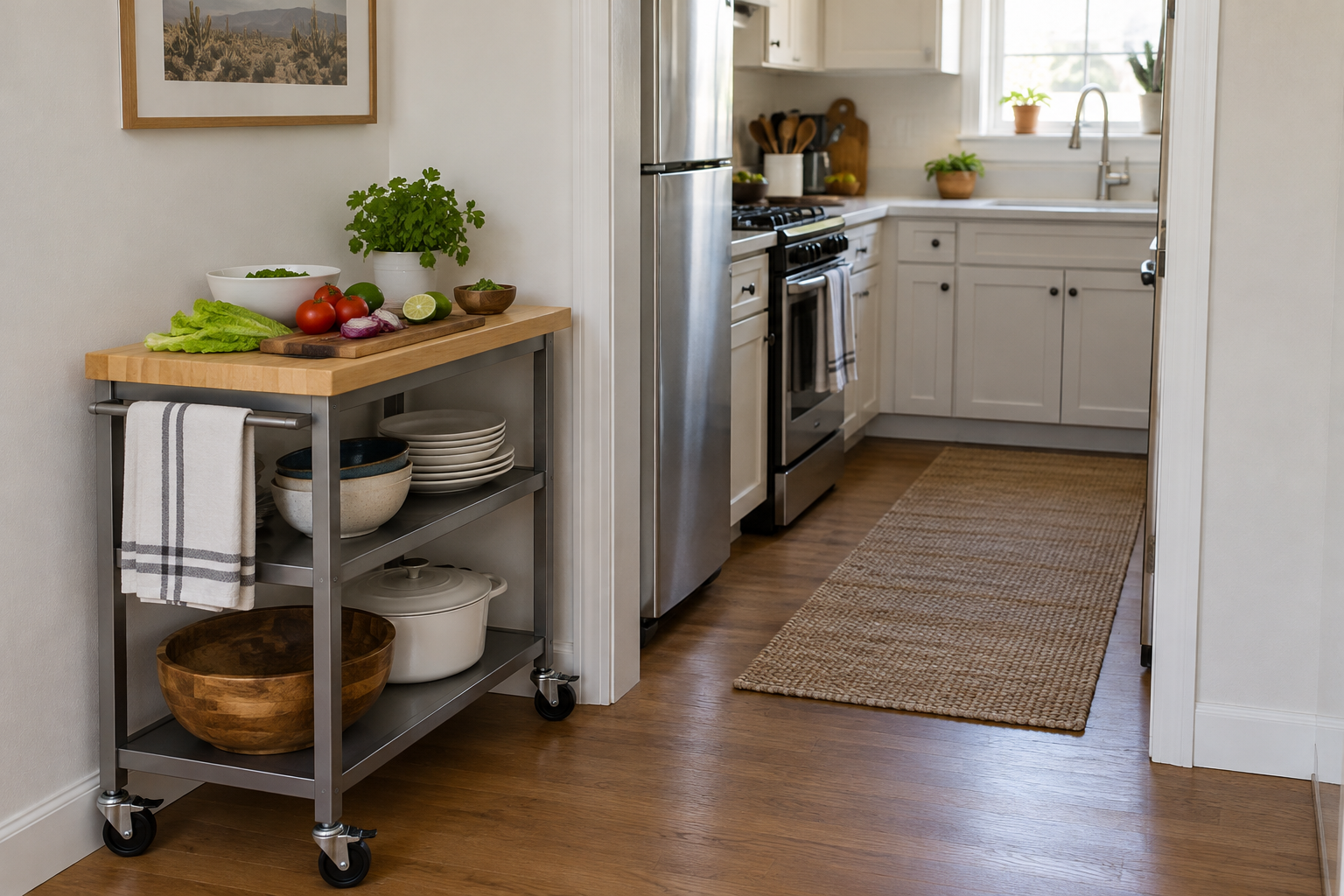
A cart that technically fits can still block the refrigerator, dishwasher, or route out of the room. Measure it with doors open and account for everyone who uses the kitchen, including mobility aids. Never use it as a rolling platform for hot pans, and do not operate heat-producing appliances on it unless their instructions permit the setup. Skip it if no safe parking spot exists.
5. Install a Fold-Down Prep Ledge Where It Can Open Safely
A wall-mounted folding table can turn an unused wall into a temporary prep zone. Choose hardware and a top rated for the intended load, and have the mounting matched to the wall construction. A renter might request written permission before installation. Open the ledge for assembling sandwiches or portioning ingredients, using a washable cutting board rather than cutting directly on an unsuitable tabletop.
The folded depth is only half the decision: measure the open table and the space occupied by the person using it. Avoid locations that obstruct exits, crowd hot appliances, or interfere with doors. Lightweight decorative brackets may not withstand chopping pressure. This is unsuitable when secure mounting is unavailable, rental permission is denied, or another household member needs the passage kept open continuously.
6. Use a Purpose-Built Pull-Out Work Surface
A cabinet-compatible pull-out worktop can provide a small station for measuring ingredients or assembling lunches. Look for a system specifically designed as a work surface, with suitable supports, stops, and a stated load rating. For example, a professionally fitted pull-out beneath the counter can hold a cutting board and sandwich ingredients, then disappear once it has been cleaned and dried.
Do not balance a board across an ordinary open drawer; drawer slides and boxes may not tolerate downward or sideways prep forces. Even a purpose-built surface can reduce cabinet storage and require a clear standing area. Follow its limits, avoid leaning on it, and obtain permission for cabinet alterations in a rental. It is a poor match for vigorous kneading unless expressly designed for that work.
7. Lift Everyday Tools Onto a Reachable Wall Rail
A short utensil rail can free the counter footprint occupied by a crowded crock. Mount it on a suitable wall away from the cooking heat and splash zone, using appropriate fixings and rental permission where needed. Hang only frequently used, fully dry tools within comfortable reach. Move the empty crock to an existing storage shelf, leaving the newly cleared counter edge available for your cutting board.
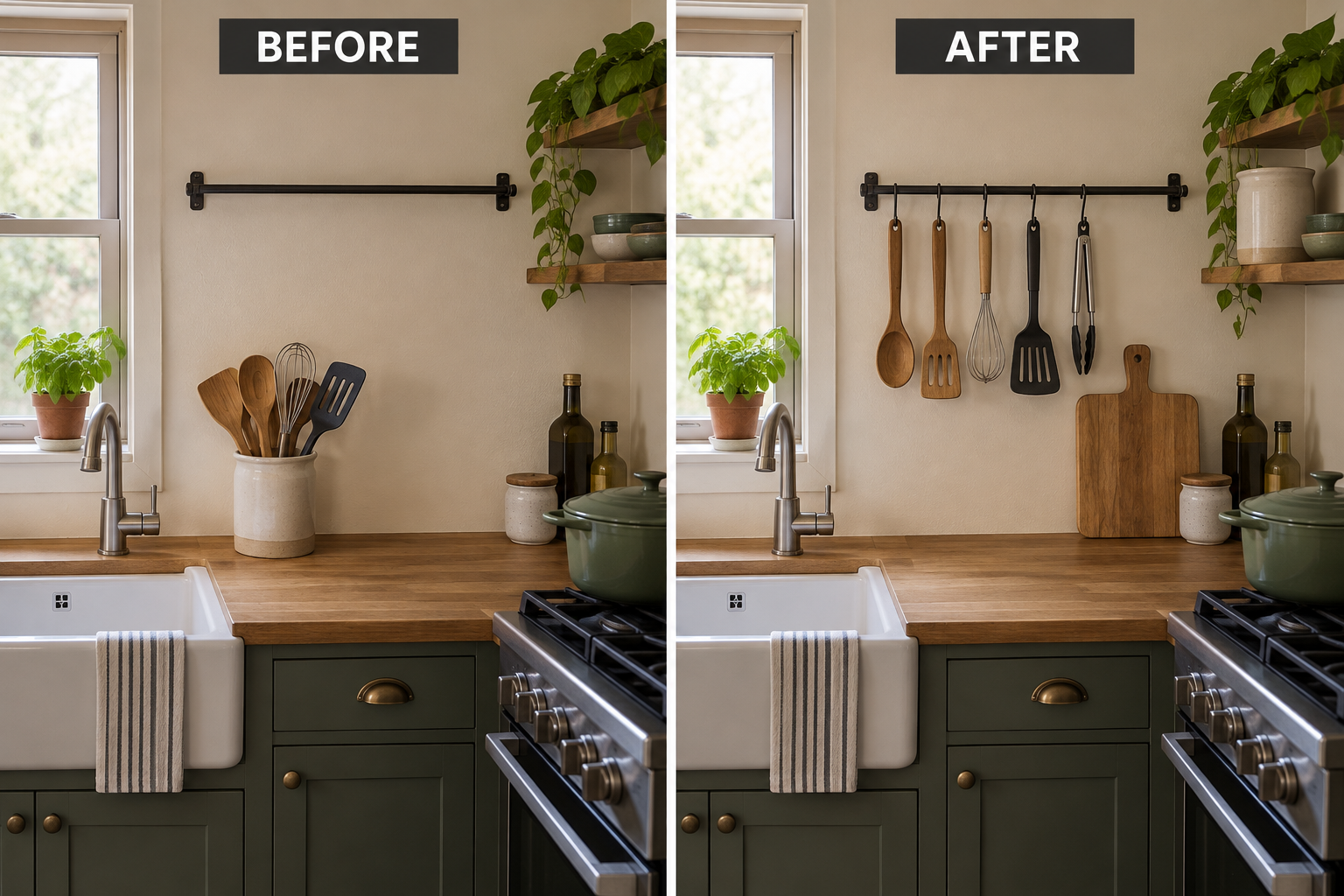
More hanging storage is not always better. Tools that dangle into the working area, collect cooking grease, or require reaching across a burner create new problems. Avoid hanging sharp knives where children can reach them, and do not assume adhesive hooks can carry a loaded rail. If drilling is prohibited or the wall location is awkward, keep fewer tools in an accessible drawer instead.
8. Borrow the Dining Table for Clean Preparation Tasks
A nearby dining table can become a second prep station for tasks that do not need the sink. Clear it completely, clean the surface, and set down a stable food-safe cutting board. Use it to tear greens, assemble wraps, or portion cooled ingredients into containers. Carry supplies in a tray so you can set up and restore the table without repeated trips.
Do not prepare food directly on a decorative table protector or porous craft mat. Keep homework materials, pet items, and household cleaners out of the setup. Table height may be uncomfortable for prolonged chopping, and raw meat preparation adds sanitation demands far from the sink. This option works best for short, clean tasks when the household can spare the table until prep is finished.
9. Right-Size the Board and Contain the Scraps
A cutting setup can waste space even when the counter is clear. Choose a board large enough for the food you actually prepare but small enough to sit fully supported. Set a compact scrap bowl beside it and transfer chopped ingredients into a mixing bowl as you work. For soup, process one vegetable at a time instead of spreading every ingredient across the counter.
Shrinking the board too far makes knife work cramped, while piling ingredients around its edges defeats the purpose. Match the board to the task: a large squash needs more support than herbs do. Keep scraps separate from usable food, empty the bowl before it overflows, and use a separate clean container for finished ingredients. If a task requires more room, switch to a larger safe surface.
10. Give the Microwave a Safe Operating Home Off the Counter
If the microwave occupies your only useful prep stretch, consider a purpose-built stand or an approved shelf installation nearby. Check the exact model’s ventilation requirements, support needs, door movement, and electrical instructions before choosing a location. A stable stand can free the original counter for chopping while keeping the microwave at a comfortable height with a nearby heat-safe place to set down a dish.
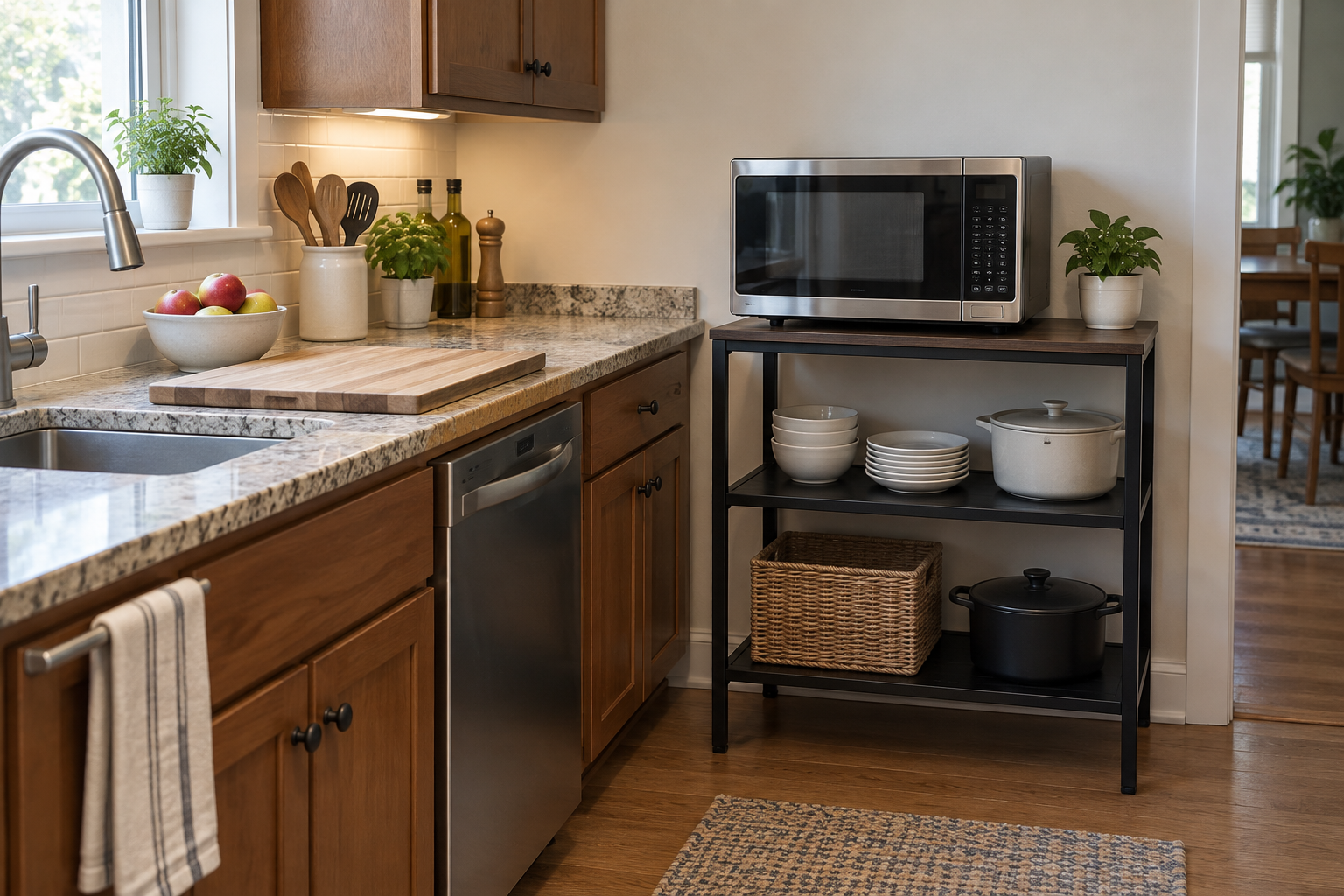
An ordinary crowded bookcase is not automatically a suitable appliance station. Do not enclose a countertop microwave, substitute extension cords for a suitable electrical setup, or place it where lifting hot liquids becomes awkward. Follow the manufacturer’s clearances and anchoring requirements, and seek qualified installation help where necessary. If the only alternative compromises ventilation, stability, or safe handling, keep it on the counter and reclaim space elsewhere.
You do not need to use every solution. Start by clearing one prep surface and testing a complete meal there. Add a movable or temporary surface only if a specific task still lacks room. The best small-kitchen setup makes clean preparation, safe cooking, and everyday cleanup easier without turning the room into an obstacle course.
Leave a Reply