A small bedroom doesn’t need matching nightstands to feel comfortable and organized. It needs a reachable place for your glasses, water, phone, and whatever helps you settle in. Start by checking what you actually use overnight, then measure beside, beneath, and behind the bed. All dimensions below are approximate planning guidelines, not clearance requirements. Test your reach from your usual sleeping position, and keep doors, exits, heating equipment, and everyday walking routes clear.
1. Choose a Slim Pedestal Table for the Essentials
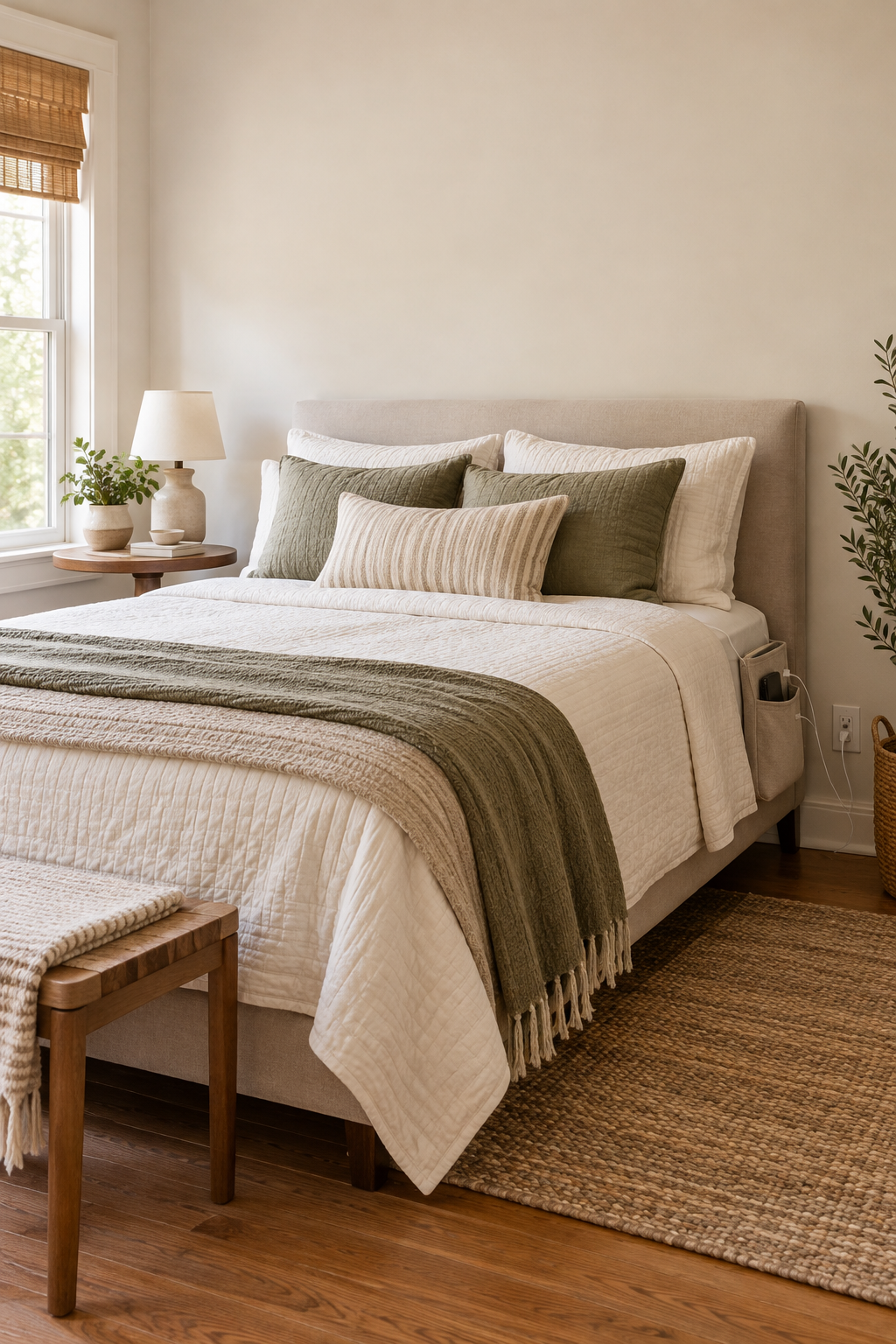
A small pedestal table gives you a landing spot without the bulk of drawers and four corner legs. Look for a top roughly 8–12 inches across, then measure the base separately. Beside a low bed, a compact metal table can hold glasses, a phone, and a small water bottle while leaving the surrounding floor visually open.
Don’t assume a narrow top means a narrow footprint: some bases spread well beyond the surface. A lightweight table may also tip when bedding catches its edge. Choose a stable design, avoid placing breakable drinks near the rim, and skip this option if children, pets, or balance needs make a small movable surface unreliable.
2. Tuck a Fabric Caddy Beside the Mattress
A mattress caddy turns the bed’s side into soft storage for lightweight essentials. Choose a model designed for your mattress and frame, then position its pockets near your shoulder rather than down by your knees. For example, give glasses their own soft pocket, slide a paperback into the largest section, and keep the phone pocket easy to reach.
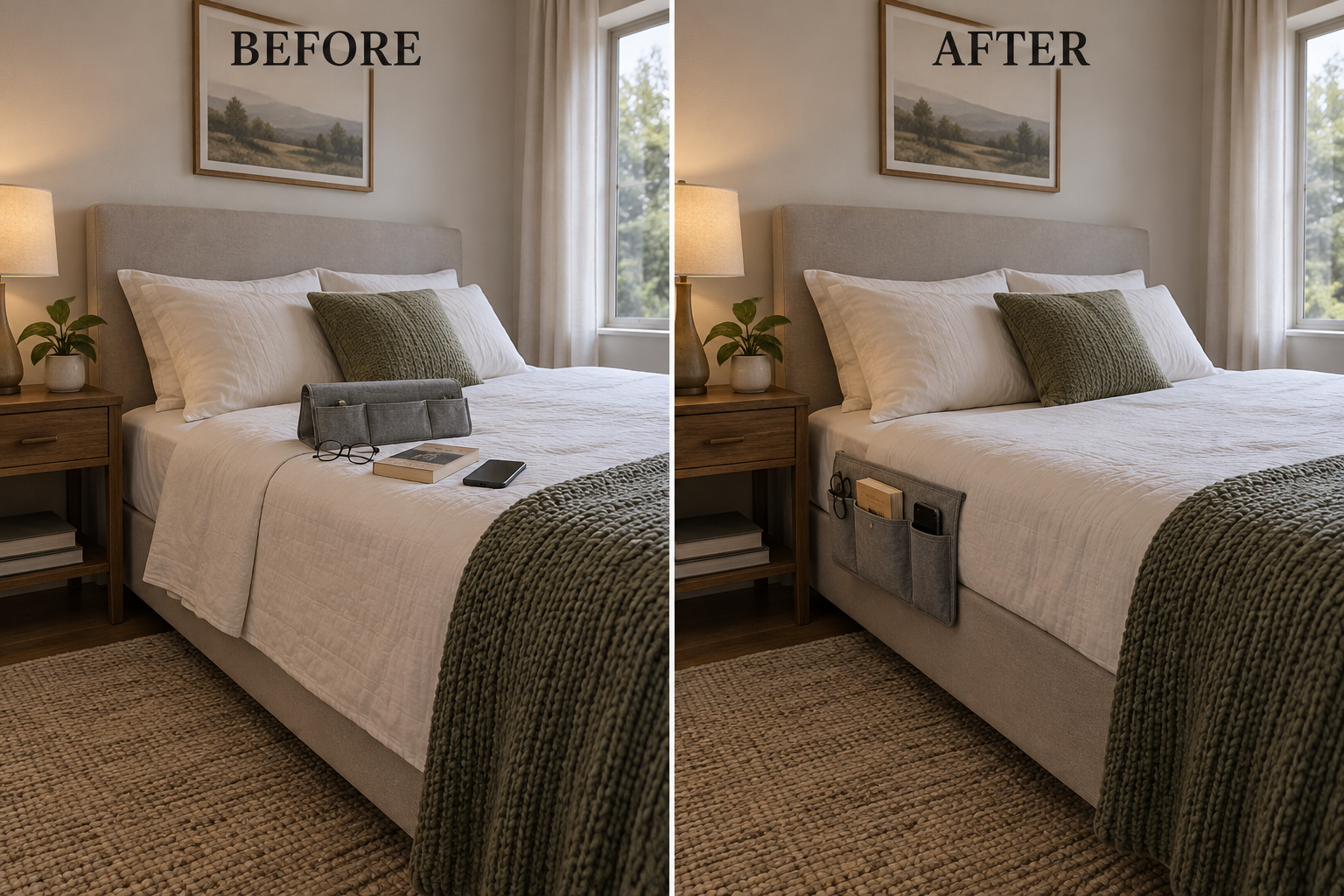
Overloading the pockets is the usual mistake; a heavy bottle can pull the caddy loose or make it sag. Check how its support flap works with adjustable bases, slats, and mattress protectors. Keep charging devices uncovered and cords outside the bedding. This solution suits small objects, not hot drinks, bulky equipment, or anything that needs a rigid surface.
3. Slide a C-Shaped Table Under the Bed
A C-shaped table can bring its surface over the mattress edge while its base slides underneath the bed. Measure the underbed height and check for center supports before choosing one. In a tight room, a small rectangular top can sit beside your pillow at night and move outward when you need to change the sheets.
The catch is compatibility, not just width. Platform beds with solid plinths, low rails, or storage drawers may leave nowhere for the base to go. A top positioned too far over the mattress can also obstruct getting up. Test the arrangement with your bedding in place, and don’t treat the table as a support handle.
4. Park a Narrow Rolling Cart Beside the Pillow
A slim rolling cart stacks storage vertically without requiring wall holes. Use the top tier for your nightly essentials, the middle for books, and the bottom for spare tissues or lotion. A cart around 6–10 inches wide may fit an awkward gap, but measure its handles and wheels, too. Lock the casters whenever it is parked.
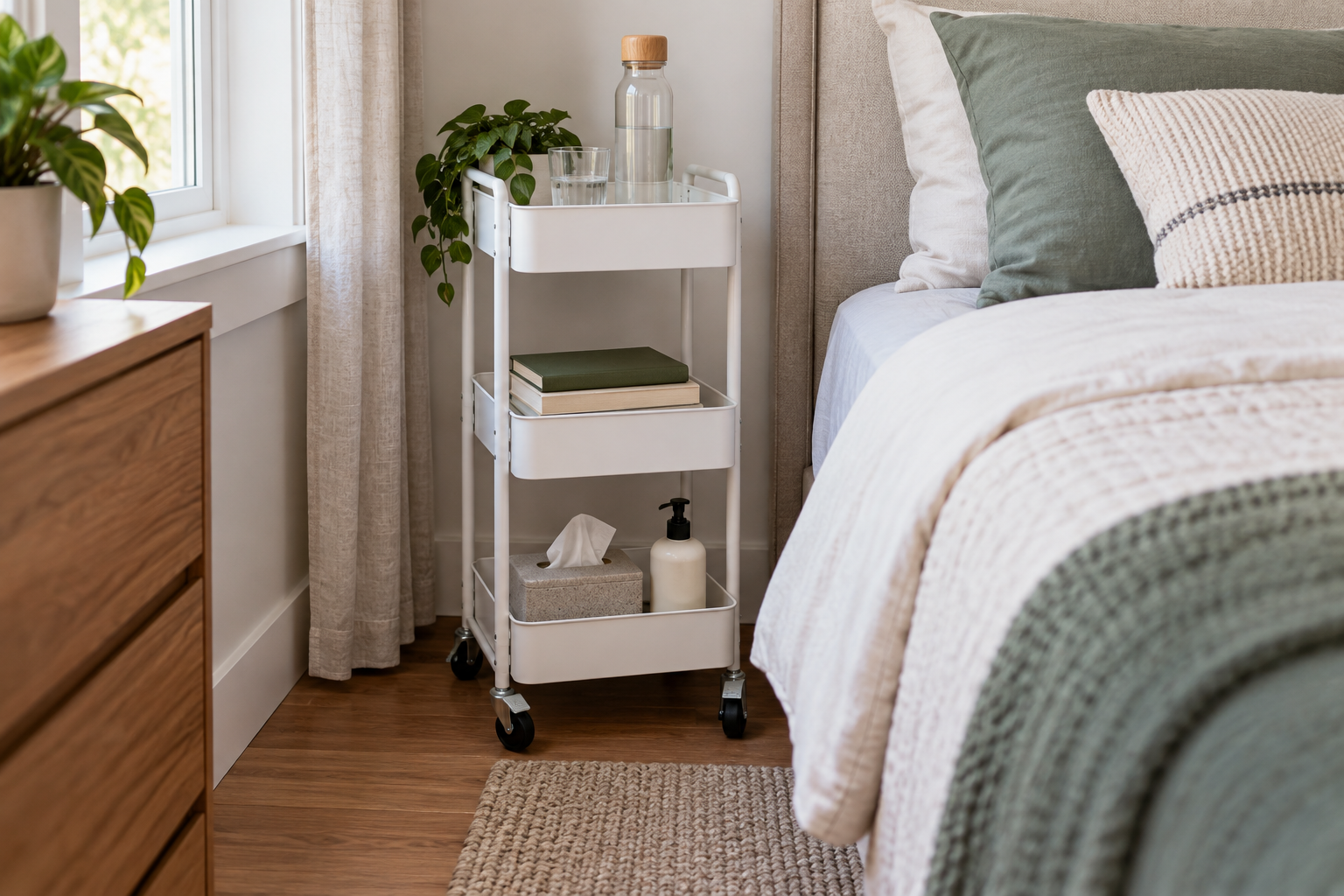
A cart fails when it fills the only usable path or becomes difficult to move on thick carpet. Keep heavier supplies low, and don’t run a charging cable across its wheels. Leave required space around heaters and other equipment according to their instructions. If the cart must move every time you leave bed, choose something smaller.
5. Attach a Tray to a Compatible Bed Frame
A clamp-on bedside tray provides a small surface without using floor space or drilling into the wall. Measure the exposed bed rail’s thickness and shape, then match those measurements to the tray’s stated limits. On a compatible wooden frame, a padded clamp can support a phone, glasses, and a lightweight cup within easy reach.
Don’t improvise a clamp connection on upholstery, a thin decorative rail, or a moving bed mechanism. Follow the tray’s load limit and check that tightening it won’t damage the finish. Skip this approach if the attachment loosens, projects into your exit route, or encourages someone to push down on it while standing up.
6. Let an Existing Dresser Do Bedside Duty
Sometimes the best solution is moving the bed rather than buying another piece. If a low dresser already sits nearby, arrange the bed so one corner of its top is comfortably reachable. Reserve that corner with a shallow tray for nighttime items, and use a small section of the nearest drawer for less-used bedside supplies.
Height and drawer access determine whether this works. A tall dresser may require an awkward upward reach, while a mattress pressed against drawer fronts makes storage frustrating. Preserve room to operate the drawers and follow the dresser manufacturer’s anchoring instructions. In a rental, obtain permission for required anchoring rather than leaving furniture unsecured.
7. Install a Shallow Ledge with a Clear Cable Route
Where your lease allows mounting, a shallow wall ledge can hold essentials above an otherwise unusable bedside strip. Position it beside the mattress, not over your pillow, and test the height before installation. Add compatible cord guides along the wall so a charging cable reaches the ledge without dangling across the bed or collecting on the floor.
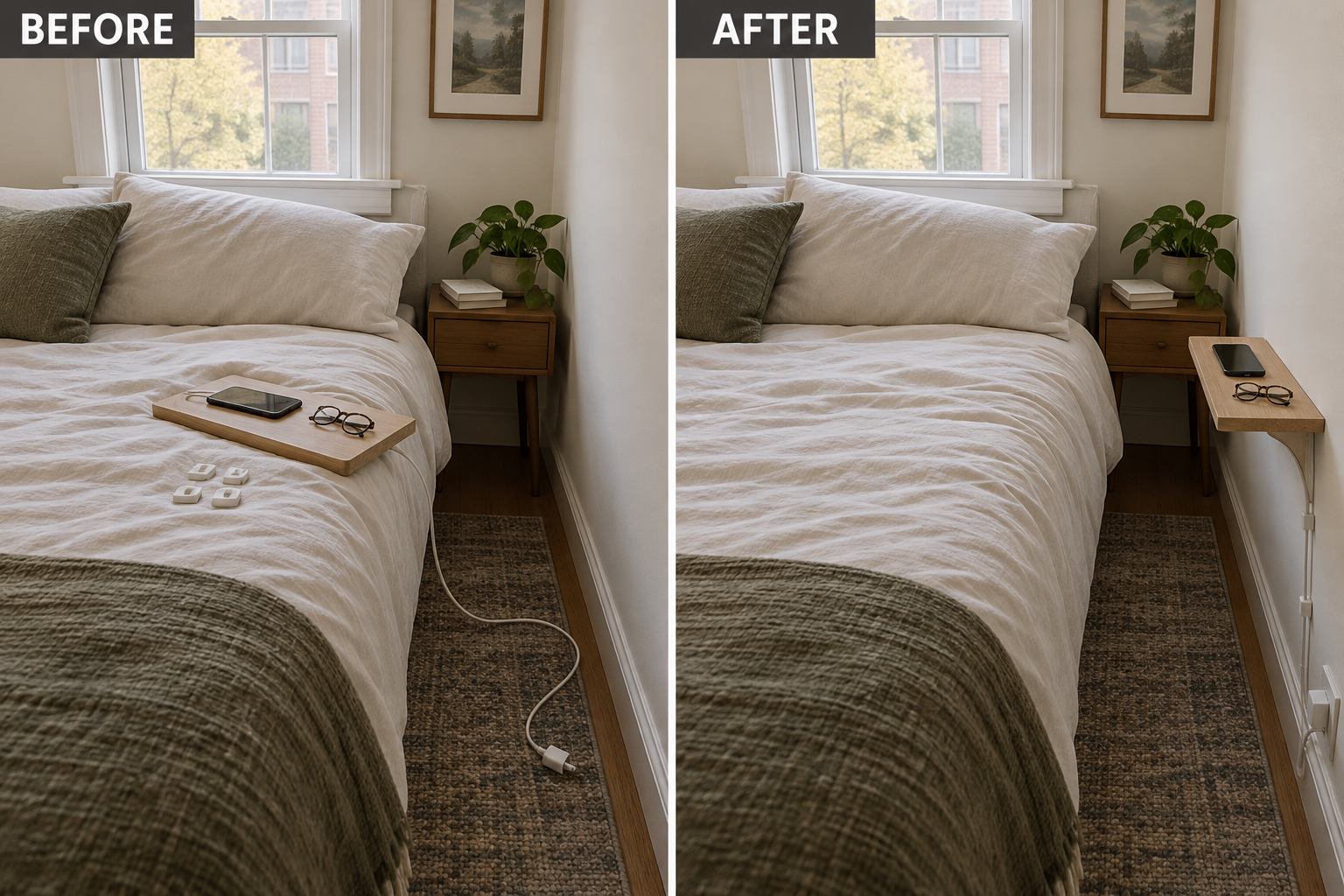
Don’t assume adhesive strips can support a loaded shelf; use mounting hardware appropriate to the wall and the manufacturer’s instructions. Cable clips can also damage rental paint, even when marketed as removable. Keep cords unpinched and charging devices ventilated. If permission, wall construction, or a safe outlet route is uncertain, choose a freestanding solution instead.
8. Use a Head-End Underbed Drawer for Backup Supplies
A shallow rolling drawer near the head of the bed can replace the storage portion of a nightstand. Measure beneath the frame and allow enough side room to pull it open. Store tissues, spare reading glasses, or a bedtime book inside, with frequently used items at the front. Close it completely before settling in for the night.
This is backup storage, not a good place for something you need instantly while lying down. Repeated bending may be uncomfortable, and an open drawer becomes a nighttime obstacle. Avoid trailing pull loops and loose charging cables underneath. It’s unsuitable when a rug blocks the wheels or the bedside gap cannot accommodate the drawer’s full travel.
9. Replace a Nightstand with a Small Storage Stool
A compact storage stool combines a nighttime surface with a place to stash spare bedding or sleep accessories. Choose a stable model with a firm, flat top; some upholstered versions need a fitted tray. Beside a modest-height bed, it can hold your glasses overnight and provide an occasional seat while you put on socks.
The tradeoff is access: everything on top must move before you open the compartment. Store occasional-use items inside rather than nightly necessities. Confirm that the stool is designed for sitting if you intend to use it that way, and avoid wheeled or rounded designs that shift easily. Soft, uneven tops are poor resting places for drinks.
10. Choose a Bed-Integrated Headboard Shelf
When replacing a bed frame, consider a compatible headboard with built-in shelf storage. A low ledge extending beside the pillow can hold glasses and a book without separate nightstands. Measure the complete bed’s depth, not just the mattress: even shallow headboard compartments can shift the mattress forward. Favor reachable side cubbies over deep shelves behind your head.

Don’t wedge an unrelated shelving unit behind the mattress and assume the bed will stabilize it. Use a compatible system assembled as instructed, including any required anchoring and rental permission. Keep heavy objects away from sleeping heads and check cable openings for pinch points. This option makes less sense when the existing bed works well or room depth is already tight.
The best bedside storage fits both your room and your nighttime habits. Choose one reachable spot for daily essentials, then give backup supplies a separate home. Before committing, measure the full footprint, try the reach, and check cords and walking routes. A small, dependable setup is more useful than squeezing in a conventional nightstand.
Leave a Reply